Concrete slab sinking often begins subtly, but recognising early warning signs can save you significant repair costs down the track. In many homes across Sydney, slight cracking, uneven slabs, or water pooling signal trouble. Your home’s integrity depends on catching them early.
Issues like concrete slab sinking are common across Sydney properties, particularly in areas like Botany, and Raise & Relevel specialises in identifying and correcting these early foundation shifts. This article explores how to identify risks, understand their causes, and take action using proven techniques.
Why does concrete slab sinking happen in homes?
When a concrete slab sinks, poor soil conditions, water infiltration, or compaction issues are usually to blame.
Here are the common causes behind slab sinking:
- Poor or inconsistent soil compaction under a slab often leaves voids that collapse under weight, pushing the slab downward.
- Excess water from leaks, gutters, or heavy rain can wash away supporting soil beneath the slab, undermining its support.
- Tree roots and large shrubs may displace subsoil, pulling moisture and causing the ground to shift, which can lead to uneven slab settlement.
- Vibration from heavy machinery or nearby construction can cause loose fill to shift, reducing stability under the slab.
In coastal or bayside suburbs across Sydney, such as Botany, these conditions are often worsened by sandy soils and high moisture exposure. Understanding these causes helps you assess risk factors in your property. In many cases, these same conditions remain hidden until damage begins. After seeing the causes, the next step is knowing how to catch early warning signs before damage escalates.
How can you identify the risks of a sinking concrete slab?
You can identify risks by watching for subtle structural changes, moisture behaviour, and slab irregularities. Here are the signs to track for early detection:
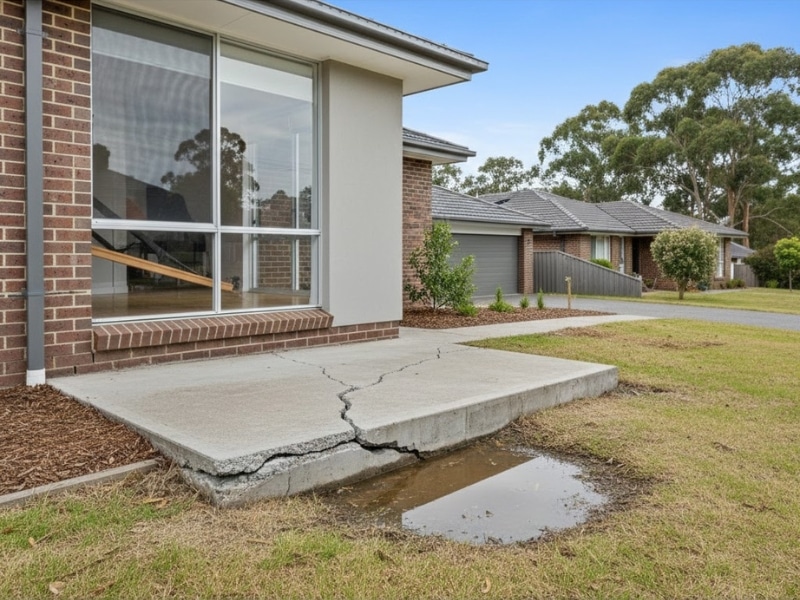
- Floors, driveways or patios begin to slope or tilt gradually over time, indicating the slab is no longer level.
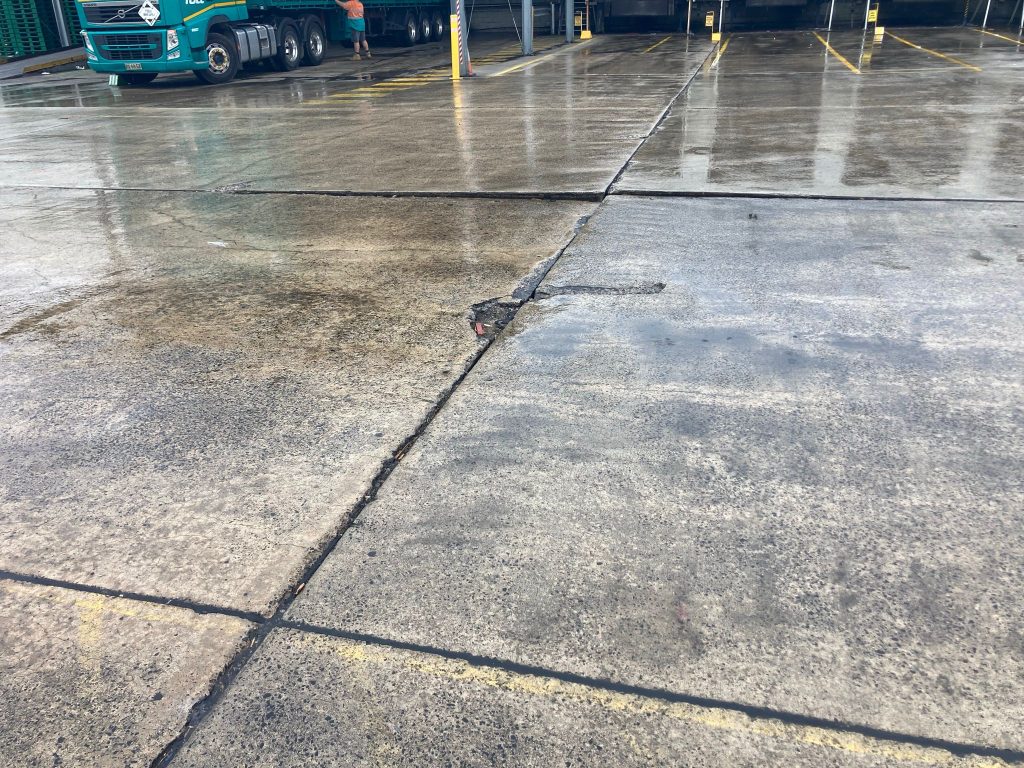
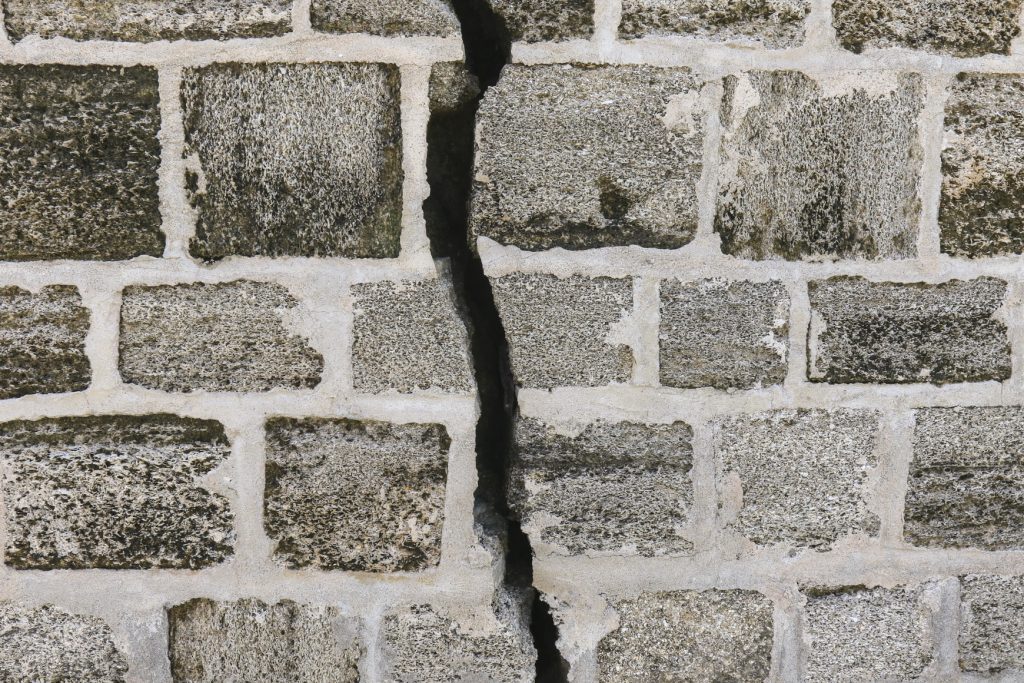
- Cracks form along edges or intersecting lines in the slab because tension develops as the slab sags unevenly.
- Doors or windows may stick or fail to close properly because the frame shifts as the slab position changes.
- Water pooling near slab edges or within joints suggests drainage issues affecting subsoil support.
These signs are common in older Sydney homes and properties, where movement in foundations often goes unnoticed for years. Early recognition lets you intervene before structural or safety issues worsen. In many cases, understanding the advantages of slab jacking compared to traditional methods can help you judge which signs signal urgent action.
Why do homeowners often overlook a sinking concrete slab?
Homeowners frequently overlook slab sinking issues because signs appear slowly and are mistaken for minor defects. Here are the reasons why they are ignored:
- Minor cracks are dismissed as normal wear rather than signs of deeper foundation movement.
- Slight tilts in the driveway or patio are rationalised as aesthetic variation instead of structural concern.
- Water pooling is blamed on surface grading or stormwater drains, not sub-slab undermining.
- Lack of visible collapse delays urgency until the problem becomes too obvious to ignore.
Because symptoms evolve gradually, many wait until cracks widen or surfaces drop significantly. It’s often only once problems become a trip hazard or cause doors to jam that attention is paid. By then, the fix becomes more intensive. Understanding the uses of concrete slab floors in homes also helps you appreciate why early signs matter. These slabs play a key role in stability, insulation, and moisture control — so any shifting can lead to more than just surface damage.
How does slab jacking fix concrete slab sinking problems?
Slab jacking fixes sinking slabs by filling voids and pushing the slab back to level via high-pressure grout or foam injection. Here are the steps and benefits involved:
- Drill small holes through the slab at predetermined points, injecting a stabilising material beneath the settled portion.
- The injected grout or polyurethane expands, displacing soil and raising the slab gradually to its former level.
- As pressure builds, the slab slowly lifts, and voids underneath fill in to maintain long-term stability.
- Once levelled, the holes are patched flush with the original surface, restoring a smooth, usable finish.
Because this method restores grade with minimal disruption, it’s widely used across Sydney homes and driveways. It also costs far less than full slab replacement. If your home is already showing signs of uneven flooring or driveway issues, it may be time to consider concrete slab jacking solutions for uneven foundations as a reliable fix that prevents the need for complete replacement.
Can concrete slab jacking prevent future foundation issues?
Concrete slab jacking acts as both a repair and preventative measure, helping stabilise soil and reduce future foundation movement. Here are ways slab jacking helps protect your property:
- Once voids are filled and the slab returns to level, lateral movement is reduced, lowering stress on surrounding slabs.
- The stabilising material helps resist further soil washout beneath the slab, supporting long-term subsoil integrity.
- Correcting the slab helps realign drainage flow, preventing water from undermining nearby foundations or walls.
- Proper treatment discourages repeated settlement, especially when you control moisture levels and vegetation around the slab.
| Concern | Before slab jacking | After slab jacking |
| Slab tilt/slope | Moderate to severe | Minimal or none |
| Void presence | Significant risk | Filled and stabilised |
| Water undermining risk | High | Lowered through regrade |
| Need for replacement | Possible | Less likely |
Over time, properly executed slab jacking adds resilience to Sydney properties, helping homeowners reduce future maintenance costs.
Why hire a professional for slab jacking instead of diy fixes?
A professional operator ensures precision, correct materials, and long-lasting results. Here are the key advantages of choosing a specialist over trying it yourself:
- Professionals perform soil testing and slab movement analysis before selecting injection points for optimal results.
- Experienced operators use purpose-designed equipment and pressure monitoring to avoid over-lifting or cracking the slab.
- They choose appropriate materials — high-density polyurethane or cementitious grout — to suit your soil and slab conditions.
Attempting a DIY fix can lead to uneven lifts, slab damage, or recurring settlement.
Relying on skilled contractors saves time, reduces risk, and delivers better outcomes long term.
Final thoughts on recognising and addressing slab issues
Recognising early signs of slab movement is critical, and acting with the right method matters. You can’t afford to delay or rely on superficial patch‑ups. If you’re unsure what next steps to take, you can discover how Raise & Relevel restores stability with slab jacking by exploring how professional solutions are tailored to your property’s condition. Acting early can prevent further movement and restore long-term peace of mind.