Cracks appearing in your walls or floors can be unsettling – and for good reason. While some cracks are harmless, others are a clear warning that your home’s foundation may be moving or failing. Across Australia, soil conditions, moisture changes, and ageing construction all contribute to foundation problems that often start subtly and worsen over time.
Understanding which warning signs matter – and when to act – can save you from escalating structural damage and costly repairs. Below, we explain 10 key signs your home may need foundation repair, with clear guidance tailored to Australian homes and conditions.
Why Foundation Problems Are Common in Australian Homes
Australia’s unique environment places homes under constant structural stress. Many properties are built on reactive clay soils, which expand when wet and shrink when dry. Combined with droughts, heavy rainfall, and poor drainage, this movement places pressure on footings, slabs, and load-bearing walls.
Foundation issues rarely appear overnight. Instead, they develop gradually – often showing early warning signs that homeowners dismiss as cosmetic damage. Recognising these signs early is the key to protecting your home’s long-term stability.
10 Warning Signs Your Home Needs Foundation Repair
1. Stair-Step Cracks in Brickwork or Block Walls
Common warning signs include stair-step cracks, particularly in external brick or masonry walls. These cracks typically follow mortar joints and indicate uneven foundation movement beneath the structure.
Unlike hairline surface cracks, stair-step cracking often signals that part of the foundation is settling or shifting at a different rate than the rest of the home.
2. Cracks in Interior Walls That Keep Returning
Hairline cracks can be normal, especially in new builds. However, cracks that reappear after repairs or continue to widen are a red flag.
Recurring cracks often mean the underlying issue – foundation movement – hasn’t been resolved. Patching alone won’t stop the damage if the structure beneath is still shifting.
3. Cracks Appearing in Floors or Tiles
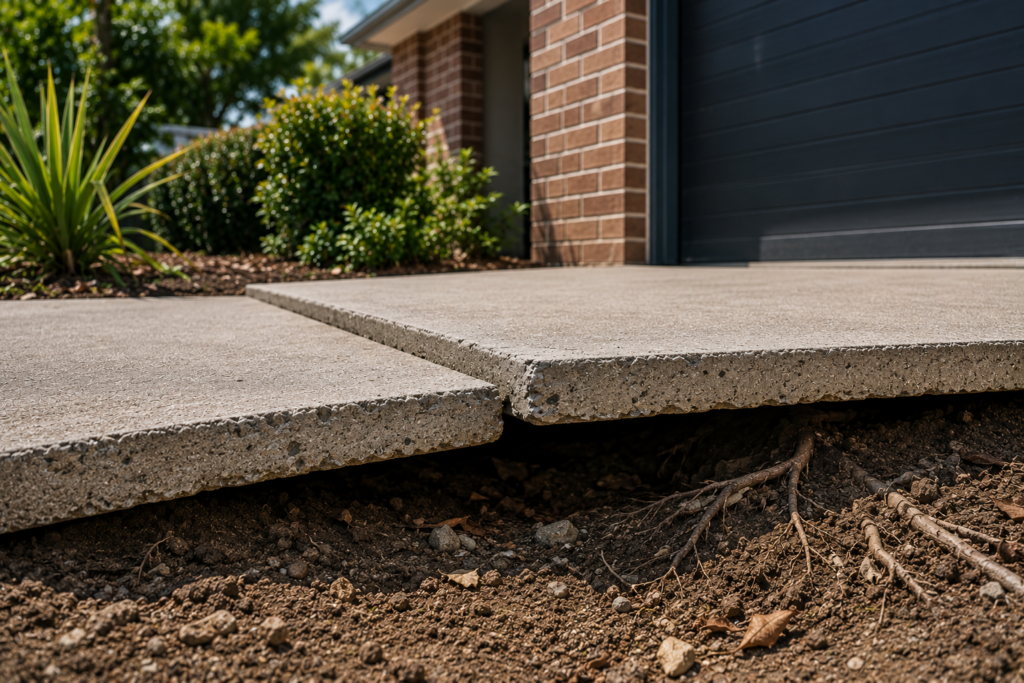
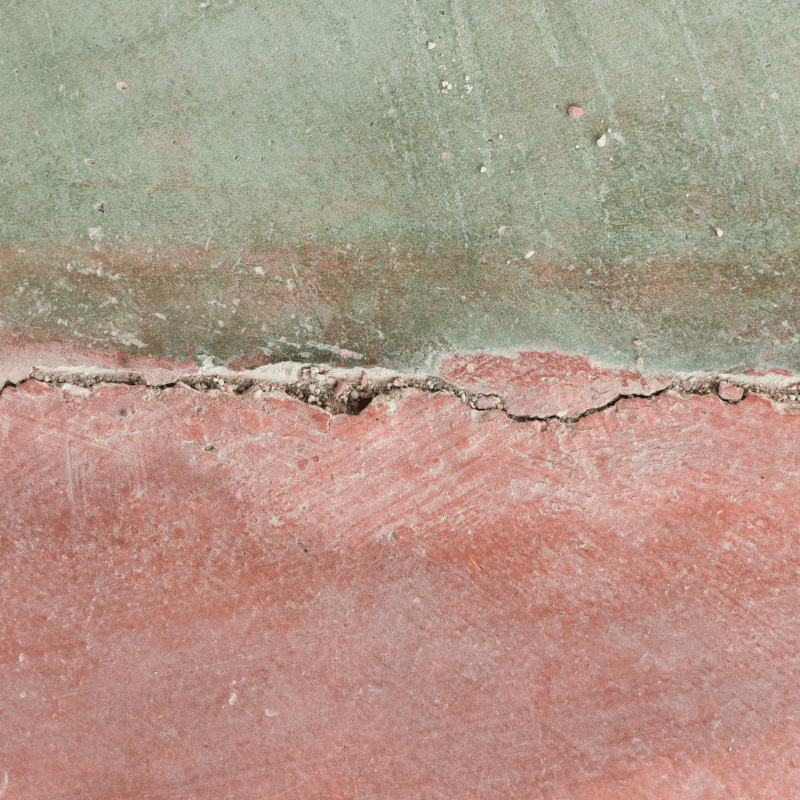
Cracks in concrete slabs, tiled floors, or polished concrete surfaces are another strong indicator of foundation stress. These cracks may run diagonally, widen over time, or cause tiles to lift.
Floor cracking is particularly concerning because it suggests movement at the base of the structure, not just surface-level wear.
4. Doors That Stick, Jam, or Won’t Close Properly
Doors that suddenly stick, jam, or swing open on their own are often blamed on humidity – but persistent issues can point to foundation movement.
As a home shifts, door frames can twist out of square, making it difficult for doors to open and close smoothly. This is especially notable when multiple doors are affected simultaneously.
5. Gaps Around Windows and Door Frames
If you notice gaps forming around windows or doors, this can indicate structural movement pulling frames away from walls.
These gaps may:
. Let in drafts
. Allow moisture intrusion
. Worsen over time as movement continues
What starts as a small gap can quickly lead to water damage and further weakening of surrounding materials.
6. Uneven or Sloping Floors
Uneven floors are one of the clearest signs that something is wrong beneath your home. You may feel floors slope, dip, or bounce underfoot.
In more advanced cases, furniture may appear tilted or roll on its own. Sloping floors often mean the foundation is no longer supporting the structure evenly – a serious issue that requires professional assessment.
7. Cracks Around Ceiling Corners and Join Lines
Cracks where walls meet ceilings, or along cornices and join lines, often appear when a home shifts unevenly.
While minor movement can cause small cracks, widespread or worsening ceiling cracks may signal ongoing foundation instability rather than simple settlement.
8. Moisture Problems That Make Damage Worse
Moisture and foundation problems are closely linked. Water issues that worsen movement – such as poor drainage, leaking pipes, or pooling water – can accelerate soil expansion and contraction.
Signs to watch for include:
. Damp patches near walls
. Mould growth
. Water pooling near the foundation
Left unaddressed, moisture problems can dramatically increase foundation movement and structural damage.
9. External Walls Pulling Away or Bulging
If external walls appear to lean, bulge, or separate from the structure, this is a serious warning sign.
These changes often indicate that the foundation can no longer support the load placed on it, increasing the risk of long-term structural failure if ignored.
10. Multiple Warning Signs Appearing Together
The most important indicator of foundation trouble isn’t a single symptom – it’s several signs appearing at once.
For example:
. Cracks in walls and floors
. Doors that jam
. Sloping floors
. Gaps around windows
When multiple issues develop together, it strongly suggests an underlying foundation problem rather than isolated cosmetic damage.
Are All Cracks Dangerous?
Not every crack means your home is in trouble. Some are purely cosmetic and result from minor settlement or seasonal changes. However, cracks become concerning when they:
. Grow wider over time
. Appear suddenly
. Occur alongside other structural issues
Knowing the difference requires experience – which is why professional assessment is so important.
When to Seek Professional Foundation Repair
If you’ve noticed any of the signs above, it’s wise to consult professional foundation repair services in Australia to determine the severity of the issue.
Specialists can assess:
. Soil movement
. Structural integrity
. Appropriate repair methods
Early intervention often means simpler, more cost-effective solutions.
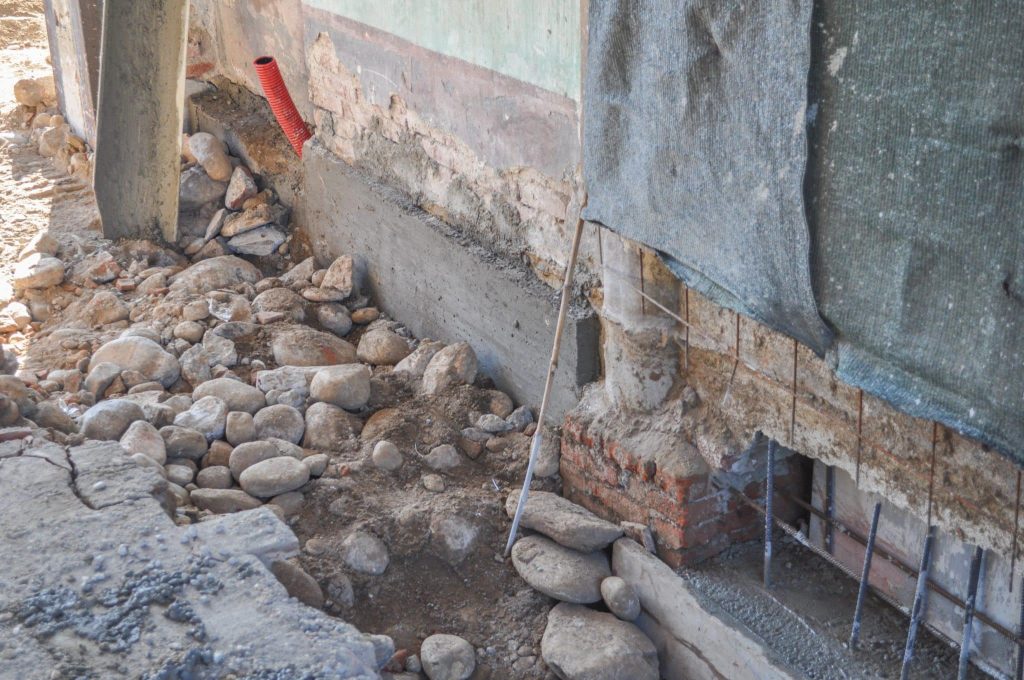
For homeowners dealing with visible wall damage, cracked wall repair solutions for Australian homes can address both the symptoms and the underlying cause when handled correctly.
In cases where structural cracks are present, concrete crack injection and foundation repair methods may be recommended to stabilise and strengthen affected areas.
Why Ignoring Foundation Problems Can Be Costly
Delaying repairs doesn’t just increase repair costs – it can affect:
. Property value
. Insurance coverage
. Safety and liveability
Foundation movement rarely stops on its own. Without intervention, small problems can escalate into major structural repairs that are far more disruptive and expensive.
Foundation Repair Standards in Australia
Foundation repair work should always align with recognised structural and building standards, including guidance outlined by the National Construction Code, which sets minimum requirements for structural safety and performance in Australian buildings.
Final Thoughts – Act Early, Protect Your Home
Cracks in walls and floors are your home’s way of signalling that something may be wrong beneath the surface. While some issues are minor, others point to serious foundation movement that requires expert attention.
By recognising these warning signs early and seeking professional advice, you can protect your home’s structure, value, and long-term safety.
If you’re unsure whether your cracks are cosmetic or structural, it’s always better to investigate early rather than wait until damage worsens.