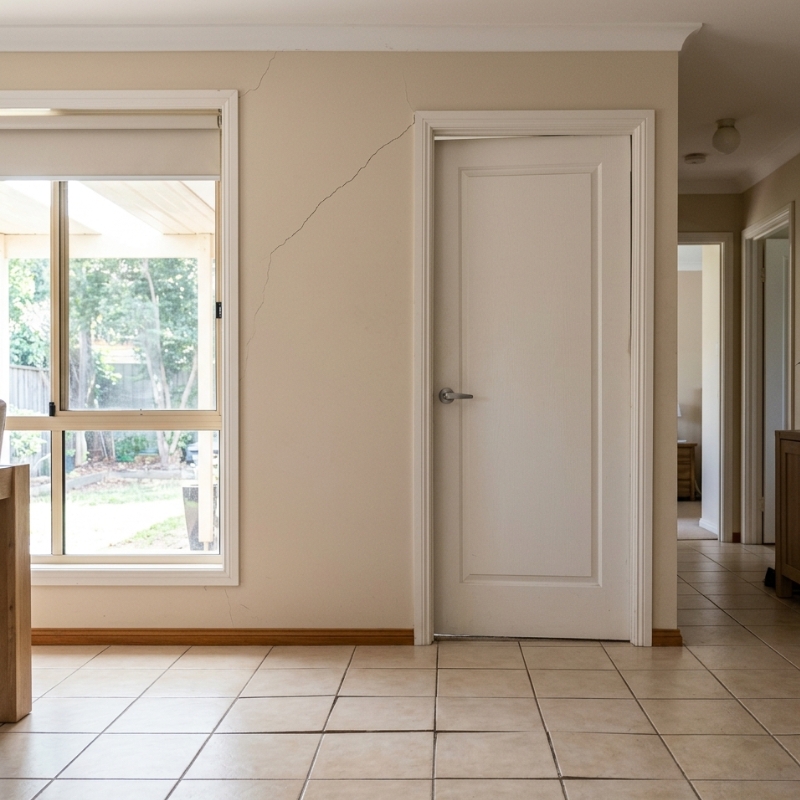
If you live in Sydney, it’s not unusual to notice the odd crack, a door that’s a bit sticky, or a floor that doesn’t feel perfectly level. Most of the time, those changes are minor. The tricky part is that early slab movement — including the first signs of a sinking slab — can look like “normal house stuff” at first.
This guide is designed to help you spot the patterns homeowners often miss — the small clues that matter, what they can suggest, and how to separate “monitor it” issues from “don’t ignore this” red flags.
What “slab movement” actually means (in plain English)
A concrete slab is meant to stay broadly stable over time. But the ground underneath it isn’t always stable.
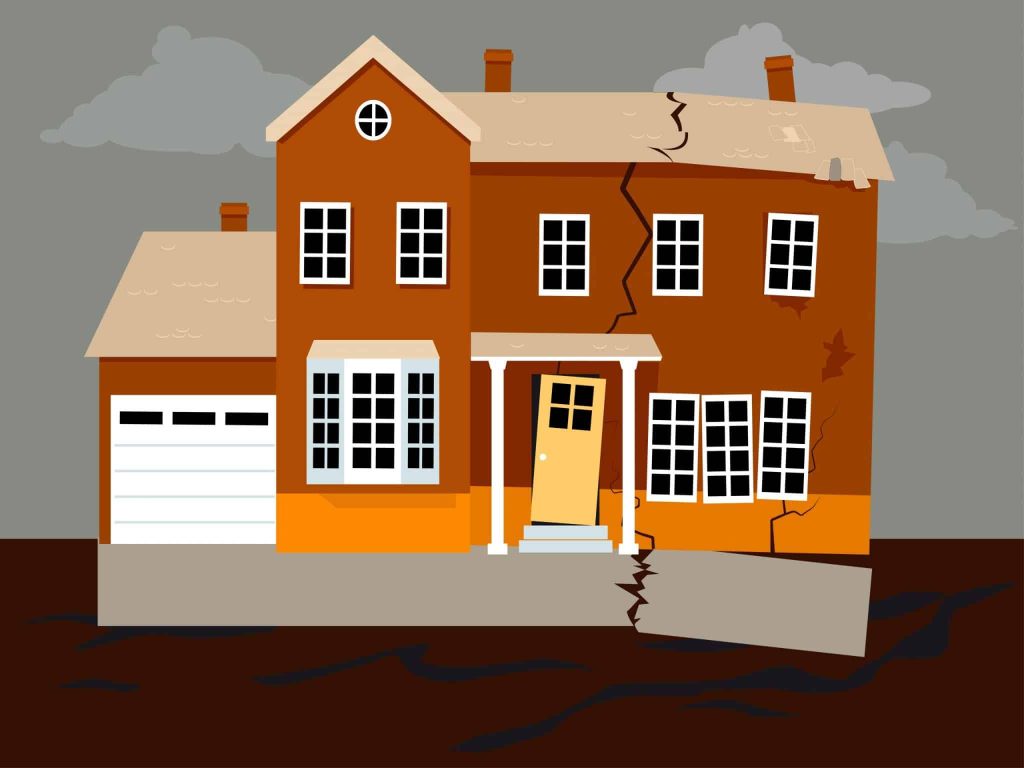
In many Australian suburbs (including parts of Sydney), soil moisture changes can cause the ground to expand, shrink, soften, or wash out in pockets. When the support under a slab changes unevenly, the slab can move in different ways:
• Settlement (dropping) in one area
• Heave (lifting) in one area
• Rotation/tilt (one side changes more than another)
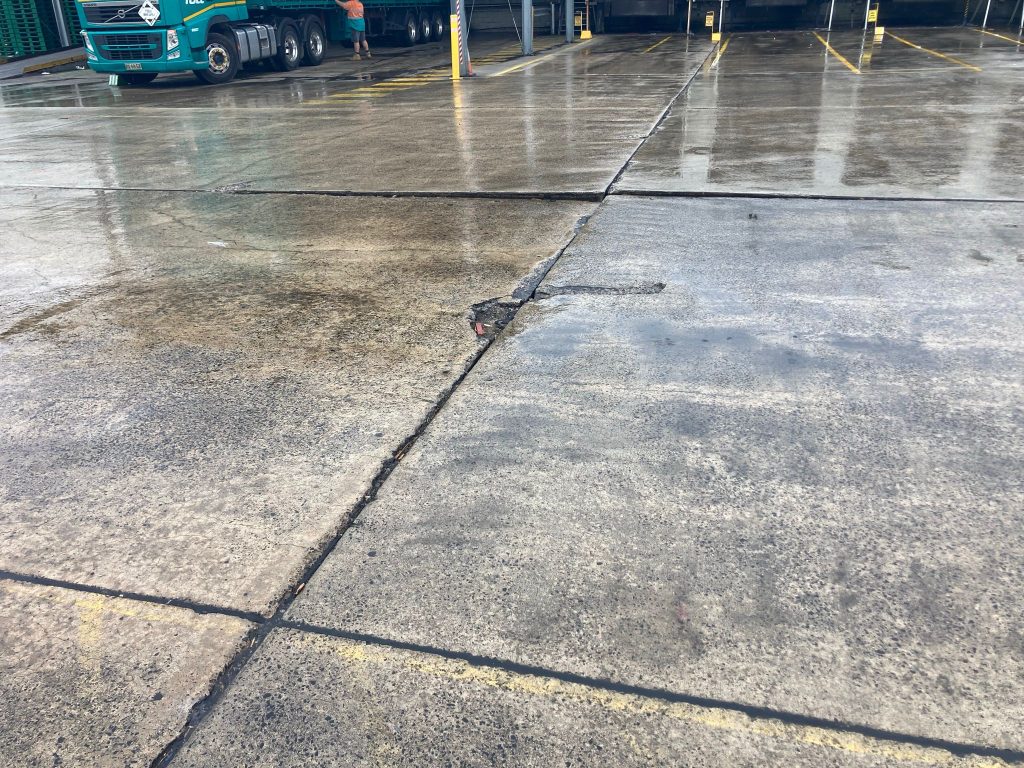
• Differential movement (two parts of the same slab behave differently)
The keyword is differential. A slab can tolerate small, uniform changes better than uneven changes. Uneven support is what tends to create visible symptoms inside the home.
Why Sydney homes can be prone to slab movement
Sydney’s building stock is diverse — everything from older terraces to newer slab-on-ground builds — but the risk factors often rhyme:
• Reactive clay behaviour in some areas (wet = swell, dry = shrink)
• Drainage problems that concentrate water near footings
• Plumbing leaks that saturate soil under or beside the slab
• Tree roots are changing soil moisture or physically influencing the ground
• Poorly compacted fill in certain spots (common around extensions, trenches, or services)
You don’t need to diagnose the cause perfectly as a homeowner. You just need to recognise when changes are consistent with movement so you can document and escalate early.
The early warning signs homeowners miss (and why they matter)
A single symptom can be misleading. What matters most is:
• A cluster of symptoms
• A change over time (getting worse, recurring, or spreading)
• A pattern that points to uneven support
1) “Cosmetic” cracks that keep coming back
Many homeowners patch a crack, paint over it, and move on. If the same crack reappears in the same place (or close by), it can be a sign the underlying movement hasn’t stopped.
Watch for:
• Cracks that reopen after patching
• Cracks that lengthen over months
• Hairline cracks that turn into wider cracks
2) Diagonal cracks from the corners of doors and windows
Diagonal cracking that radiates from the corner of an opening can be a sign of stress concentration — and can show up when parts of a wall are moving differently to others.
Not every diagonal crack is structural, but it’s a classic “pattern crack” worth monitoring carefully, especially if it’s new or growing.
3) Step cracking in brickwork (especially outside)
Step cracks follow mortar joints in a stair-step pattern. They’re easier to spot on brick veneers and can indicate differential movement.
If you see step cracks outside, take dated photos. External symptoms are often more meaningful than a single internal hairline crack.
4) Doors that suddenly stick (or suddenly swing open)
Doors are surprisingly useful “movement detectors” because they respond to small changes in frame shape.
Pay attention to:
• A door that used to work fine starts sticking within weeks
• Multiple doors in the same area change at the same time
• A door won’t latch unless you lift it, force it, or adjust the strike plate
• A door swings open or shut by itself because the floor is no longer level
One sticky door can be a humidity or a hinge issue. Several changes together can be a bigger clue.
5) Gaps that appear at skirtings, cornices, or architraves
These are subtle and easy to miss because they’re “quiet” signs.
Look for:
• A widening gap between the skirting and the floor
• Cornice separation where the wall meets the ceiling
• Architraves pulling away from the wall around doors/windows
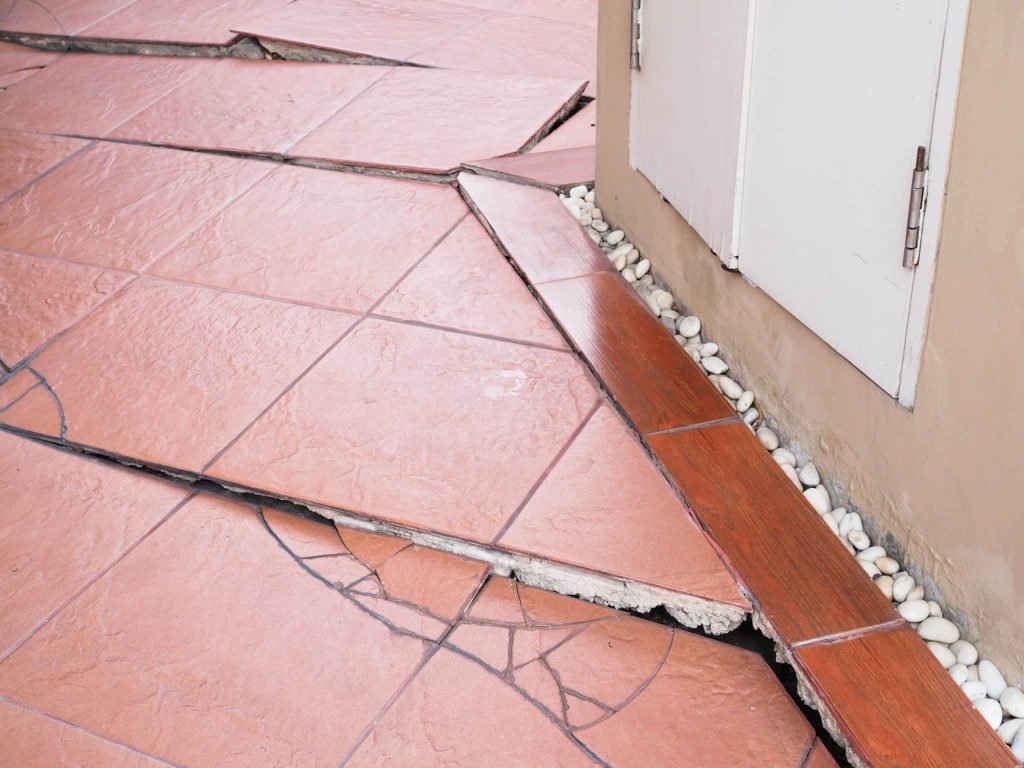
6) Cracked tiles, tile “lipping”, or grout lines opening in one zone
Tiles don’t like movement. But again, context matters.
More concerning patterns:
• A cluster of cracked tiles in one corner/room
• A ridge you can feel underfoot where two tiles no longer sit level
• Grout that repeatedly cracks along the same line
Less concerning (usually):
• A single cracked tile from an impact
• Isolated grout cracking near a doorway with heavy traffic
7) A floor that feels “off” — but only in certain pathways
People often describe this as:
• “It feels like I’m walking slightly downhill”
• “The ball rolls to the same side”
• “The chair legs rock in one spot”
An uneven feel that’s localised can align with a drop or heave in one portion of the slab.
If you’re exploring solutions down the track, a calm next step is learning about options for stabilising a concrete floor slab.
After heavy rain: what to check inside and outside
In Sydney, rainfall events (and what happens to stormwater afterwards) can make movement symptoms show up quickly — or reveal an issue that was already developing.
Inside checks (10 minutes)
• Walk the same hallway or room edges barefoot and notice any new “tilt” feeling
• Check doors that were previously normal
• Look for new hairline cracks at window/door corners
• Re-check any known cracks for widening or lengthening
Outside checks (10 minutes)
• Look for ponding water near the slab edge after rain
• Check downpipes and stormwater connections for overflow
• Note soggy soil patches that don’t dry out
• Look for new gaps between paths/driveways and the house
• Check for visible erosion channels where water is running toward the house
The goal isn’t to panic after every storm. It’s to notice “new and different” patterns.
Question: Are cracks after rain a sign that my slab is moving?
Sometimes. Rain can change soil moisture quickly, especially where drainage sends water to one part of the home. If cracks appear (or noticeably worsen) after wet weather, that’s a useful clue — particularly if it repeats across multiple rain events. If the cracks stabilise and don’t change again, it may have been a one-off shrink/swell cycle. The safest approach is to document it and watch for progression.
A simple monitoring plan (that actually helps)
You don’t need fancy tools to create useful evidence. You just need consistency.
Your 30-day “watch and document” plan
• Take clear photos of each crack (include a coin or ruler for scale)
• Label the photo with a date (your phone usually does this automatically)
• Note location (e.g., “laundry door corner” or “north wall lounge”)
• Re-check weekly for 4 weeks
• Record any door/window changes (date + what changed)
If you want to measure crack width more consistently, you can lightly mark the crack ends with pencil and note the date. Avoid forcing anything open/closed if it suddenly resists — that can worsen damage.
Question: How do I tell if a crack is “getting worse”?
Look for movement over time, not just size. Warning signs include cracks that:
• lengthen (grow at the ends)
• widen (even slightly, but steadily)
• branch into new cracks nearby
• reopen after patching
• appear alongside new door/window issues in the same area
Common “false alarms” (and how to think about them)
It’s helpful to know what can mimic slab movement so you don’t spiral.
Seasonal swelling in timber doors
Sydney’s humidity can swell timber doors slightly. If a door sticks only on very humid days and returns to normal later, it’s less suggestive of slab movement.
Minor plaster shrinkage cracks in newer builds
As homes settle and materials cure, small plaster cracks can occur. These are often hairline, don’t grow, and don’t come with other symptoms.
One-off tile or grout cracking
A single cracked tile can be impact-related. Repeating cracks in a line, or a cluster in one zone, are more meaningful.
What causes slab movement most often (high level)
Homeowners don’t need to become geotechnical engineers, but it helps to understand the main buckets:
• Moisture variation in reactive soils (wet/dry cycling)
• Concentrated water near the slab (stormwater, downpipes, surface grading)
• Plumbing leaks (often “quiet” until symptoms build)
• Root influence (moisture drawdown or uplift pressure)
• Localised fill/compaction issues (especially around trenches and extensions)
Different causes can produce similar symptoms, which is why pattern + progression matters more than trying to guess the single cause.
Question: Is slab movement always serious?
No. Buildings can move slightly without becoming unsafe. The concern rises when movement is differential (uneven), ongoing, and creating compounding symptoms (cracks + doors + floor slope changes). Early identification is valuable because it can reduce secondary damage (like recurring repairs to plaster, tiles, and joinery).
When to escalate beyond monitoring
If any of the below apply, it’s time to get a professional opinion rather than “wait and see”:
• Cracks are widening quickly or appearing in multiple rooms
• Doors/windows change noticeably over a short period
• You see step cracking in external brickwork that’s progressing
• Floors feel increasingly sloped or bouncy in a specific area
• You suspect a plumbing leak (unexplained damp, musty smells, sudden water use changes)
• You notice persistent ponding/erosion near the slab edge after rain
• A crack is accompanied by new gaps at cornices/skirtings in the same zone
A practical “next step” for many homeowners is understanding slab jacking so you can have more informed conversations about what stabilisation may involve if movement is confirmed.
What you can do right now to reduce risk (without “DIY structural repairs”)
This is about sensible housekeeping that can reduce the drivers of movement.
• Keep stormwater moving away: ensure downpipes discharge to the appropriate drainage
• Avoid constant soaking at one edge: don’t overwater garden beds right next to the slab
• Address obvious surface grading issues so water doesn’t flow toward the house
• Fix leaking outdoor taps and irrigation
• Watch for plumbing warning signs and investigate early
• Maintain consistent moisture where reactive soils are likely (avoid extreme wet/dry swings around the perimeter)
For general guidance on acceptable building tolerances (useful context when you’re deciding whether something is “within normal expectations”), the NSW Government’s Guide to Standards and Tolerances is a helpful reference.
What “help for sloping floors” can look like (without turning this into a service pitch)
Sloping floors can come from different causes — not all are slab-related —, but when a slab has moved unevenly, the broad goal is to restore more uniform support under the affected area.
If your monitoring points to slab-related movement, it can be useful to read up on help for sloping floors in a way that focuses on the “why” and “how” rather than quick cosmetic fixes.
FAQ
How do I know if my home has slab movement or just normal settling?
Normal settling tends to be minor and stable. Slab movement is more likely when you see a pattern of changes that progress over time (cracks + doors/windows + uneven floor feeling), especially after rain or across seasons.
Which cracks are most concerning?
Cracks that change (widen/lengthen), repeat after patching, run diagonally from door/window corners, or show up alongside sticking doors and new gaps at cornices/skirtings are more worth escalating.
Why do doors stick when the slab moves?
Even small shifts can slightly twist a frame opening. A door that once had even clearance can begin rubbing at the top corner or latch side when the geometry changes.
Are uneven floors always caused by the slab?
Not always. Floor slope can also relate to subfloor framing (in raised-floor homes), renovations, or localised issues. The clue that points more toward slab involvement is a cluster of symptoms in the same zone.
Should I patch cracks straight away?
Cosmetic patching is fine if you understand it may hide progression. If you’re trying to work out whether movement is ongoing, document and monitor first (photos + dates). If the crack is sharp, shedding material, or near a safety issue, address that promptly.
What should I check first after heavy rain?
Start with drainage: downpipes, stormwater connections, ponding near the slab edge, and any erosion channels that send water toward the house. Then check whether internal symptoms (doors/cracks) changed around the same time.