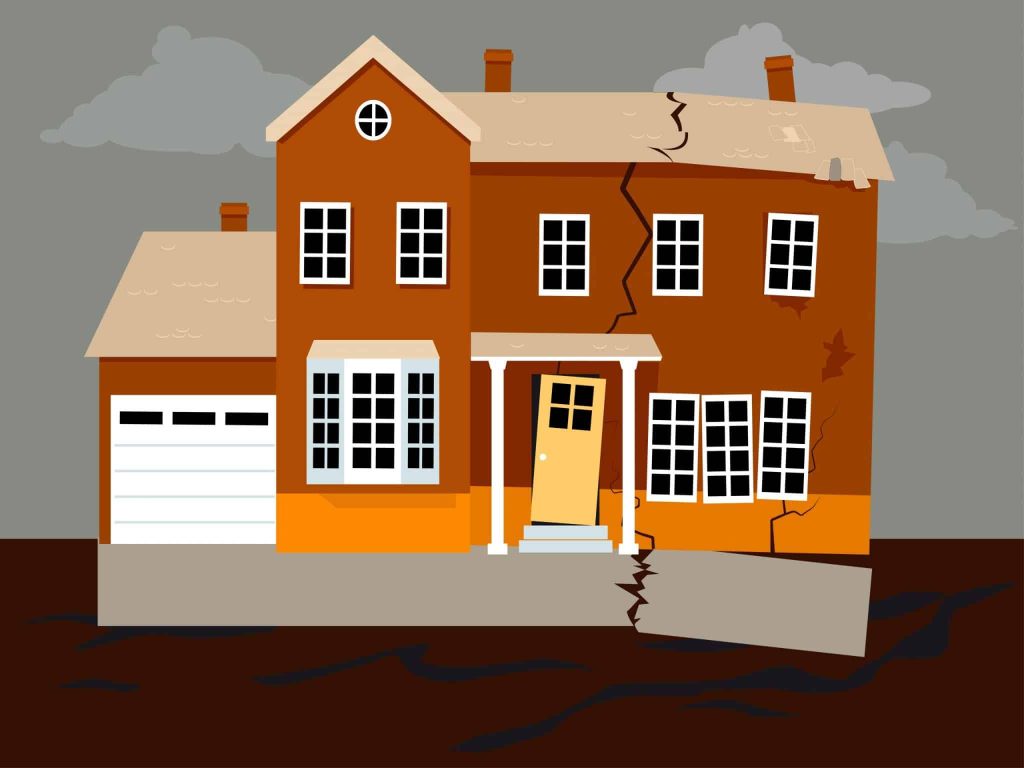
The most common signs of slab movement include cracks appearing in walls and floors, uneven surfaces throughout the building, and sticking doors or windows. Gaps forming around structural elements are also a key indicator. Spotting these issues early gives property owners a real chance to act before damage progresses.
Slab movement occurs when the ground beneath a concrete foundation shifts, settles, or erodes. It can affect residential homes, commercial buildings, and industrial structures across Australia. Knowing what these signs look like and why they appear helps property owners make informed decisions about when to seek professional help.
Key Takeaways
- Cracks in walls, ceilings, and floors are often the first visible sign that a slab has started to shift beneath the structure.
- Uneven or sloping floors indicate that part of the concrete slab has settled or dropped, which affects both safety and daily use of the building.
- Sticking doors and windows often indicate that the building frame has shifted due to foundation movement below.
- Acting on these warning signs early reduces repair costs significantly and prevents the movement from causing broader structural damage.
How Do Cracks Indicate Signs of Slab Movement in Buildings?
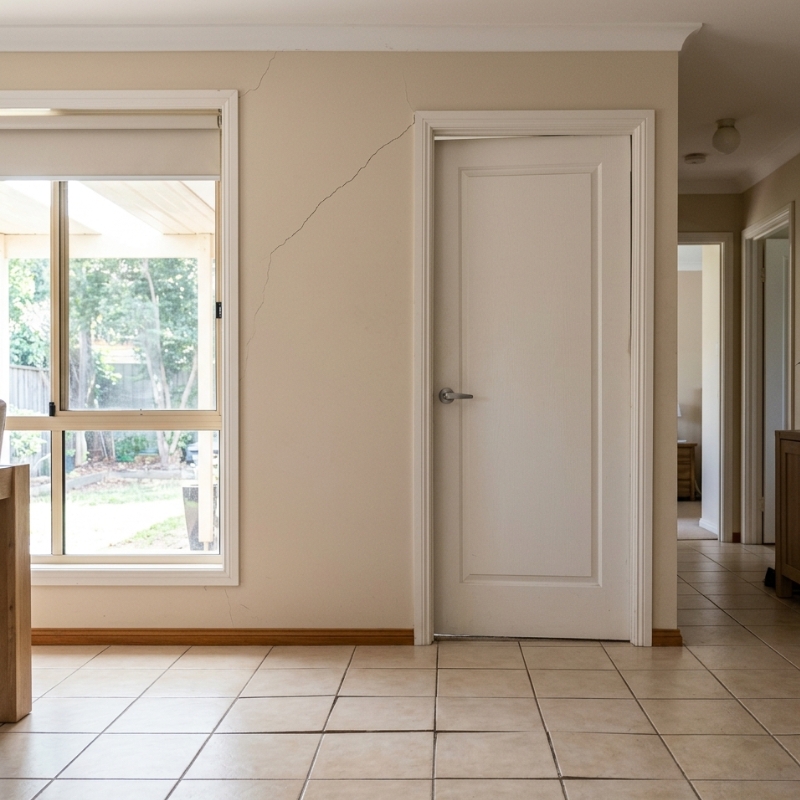
Cracks are usually the first visible sign that something is happening beneath a structure. They appear when the slab shifts unevenly and place stress on walls, floors, and ceilings above it. The pattern, direction, and width of a crack can reveal a lot about what is occurring at the foundation level.
Not all cracks signal a serious problem. Thin, stable cracks in plaster may simply reflect normal building movement over time. The ones that warrant attention are cracks that widen progressively, recur after patching, or form in recognisable structural patterns. Diagonal cracks running from door and window corners are a common early indicator of differential settlement, where one section of the slab has dropped more than another.
Common crack types linked to slab movement include:
- Internal wall cracks that run diagonally from the corners of door and window openings.
- Ceiling cracks that extend in a straight or branching line across a room.
- Concrete floor cracks that appear near walls or along existing slab joints.
- Stair-step cracks in brickwork that follow mortar lines diagonally across the wall.
- Cracks around door and window frames that continue to widen over time.
- Expansion joint separation where concrete sections pull visibly apart.
Crack width is a practical measure of severity. Cracks wider than 2mm that continue to grow indicate ongoing movement and should be assessed professionally. Horizontal cracks in masonry walls can indicate lateral soil pressure rather than simple settlement, a condition that is different and often more serious. You can read more about how these patterns relate to cracked walls and what they typically mean for a building’s foundation.
Recurring cracks are a strong red flag. If a crack returns after repair, the underlying movement has not been resolved. Australian Standard AS 2870, which covers residential slabs and footings, classifies reactive soil conditions across site classifications from A through to P, providing a framework for understanding foundation risk before and after construction.
What Causes Signs of Slab Movement in Buildings Over Time?
Slab movement rarely happens suddenly. It develops gradually as conditions beneath the foundation change over months and years. Australian soil types and climate patterns create a particularly active environment for this kind of movement, and many regions face ongoing risk throughout a building’s life.
Reactive clay soils are one of the most significant contributors across the country. These soils expand when they absorb moisture and contract sharply during dry periods. Repeated seasonal cycles of swelling and shrinking place constant stress on concrete slabs. Geoscience Australia’s research on ground deformation and soil movement identifies large portions of eastern and southern Australia as high-risk zones for soil-driven foundation movement.
Common causes of slab movement in Australian buildings include:
- Reactive clay soil that swells and contracts with seasonal moisture changes.
- Drought and heavy rainfall cycles that repeatedly shift soil volume.
- Poor drainage that allows water to pool and erode soil beneath the slab.
- Tree root activity that removes moisture from soil and creates subsurface gaps.
- Ground settlement in areas with fill material or poorly compacted subgrade.
- Soil erosion caused by underground water movement or leaking pipes.
- Inadequate site preparation during the original construction phase.
Older buildings carry a higher risk because construction standards have improved significantly over time. Sites that were not adequately compacted or where soil classification testing was limited may show movement decades after the original build. The National Construction Code, maintained by the Australian Building Codes Board, now sets minimum requirements for footing design based on site classification, but older buildings predate many of these standards.
Heavy rain following a dry period is particularly damaging. Dry soil shrinks and creates voids beneath slabs. When water arrives, the soil expands unevenly and pushes against the foundation in ways it was not designed to accommodate. This pattern is well documented in areas with black cracking clay, which covers large parts of Queensland, NSW, and Victoria. The relationship between these soil conditions and subsidence is one that building owners in these regions should understand clearly.
How Can Uneven Floors Indicate Slab Movement in Buildings?
Uneven floors are a reliable physical indicator that part of the foundation has moved. When a section of slab settles or drops, the floor surface above it also settles or drops. The change can be subtle at first, presenting as a gentle slope or a small dip in one area, but it often becomes more noticeable over time.
In residential properties, occupants may notice that furniture sits unevenly, or that water pools in unexpected spots on tiled floors. In commercial and industrial buildings, even minor floor-level differences can affect equipment alignment, the safe movement of goods, and daily workflow. These are functional concerns that go well beyond appearance.
Signs to look for in floor surfaces include:
- Sloping floors that tilt noticeably toward one wall or corner of a room.
- Sunken sections where part of the floor has dropped lower than the surrounding area.
- Visible height differences at doorways or transitions between rooms.
- Cracked or lifted floor tiles, particularly near walls or at the centre of a room.
- Gaps are forming between the flooring materials and skirting boards along the base of walls.
- Movement felt underfoot when walking across particular areas of the floor.
A floor-level survey measures the exact amount of movement and identifies which sections of the slab are affected. This data helps professionals determine whether movement is isolated or widespread, and which repair approach is most appropriate. The sinking floors page outlines how these surveys work and what they typically reveal. Commercial buildings often show more pronounced floor-level changes because large floor plates amplify even minor slab deflection across their span.
When Should Property Owners Act on Signs of Slab Movement in Buildings?
Acting early consistently produces better repair outcomes. Addressing foundation movement before it progresses to significant structural damage is far less costly than managing the consequences of delaying it. Monitoring the building and acting when multiple symptoms appear is the most practical approach for any property owner.
The Queensland Building and Construction Commission notes that foundation and slab defects are among the most common categories of serious structural complaints received from homeowners. NSW Fair Trading similarly records structural building issues as a leading reason for post-construction disputes. These patterns confirm that foundation movement is widespread, not rare.
A professional assessment is recommended when:
- Cracks continue to widen or reappear after previous repairs.
- Multiple symptoms appear together, such as cracks alongside uneven floors and sticking doors.
- Floors become noticeably uneven, and the difference is measurable without specialist equipment.
- Doors and windows stick, jam, or no longer align properly within their frames.
- Gaps appear between walls and ceilings, or between previously flush structural elements.
- Water drainage problems develop near or beneath the building footprint.
Delaying repairs allows movement to continue unchecked. Secondary damage accumulates across wall finishes, plumbing, flooring, and framing as the slab continues to shift. Why concrete levelling matters for long-term building performance becomes clear when property owners see how quickly repair costs escalate once structural elements are involved. The Housing Industry Association’s housing data for Australia shows the significant cost gap between preventive maintenance and reactive structural repair across residential building types.
Can Signs of Slab Movement in Buildings Lead to Structural Damage?
Untreated slab movement does not stay contained to the foundation. As the slab continues to shift, the effects move progressively upward through the structure. Walls, roof lines, window frames, plumbing, and flooring all begin to show the impact if the underlying movement is not addressed.
The Victorian Building Authority identifies slab and footing failure as one of the most serious structural defect categories in residential construction. The Western Australia Building Commission similarly lists foundation movement among the key reasons buildings require major structural remediation after inadequate site assessment or maintenance. Both authorities point to early intervention as the most effective way to limit long-term damage.
Potential consequences of untreated slab movement include:
- Progressive cracking in load-bearing walls and structural columns throughout the building.
- Misaligned doors and windows that can no longer open, close, or latch properly.
- Wall separation where internal walls pull away from external ones at junctions.
- Plumbing damage from pipes cracking or joints separating beneath the slab.
- Flooring deterioration, including tile cracking, grout failure, and timber warping.
- Reduced property value due to visible and documented structural issues.
- Safety risks to occupants in buildings with compromised structural integrity.
The cost difference between early repair and major structural remediation is significant. Slab jacking services applied at the right time restore support beneath a settled slab at a fraction of the cost of full slab replacement or underpinning. Foundation issues rarely stabilise on their own. The soil conditions driving movement continue unless they are treated directly, which is why professional assessment and repair are both more reliable and more cost-effective than ongoing monitoring without action.
How Can Concrete Leveling Help Correct Slab Movement?
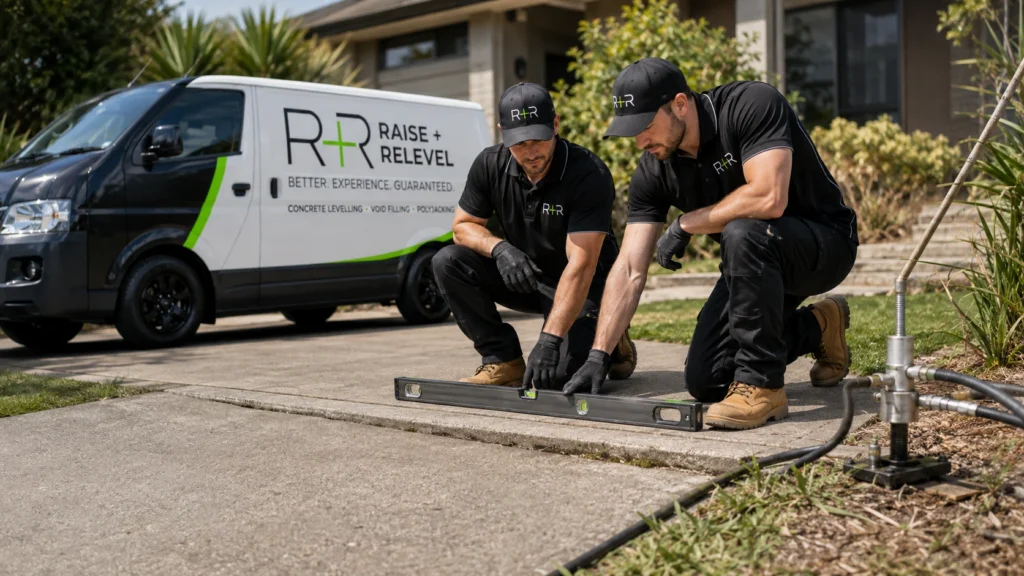
Concrete levelling restores support beneath settled slabs by addressing the voids and soil instability causing the problem. Rather than removing and replacing the slab, levelling methods lift and stabilise the existing structure with minimal disruption to the building and its occupants.
Several repair methods are available, and a professional assessment determines which approach best suits the specific site conditions. Residential concrete levelling services cover a range of residential applications, while industrial solutions address the different demands of commercial and heavy-use environments.
| Issue | Concrete Levelling Solution |
| Uneven or sloping floors | Slab lifting and re-levelling |
| Voids beneath the slab surface | Void filling |
| Localised settlement areas | Slab jacking |
| Unstable or reactive soil | Specialised grouting |
| Trip hazards on the surface | Concrete re-levelling |
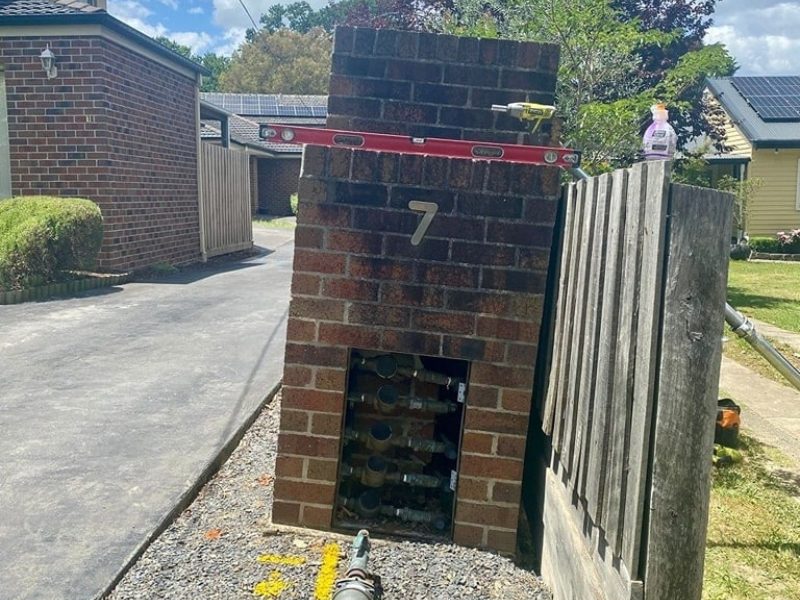
Slab jacking injects material beneath the slab under controlled pressure to fill voids and lift the concrete back toward its original level. Specialised grouting strengthens soil around and beneath the foundation, improving long-term stability. Void filling targets hollow spaces that form when soil erodes, washes away, or compacts unevenly beneath the slab.
Each method addresses the root cause rather than just the surface symptom, which is why outcomes are more durable than those achieved with surface patching alone. Property owners dealing with driveway or path levelling issues can also explore these approaches for external concrete structures around the home. All repair decisions at Raise and Relevel begin with a site assessment to ensure the chosen method matches the actual conditions on that property.
Conclusion
Catching signs of slab movement early is the most reliable way to protect a building’s structural integrity and keep repair costs manageable. Cracks in walls and floors, uneven surfaces, sticking doors and windows, and gaps around structural elements are all signals worth taking seriously. Australian soil conditions mean these issues are more common than many property owners expect, and they rarely resolve on their own.
Concrete levelling, slab jacking, void filling, and specialised grouting all offer practical ways to restore foundation stability without the cost and disruption of full slab replacement. If you have noticed any of these warning signs, contact Raise and Relevel for a professional assessment.
Frequently Asked Questions
What Are the Most Common Signs of Slab Movement in Buildings?
The most common signs include cracks in walls, ceilings, and floors; uneven or sloped flooring; sticking doors and windows; and visible gaps where structural elements have separated. When several of these symptoms occur simultaneously, they often indicate active foundation movement rather than cosmetic settling. A professional inspection is recommended when multiple symptoms are present together.
Do Cracks Always Mean There Is Slab Movement?
Not all cracks indicate slab movement. Thin, stable cracks in plaster or render can occur naturally as a building settles in the years following construction. Cracks that widen over time, keep returning after repair, or form in a stair-step pattern across brickwork are more likely to point to ongoing movement beneath the foundation. These should be assessed by a professional who can determine whether the cause is structural or cosmetic.
Can Slab Movement Affect Doors and Windows?
Yes, slab movement regularly affects doors and windows. As the foundation shifts, the building frame above it moves with it, which alters the shape of the door and window openings. Frames that were once square become slightly racked, causing doors and windows to stick, fail to latch, or develop uneven gaps along their edges. This symptom almost always appears alongside other signs, such as cracking or uneven floors.
What Causes Slab Movement in Residential and Commercial Buildings?
Reactive clay soils are a leading cause across much of Australia because they expand and contract with seasonal moisture changes. Poor drainage, tree root activity drawing moisture from the soil, leaking pipes causing erosion beneath the slab, and inadequate compaction during original construction all contribute. Drought and heavy rainfall cycles intensify these effects across much of the country, particularly in areas with black cracking clay.
How Can Slab Movement Be Repaired?
Repair options depend on the cause and extent of movement identified during a professional inspection. Slab jacking lifts settled sections by injecting material beneath the concrete to fill voids and restore the level. Specialised grouting stabilises reactive or loose soil around the foundation. Void filling addresses hollow spaces that form when soil beneath the slab erodes. In some cases, a combination of methods is used to address both surface symptoms and the underlying soil conditions driving the movement.
Sources
- Geoscience Australia — Ground Deformation and Soil Movement: https://www.ga.gov.au/scientific-topics/hazards/geohazard-monitoring/ground-deformation
- Australian Building Codes Board — National Construction Code: https://www.abcb.gov.au/resource/national-construction-code
- Victorian Building Authority — Structural Building Issues: https://www.vic.gov.au/sites/default/files/2025-02/Research-Analysis-Non-cladding-Building-Defects.pdf
- NSW Fair Trading — Building Defects: https://www.fairtrading.nsw.gov.au/housing-and-property/building-and-renovating/problems-with-a-building-project/building-defects
- Western Australia Building Commission — Building and Renovating: https://www.buildingcommission.wa.gov.au/building-and-renovating/getting-started