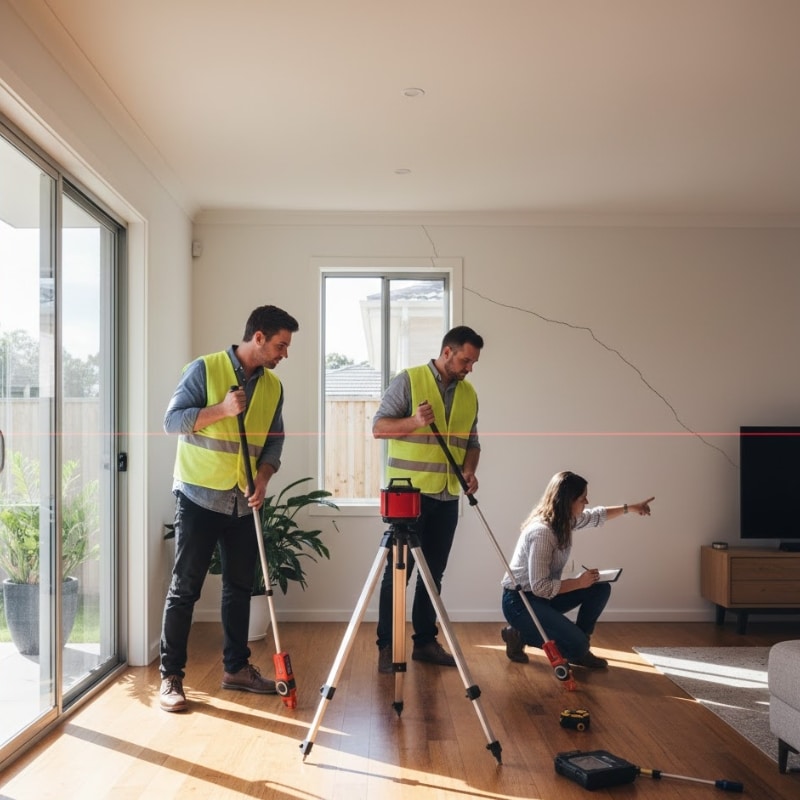
Unlevel buildings are a widespread structural concern across Australia, affecting residential homes, commercial facilities, industrial warehouses and older public buildings. Because Australia contains some of the most reactive soils in the world — combined with extreme weather cycles, long drought periods and sudden rainfall — building movement is a common and often unavoidable reality.
While some unevenness is minor and mainly aesthetic, other cases indicate serious subsidence, foundation settlement, slab heave, or structural distortion. These issues may not only compromise building safety but also lead to costly repairs if left unaddressed.
This guide explains how engineers diagnose unlevel buildings in Australia, including:
- Warning signs
• Australian soil and climate influence
• Testing methods used by structural specialists
• How to differentiate superficial unevenness from serious structural movement
If at any point you need a professional assessment or repair advice, you can explore professional unlevel building repair solutions in Australia for expert support.
Why Buildings Become Unlevel in Australia
Australia’s ground conditions vary dramatically by state, region and climate zone. This diversity plays a major role in why buildings shift, tilt or become unlevel.
Key contributors include:
- Reactive clay soil expansion and contraction
• Long drought periods causing soil shrinkage
• Heavy rainfall causing ground swelling
• Soil erosion under slabs or piers
• Tree root moisture extraction
• Ageing footing systems
• Inadequate drainage
• Leaking pipes or stormwater
• Poor compaction during construction
Understanding these influences helps clarify why a building becomes unlevel before determining how to diagnose it.
For detailed soil movement insights, refer to the national geological data provided by Geoscience Australia.
Engineering Signs That a Building Is Unlevel
Before any formal tests are performed, structural experts look for visual and measurable indicators that a building is no longer sitting evenly.
1. Sloping or Uneven Floors
One of the most common symptoms of an unlevel building is a change in floor slope. This can present as:
- A noticeable lean towards one side of a room
• A dip or hump in floorboards
• A “rolling ball” effect where objects naturally move
• Visible floor height differences between rooms
Floor deviation often reflects underlying foundation movement.
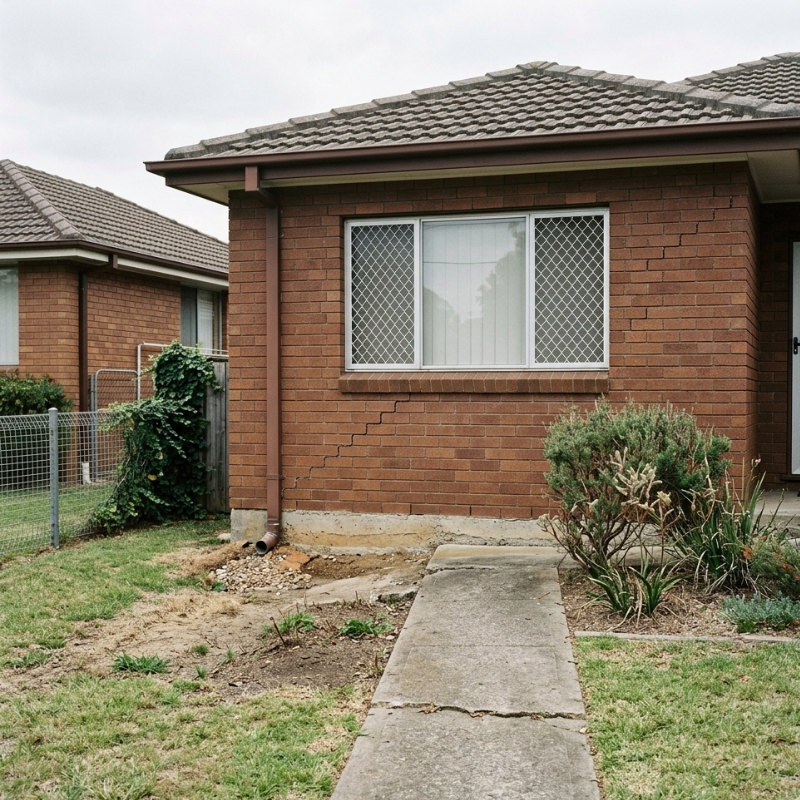
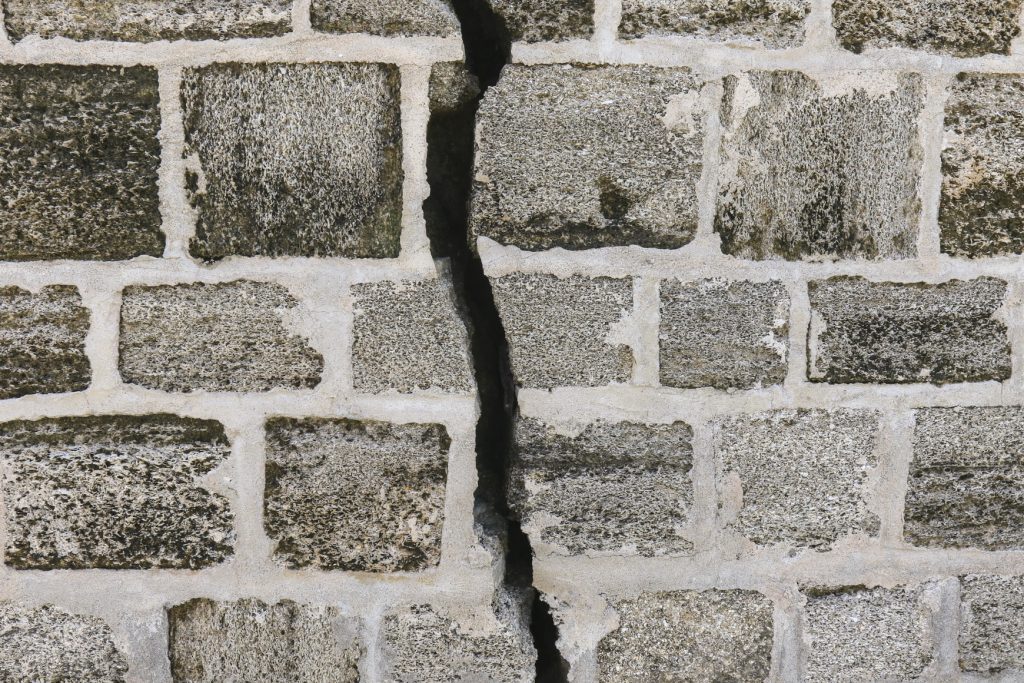
2. Cracked Internal or External Walls
Wall cracks — especially diagonal, horizontal or stepped mortar cracks — often indicate differential settlement or soil movement.
Common structural crack patterns include:
- Cracks from the window or door corners
• Separation between walls and ceilings
• Gaps between brickwork
• Step cracking in external walls
These cracks help engineers understand which parts of the building have shifted.
3. Sticking Doors and Windows
Frames may twist or distort due to building movement. Signs include:
- Doors catching at the top or bottom
• Windows no longer open smoothly
• Uneven gaps around frames
These symptoms can indicate rotation or settlement in a specific section of the building.
4. Gaps Around Skirting Boards and Architraves
Movement in walls or floors often results in separation at joints, particularly at skirting boards or door trims. These gaps can show where the building has lifted or sunk.
5. Visible Foundation or Pier Movement
In older homes with stumps or piers, movement can often be observed by checking underfloor spaces:
- Sinking stumps
• Tilted piers
• Gaps between bearers and stumps
• Timber decay
• Moisture pooling beneath the house
6. Roofline Distortion or Sagging
If the roof has shifted or sagged, it may be due to:
- Pier movement
• Slab rotation
• Wall deformation
• Structural load transfer anomalies
This is a higher-risk indicator requiring immediate attention.
Engineering Testing Methods Used to Diagnose Unlevel Buildings
Professional diagnosis involves more than visual inspection. Engineers use a structured, technical approach to confirm the extent and direction of building movement.
Below are the most common engineering-level tests performed in Australia.
1. Laser Levelling (Cross-Floor Height Mapping)
Laser levelling is the gold standard for diagnosing unlevel floors.
It provides:
- Millimetre-accurate measurements
• A full map of floor height variation
• Identification of dips, peaks or sloping areas
• Data to determine exact movement direction
Laser data is typically compared against previous measurements (if available) to assess ongoing movement.
2. Dumpy Level Survey
A dumpy level is a precision optical instrument used to measure differential floor heights or external wall settlement.
Engineers use it to:
- Measure changes in elevation across rooms
• Detect vertical displacement
• Determine slope gradient
• Validate suspected subsidence
3. Floor Flatness Tolerance Assessment (FFL Testing)
FFL (Finished Floor Level) standards help determine whether a floor is within acceptable construction tolerances.
Testing includes:
- Measuring floor deviation
• Assessing whether slope exceeds acceptable limits
• Evaluating structural compliance
If the floor exceeds tolerance, it may indicate subsidence or slab heave.
4. Moisture Testing & Soil Moisture Profiling
Soil moisture plays a major role in building movement in Australia.
Moisture assessment helps identify:
- Reactive clay swelling
• Soil shrinkage zones
• Leaks under or near the foundation
• Incorrect stormwater drainage patterns
Consistent moisture imbalance is a strong indicator of future or current building movement.
5. Crack Monitoring & Measurement
Engineers monitor cracks over time with:
- Crack width gauges
• Digital callipers
• Tracking markers
• Time-lapse measurement logs
If cracks continue widening, structural movement is ongoing and requires intervention.
6. Underfloor Structural Inspection
In stump-and-bearer homes, underfloor inspection reveals:
- Pier displacement
• Rotting or sinking stumps
• Excess moisture
• Structural loading issues
This is critical in older homes across NSW, VIC and QLD.
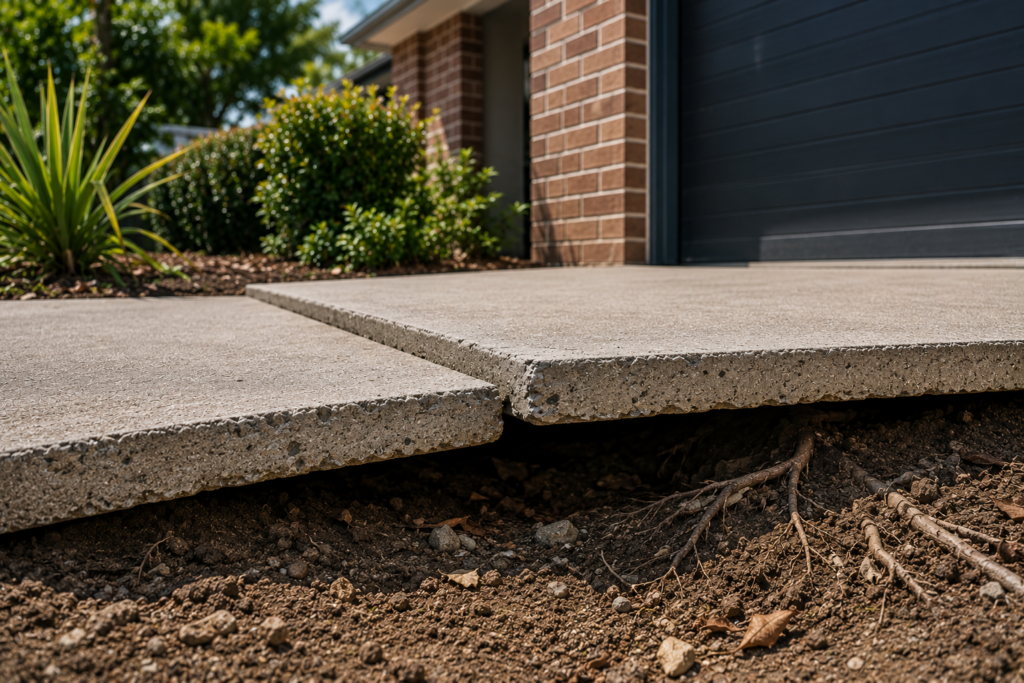
7. Slab Inspection for Heave or Settlement
Slab-on-ground homes may experience:
- Edge lifting
• Centre sinking
• Void formation
• Heaving due to moisture imbalance
Engineers examine slab edges, internal control joints and the underside (if accessible) to understand deformation patterns.
8. Structural Load Path Analysis
Load path evaluation ensures the building is distributing weight correctly.
Engineers review:
- Alignment of load-bearing walls
• Movement of beams or joists
• Uneven weight distribution
• Transfer of loads creating rotation or tilt
How Australian Soil and Climate Influence Building Level
Australia has some of the most diverse and reactive soil conditions in the world. Understanding these is crucial for diagnosis.
Reactive Clay Soil Zones (NSW, VIC, SA, QLD, ACT)
Features:
- High expansion when wet
• Significant shrinkage during drought
• Causes slab movement, pier sinking, and wall cracking
Sandy Coastal Soil (WA, QLD, NSW)
Often leads to:
- Erosion
• Loss of support under slabs
• Voids forming beneath foundations
Loam and Mixed Soils (TAS, SA, VIC)
More stable, but still affected by:
- Drainage issues
• Waterlogging
• Settlement beneath piers
Deep Clay Deposits (Canberra, Melbourne)
These regions experience:
- Extreme seasonal movement
• Rapid structural shifts
• Slab heave during wet seasons
When an Unlevel Building Becomes a Structural Emergency
Seek urgent assessment if you observe:
- Rapidly worsening floor slope
• Cracks wider than 5 mm
• Sticking doors in multiple rooms
• Ceiling or cornice separation
• Visible foundation sinking
• Slab separation from walls
• External brick step-cracking
These signs indicate active subsidence requiring professional stabilisation.
Repair Options After Diagnosis
Once engineers confirm the cause and severity, repair methods may include:
1. Resin Injection for Slab Lifting
A minimally invasive method used to raise and stabilise sinking slabs.
2. Underpinning
Used for major foundation settlement under brick buildings or commercial structures.
3. Releveling of Floors and Structures
Precise releveling lifts the structure back to its correct position.
For details on available solutions, explore and discover expert structural releveling options to understand repair suitability.
4. Replacing or Reinforcing Stumps or Piers
Common in Queenslanders and Victorian cottages.
5. Drainage Corrections
Prevents future soil instability.
6. Soil Stabilisation or Moisture Balancing
Used when reactive clay is the primary cause.
AEO-Friendly Q&A Section
How do I know if my building is unlevel?
Signs include floor slope, cracking walls, sticking doors and visible foundation movement.
What test do engineers use first?
Laser levelling or dumpy level measurements are typically the starting point.
Does an unlevel building always mean subsidence?
No, but subsidence is one of the most common causes.
Can an unlevel building be saved?
Yes — modern resin lifting and structural releveling methods can restore stability.
Is diagnosing an unlevel building expensive?
Assessments vary, but are far cheaper than a major structural failure.
Conclusion: Professional Diagnosis Is Essential for Structural Safety
Diagnosing an unlevel building is a complex task requiring engineering knowledge, soil behaviour understanding and precise measurement tools. Early assessment helps prevent further damage, reduces repair costs and ensures long-term safety.
Across Australia, property owners rely on comprehensive foundation and subsidence repair services available to accurately diagnose and stabilise unlevel structures, safeguarding both residential and commercial properties.