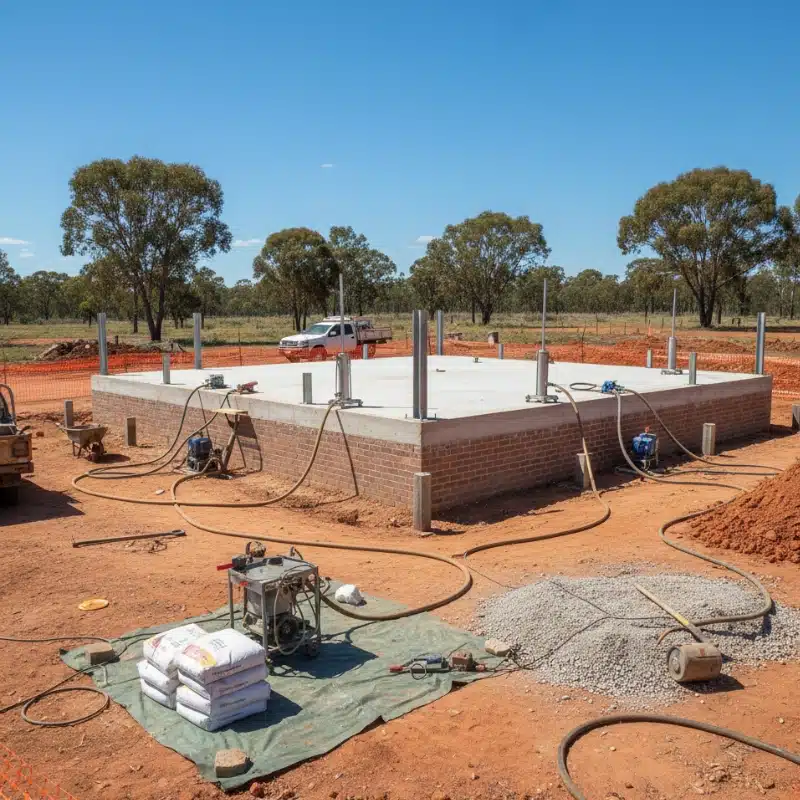
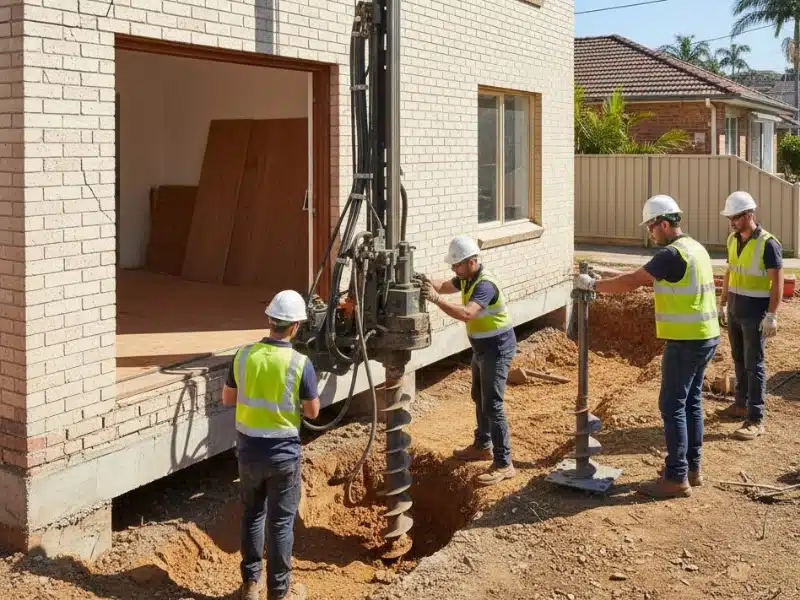
Underpinning foundations improve stability by transferring the weight of a building onto deeper, more stable ground that is less affected by movement. If your floors are sloping, walls are cracking, or the structure feels uneven, the underlying soil may no longer be providing adequate support — and underpinning may be required to restore stability.
Underpinning systems are engineered to strengthen buildings affected by ground movement by addressing the root cause beneath the structure, rather than simply repairing surface damage. In Sydney and across NSW, factors such as reactive clay soils, changing moisture levels, poor drainage, and legacy construction methods commonly contribute to foundation movement.
Rather than resorting to demolition or major reconstruction, many property owners across Sydney Metro now rely on modern underpinning solutions to stabilise their homes and buildings efficiently and safely.
Based in Botany and servicing all of NSW, Raise & Relevel specialises in underpinning solutions designed to restore structural stability with minimal disruption. In this article, you’ll learn what problems underpinning can resolve, how professionals assess foundation movement, and which underpinning methods suit different soil conditions found across Sydney and NSW.
What problems can underpinning foundations fix in a property?
Structural instability doesn’t always begin with something dramatic. Often, small shifts in your home’s footing develop into significant problems. Underpinning foundations are designed to correct or prevent issues caused by soil movement, poor drainage, or failed footings. Here’s what underpinning typically resolves:
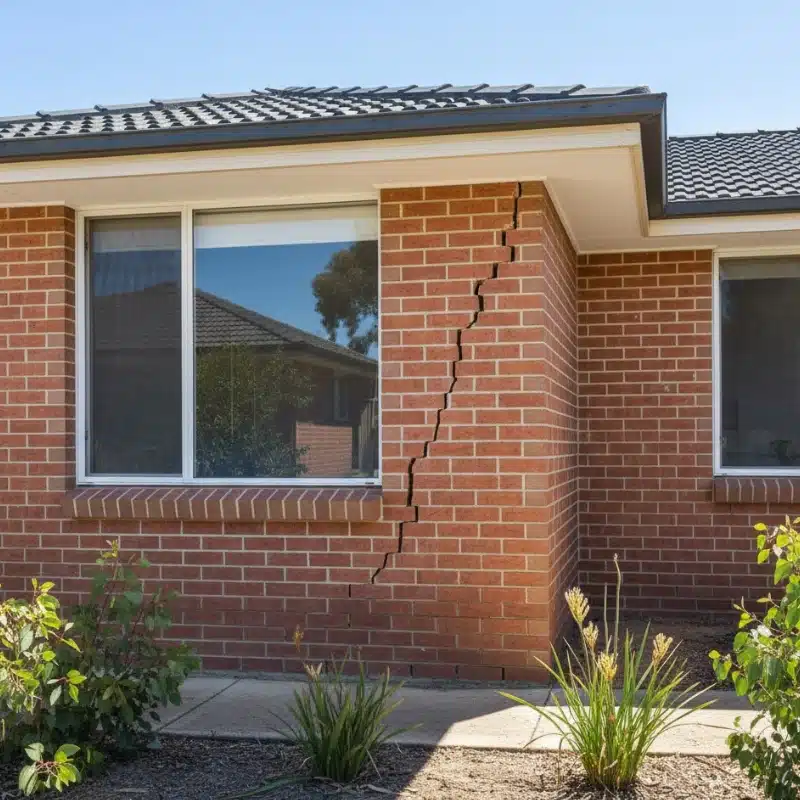
- Cracks in walls, particularly near doors, windows, or cornices — a common issue in older Sydney homes
- Sinking or uneven floors, especially in older homes
- Doors and windows that stick or no longer fit squarely
- Movement of brickwork, often seen as diagonal cracking
- Structural sagging on one side of the property
These issues are warning signs of deeper trouble beneath your foundation. If ignored, they can affect the entire building’s integrity. Reliable solutions for underpinning foundations in Sydney and across NSW provide tailored approaches that depend on the specific structural concern and ground conditions.
Why is subsidence one of the biggest reasons for underpinning foundations?
Subsidence is when the ground beneath a property compresses or collapses, leading to uneven support. It’s one of the most serious — and common — reasons homes require underpinning. This often happens due to:
- Dry weather conditions are causing clay soils to shrink
- Leaking pipes are softening the ground
- Poor compaction of soil during initial construction
- Tree roots are absorbing too much moisture
Once subsidence sets in, you’ll likely see diagonal wall cracks, floor sloping, or even roof movement. These are not cosmetic flaws — they’re structural failures in progress. That’s why early detection and engineered intervention matter. Modern underpinning techniques, such as screw piles and resin injection, are designed to re-support the structure without needing to dig up the whole site. This directly connects to decisions around choosing between house releveling and rebuilding, especially when cost and safety are both on the table.
How do professionals decide when underpinning is needed?
Not every crack or dip calls for underpinning. That’s where professional assessment makes the difference. Experts don’t just look at the damage — they assess the cause, soil behaviour, and structural integrity. The process usually involves:
- Site inspection and measuring floor levels
- Crack mapping and structural condition reporting
- Soil testing (borehole or cone penetrometer testing)
- Drainage and moisture analysis
- Historical movement review (via laser or digital levelling)
This multi-step approach helps determine if the movement is active, passive, or seasonal. It’s also key to selecting the correct underpinning method — whether you’re dealing with clay shrinkage or sand collapse.
Below is a summary of assessment techniques:
| Assessment Stage | Purpose | Typical Tools Used |
| Floor Level Checks | Identify uneven floors | Laser levels |
| Crack Width Monitoring | Track movement over time | Callipers, crack gauges |
| Soil Composition Testing | Analyse load-bearing conditions | Borehole, CPT testing |
| Moisture Mapping | Locate water influence | Moisture meters |
| Structural Load Analysis | Ensure safe load transfer post-fix | Engineering software |
By combining these insights, professionals develop a tailored approach that suits both the structure and the terrain. The impact of ground subsidence on Sydney homes becomes clear during this rigorous diagnosis phase.
Which underpinning foundation methods work best for soil conditions?
Different soil types behave differently under load and moisture changes. Selecting the correct underpinning method depends on how the ground responds to environmental conditions.
Common underpinning techniques used across Sydney and NSW include:
- Resin Injection
Suitable for sandy or loose soils. The expanding resin fills voids and compacts the ground with minimal disruption. - Screw Piles
Ideal for reactive clay soils. Installed deep into stable strata to provide reliable load transfer and long-term support. - Concrete Underpinning
A traditional method is used where soil conditions are stable, but footings have failed. Often more invasive and labour-intensive.
Each method has specific applications, and long-term performance depends on accurately matching the solution to the soil profile.
Can underpinning foundations prevent cracks from spreading in walls?
Wall cracks often begin small but grow over time. The right underpinning system can stop cracks from worsening — and in some cases, close them completely. Cracks usually spread due to:
- Continuous soil movement
- Ongoing moisture changes beneath the footing
- Lack of structural support in one area
Once the underpinning is installed, the house’s load is transferred evenly across stable ground. This halts further movement, allows crack stitching or filling, and restores integrity to the wall structure. Signs your cracks may need intervention include:
- Gaps that widen with weather changes
- Cracks above doors or windows
- Hairline cracks are turning into stair-step patterns
- New cracks are forming after the flooring changes
Underpinning won’t remove cosmetic marks, but it eliminates the cause behind them. It’s a long-term fix, not a cover-up. Australian training standards for constructing underpinning ensure that these repair methods meet strict safety and performance criteria.
How do underpinning solutions restore sinking or uneven floors?
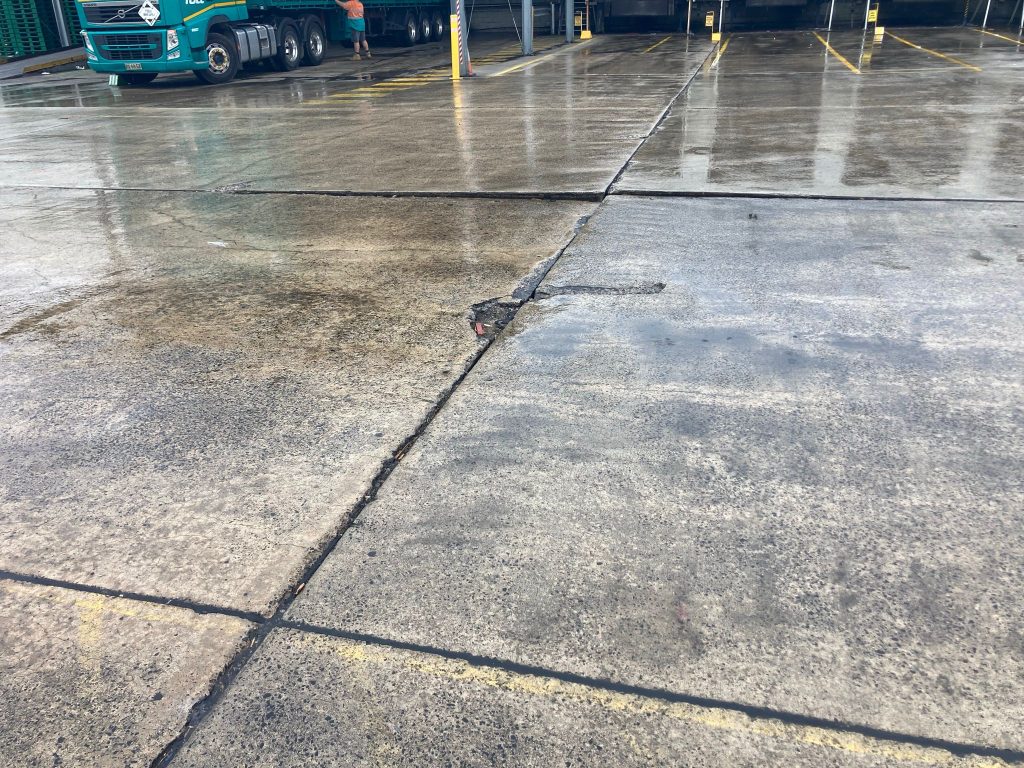
Floors that slope, dip, or bounce can be more than annoying — they point to foundation trouble. Underpinning restores floor levels by strengthening the ground underneath and lifting the slab or stumps back into position. Techniques that achieve this include:
- Resin injection for slab floors — quick, clean, and minimally invasive
- Screw piles with brackets for stump-supported homes — stabilise timber frames
- Concrete underpinning for wide-area or heritage structures
After installation, laser levels verify lift outcomes. In most cases, flooring can be reused once realigned. Key results from floor re-levelling:
- Improved walking surface and safety
- Better door and window operation
- Reduced stress on framing and roofing
These benefits go beyond convenience — they extend the life of the entire home.
Final thoughts on underpinning foundations and building safety
A home with stable foundations isn’t just safer — it’s more comfortable and resilient. Whether you’re facing cracks, sloping floors, or worrying movement in your property or anywhere across Sydney and NSW, understanding how underpinning works can give you the confidence you need. Remember:
- Most movement is progressive, not sudden
- Timely action can prevent costly rebuilds
- Professional assessment is key to long-term results
Ask Raise & Relevel about securing long-term foundation stability if you’re seeing warning signs in your home.