
Underpinning and resin injection are both used to tackle uneven and sinking foundations, but what is the difference between these remedial construction methods?
In a nutshell, traditional underpinning uses large-scale excavation methods and concrete to stabilise foundations, while resin injection involves injecting resin that expands into areas of unstable soil.
Each approach has slightly different use cases. Traditional underpinning is highly effective for larger jobs or complex work with reactive soils. However, it can be an invasive and disruptive process. Resin injection, on the other hand, is fast, less invasive and best suited for simpler jobs.
In this article, we’ll cover everything you need to know about underpinning vs. resin injection, including the technologies, purposes, tips for choosing the best approach and signs that your property might need structural attention.
What is underpinning?
Underpinning is a construction approach used to stabilise and relevel property foundations. It’s carried out by groundwork engineers using a variety of solutions. The best approach depends on the nature of the issue and the complexity of the job.
When is underpinning recommended for foundation repair?
Underpinning may be needed when a property has foundation issues, such as:
- Subsidence, or areas of sinking (such as voids)
- Unstable soil (such as sandy soil, which is very common in Australia)
- Structural changes (such as adding a new extension)
- Historic issues with a poor design or build
- Nearby construction or mining issues that have caused the ground to become unstable
- Instability from extreme weather events
Foundation issues can emerge slowly over time or suddenly, such as during an extreme weather event or local construction. No matter how quickly they appear, it’s important to get a qualified assessment as soon as you spot issues. The sooner you address the problem, the easier (and cheaper) the fix will be.
The cracks or other signs you’re noticing in your home may simply be the result of expected settling, and they may merely be cosmetic issues. Only a professional assessment will give you the answers you need. It can also give you peace of mind.
How does underpinning work?
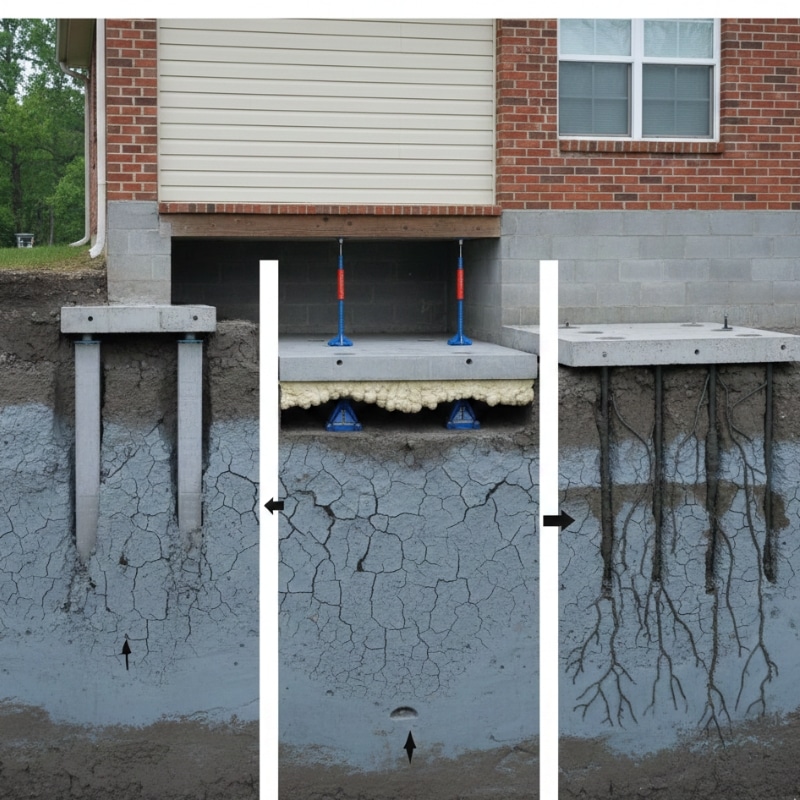
There are different approaches to underpinning, including resin injection underpinning and traditional methods, such as concrete underpinning, mini piling and piering:
- Traditional mass concrete underpinning involves excavating the foundations in sections and then refilling them with concrete.
- Resin underpinning involves channelling expanding polyurethane foam through small drill holes to strengthen and destabilise smaller areas.
- Mini piling involves driving steel piles into the ground until they reach stable soil and stabilise the building.
- Piering or piles involves adding permanent piles to transfer the property’s load to stable ground.
Determining which method is most appropriate will depend on a professional assessment from a groundwork engineer.
The good news is that modern technologies allow for targeted remediation approaches (such as resin injection), and this limits the work, mess, cost and stress involved wherever possible.
What is resin injection?
Resin injections are increasingly used to underpin smaller, less complex projects. It’s a high-tech solution that can offer great results if the conditions are right.
How does resin injection work?
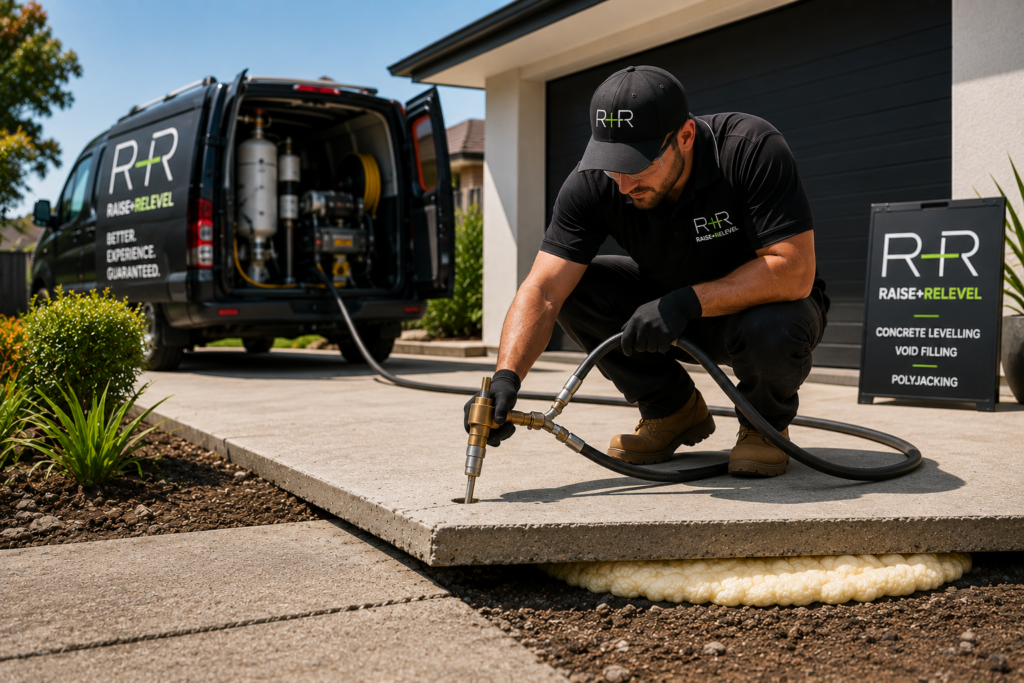
With resin injection, small holes are drilled into the ground, and a special foam that rapidly expands is injected into the holes to fill voids. The expanding foam then stabilises the weight-bearing capacity of the soil and helps to lift the property foundation back into place.
Because this is such a targeted solution, it requires minimal access and equipment. It also minimises damage and doesn’t leave a mess. This also makes it a relatively cost-effective solution.
Is resin injection as good as underpinning?
The more important thing to consider is whether resin injection is most suitable for the groundwork issues in question. If the work required is fairly minimal, resin injection tends to be faster, easier and cheaper.
But if the problem is more extensive, traditional mass concrete or screw piling underpinning methods may be more appropriate and permanent. A Raise + Relevel groundwork engineer can assess your situation and provide you with a detailed and accurate recommendation.
Contact us today to learn more.
Underpinning vs. resin injection: which one is better for you?
The question of underpinning vs. resin injection depends on the property, the issues and other relevant factors, such as ease of access.
Underpinning and resin injection methods both have their pros and cons. For example, resin injection is fast, clean and cost-effective, but it’s better for smaller jobs and may not be as permanent as concrete underpinning.
Mass concrete underpinning is invasive and more time-consuming, and it usually requires residents or occupants to leave the property. However, it also delivers highly reliable, permanent results, and it can restore a foundation to level stability in even the most extreme subsidence situations.
To determine the right situation for you, it’s important to get a professional evaluation. This is necessary to understand what’s causing the issues with foundation sinking, slipping or cracking and to recommend the best options for remediation.
Common signs you may need foundation repair
If you’re concerned about the stability of your foundation, there are a few indicators that something may be wrong. Here are the most common signs:
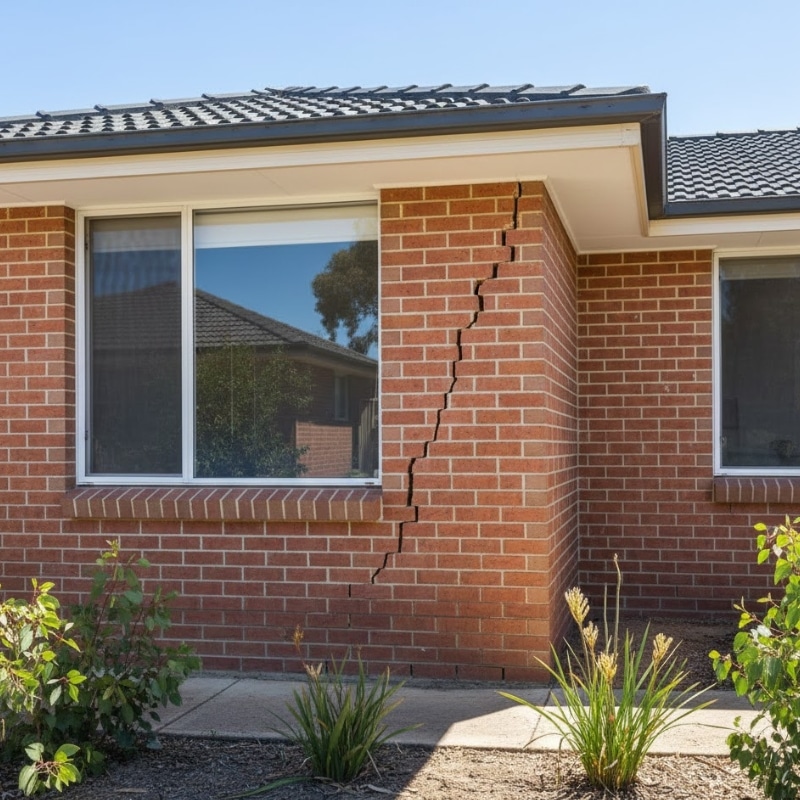
Sign 1: Cracked walls or bricks
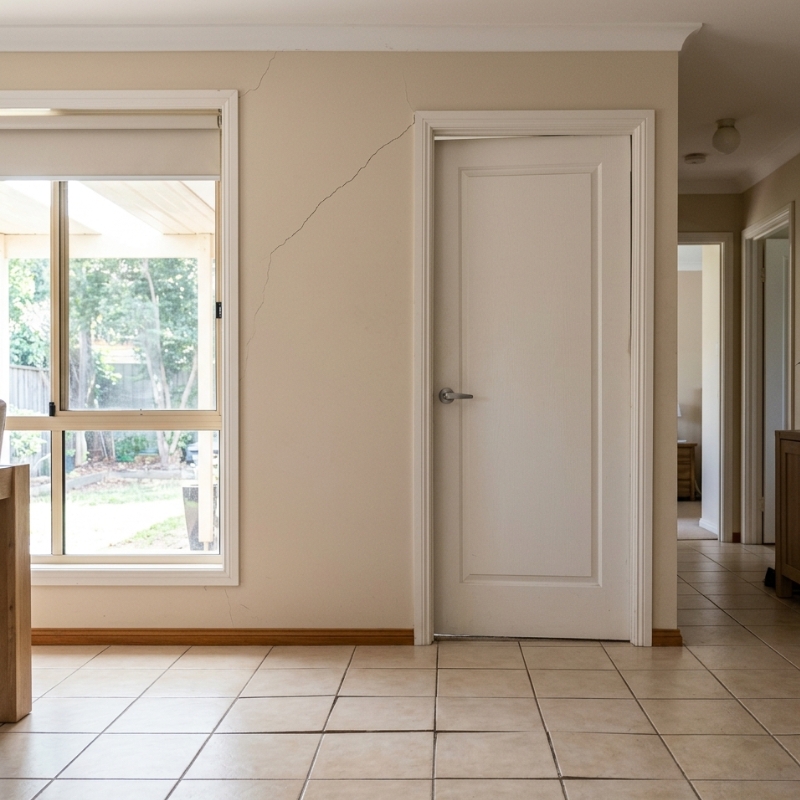
Some cracks in walls or bricks can be cosmetic, especially if they’re hairline cracks. But more significant cracks (wide enough for a coin to fit in them) or vertical cracks are likely related to foundation movement.
Sign 2: Sticking doors/windows
Similarly, if your windows and doors have started to stick, this can be a sign that your foundation is sinking or shifting in some way.
Sign 3: Sloping or uneven floors
Can you roll a marble across the floor? Sloping floors can indicate foundation issues such as subsidence.
Sign 4: Gaps between skirting boards and floors
If gaps emerge between your skirting boards and the floors, or if your kitchen cabinets start to bow away from the walls, these are common signs of an issue that requires investigation.
Sign 5: Moisture or mould in the basement
If you’ve spotted mould or moisture in your basement or crawl space, you may have foundation issues. It’s best to call a professional to assess the situation rather than guessing at what is causing the problem.
Be sure to get an assessment from a qualified professional to determine exactly what’s going on with your property and what the best course of action is. A trusted professional with the right experience will give you clear solutions and restore your peace of mind.
Raise + Relevel has more than 100 years of collective experience in raising and releveling properties of all kinds, using highly effective underpinning solutions that stop problems in their tracks and bring properties back to stability and safety for the long term. Reach out to our friendly, expert team today. We’d be happy to help.
How to choose the right foundation repair method
Relying on the signs described above or a visual inspection alone isn’t sufficient to determine whether you have foundation problems.
A professional groundwork engineer has the experience and tools necessary to conduct an in-depth diagnostic of your property and assess what’s causing the property foundation to shift or sink and what the best solution is.
Groundwork engineers weigh up a number of factors to make the best recommendations. These include:
- Soil conditions: If the soil is poor, sandy, or otherwise compromised, it will need to be improved with underpinning methods that reinforce its integrity.
- Severity of sinking: The question of underpinning vs. resin injection will depend on the severity of the issue. Minor problems are often solved quickly with resin injection. More serious issues may need traditional mass concrete underpinning.
- Structural load: If the property has had an extension or added load through a change of use, these can affect the strength and stability of a foundation.
- Budget: The cost of underpinning is always a factor for homeowners. Raise + Relevel always seeks to offer solutions that fit the situation and your budget.
- Access requirements: Properties in busy public areas or those with challenging access are more difficult and expensive to treat.
- Timeline: The extent of the problem and the recommended solution will determine the timeline. Some resin injection projects can be delivered in a day, and some traditional underpinning projects will take weeks.
It’s vital to consult a trusted expert to understand your specific situation and the options available to you. This also ensures building inspectors can approve the completed work.
Why do I need to hire an expert to fix my foundation?
Underpinning isn’t a DIY job; it requires complex machinery, construction project management, and skilled contractors who understand the technicalities of the work involved.
The cost of working with different contractors can vary greatly, but affordability doesn’t equal cost efficiency. More experienced contractors tend to save you money in the long term, and you can rest easy knowing that the job will be done right and to the highest standards. This is vital because a poor underpinning job often only reveals itself years down the line when you’re faced with another bill.
A quality, certified underpinning job is also essential for maintaining your home insurance and for satisfying building regulations compliance (particularly if you want to sell your property later and need to provide certification).
Raise + Relevel is the trusted partner of choice. We have more than 100 years of combined experience, and have treated more than 7,000 properties across Australia. We also offer robust warranties, including a 100-year product warranty and a 50-year workmanship guarantee. We handle every aspect of your project from start to finish, with all paperwork, guarantees and warranties.
In addition to our superb quality, we’re also competitively priced. That’s because we run an efficient business based on service delivery and expertise, not heavy sales. In fact, the Raise + Relevel team member who comes to your property to quote your job will be the same professional who delivers it.
Ready to repair your home’s foundation?
If you’ve noticed signs of foundation issues, the first step is to seek professional help and get an assessment.
Foundation issues, such as sinking, slipping or shifting, often get worse over time. The sooner you notice an issue and deal with it, the easier, quicker and more affordable the fix will be.
Raise + Relevel is here to give you a trusted assessment, with total transparency and rock-solid guarantees for our work. We encourage our customers to ask lots of questions because we want everyone to feel completely comfortable about our recommendations. We strive to offer an exceptional level of service at all times.
Read some of our five-star reviews to find out why other customers are glad they’ve trusted Raise + Relevel to resolve their foundation problems. You’ll understand why so much of our business comes from referrals and recommendations.
To move ahead with your assessment and prioritise the safety and security of your property (and its inhabitants), contact us today for an appointment.
Our team of reliable, experienced professionals will work quickly and effectively to get any necessary work done for you and deliver the right paperwork and certifications to satisfy building regulations and insurance requirements. We’re committed to restoring the safety of your home.
FAQs
How long do the results last?
The results of underpinning and resin injection should be permanent. Speak with your groundwork consultant at Raise + Relevel. They’ll provide full and transparent information and deliver guaranteed work.
Will I need to move out during repairs?
This depends on the degree of work required. Small resin injection jobs don’t usually require you to move out. However, bigger jobs might require a temporary location for your safety.
Which method is cheaper: underpinning or resin injection?
Underpinning and resin injection are both priced according to the size and nature of the job. Resin injection is usually the cheaper option. The cost of underpinning with concrete is higher due to the materials, time and equipment required.
Is resin injection as good as underpinning?
Resin injection is highly effective and offers many benefits. It’s increasingly becoming the underpinning method of choice for projects that are fairly minimal in severity, as it’s fast, affordable and clean.
However, in some instances, traditional mass concrete underpinning or screw piling may be more appropriate. The results of the assessment and the factors that have combined to cause the property foundations to shift will determine which solution will be most effective.