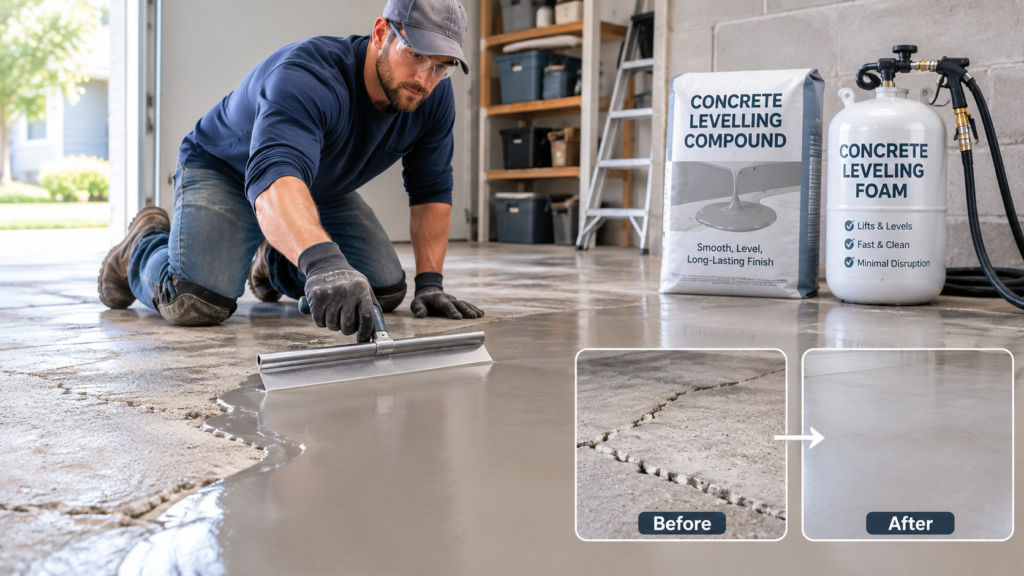
A concrete levelling compound fixes minor surface irregularities in existing slabs, giving you a flat, even base before laying new flooring. It works by filling low spots and smoothing out small imperfections without touching the structural layer below. Knowing when to use one saves you from unnecessary slab replacement and from starting a flooring job on an unready surface.
Key Takeaways
- A concrete levelling compound addresses minor surface unevenness and prepares structurally sound slabs for flooring installation, but it does not fix underlying movement or foundation problems.
- Choosing the right product depends on factors such as application thickness, moisture exposure, traffic load, and the type of flooring above.
- Correct surface preparation, including cleaning, crack repair, and priming, directly affects how well the compound bonds and how long it lasts.
- Skipping steps like moisture testing or curing time remains one of the most common reasons levelling compound jobs fail before the flooring finish even goes down.
When Should You Use a Concrete Levelling Compound Instead of Replacing Concrete?
A concrete levelling compound is suitable for situations where the slab itself is sound, but the surface has developed minor irregularities. Surface-level problems are common in older homes and commercial buildings across Australia. Residential concrete slabs placed on ground experience shrinkage, wear, and minor settlement over time, and levelling compound exists precisely to address those issues without full replacement.
The key question is whether the problem is cosmetic or structural. A levelling compound handles the first category. It does not fix the second.
Situations Where a Levelling Compound Works Well
These are the common scenarios where levelling compound is the right tool for the job:
- Uneven concrete with minor high and low spots across the surface
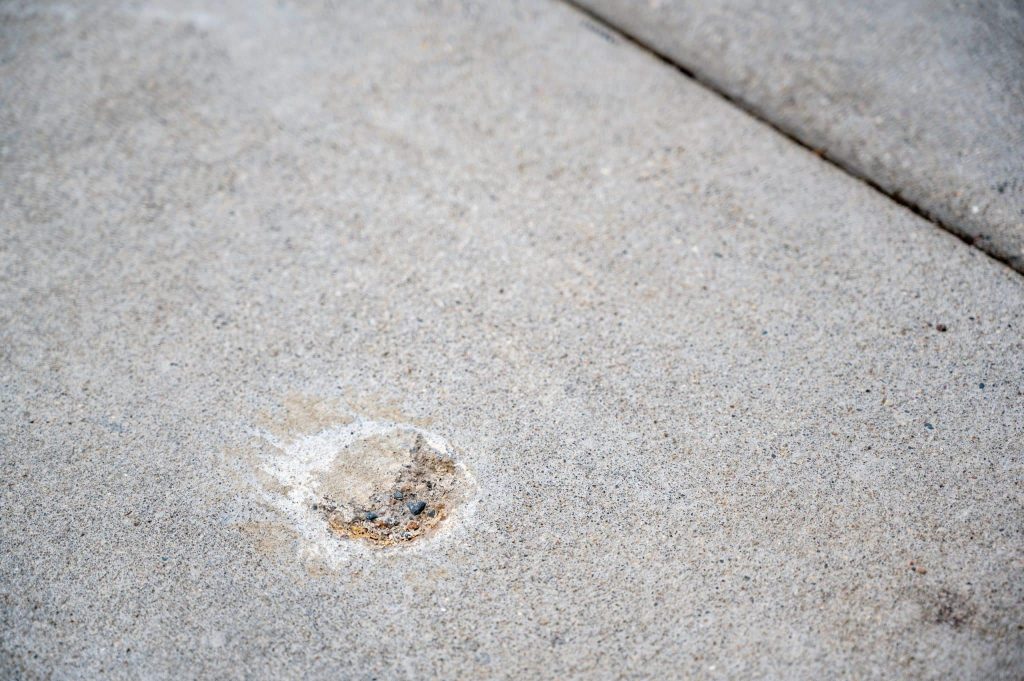
- Small surface depressions left by wear, old adhesives, or previous floor coverings
- Floor preparation before laying tiles, vinyl planks, timber, or carpet
- Interior renovation projects where the slab is in good condition, but the surface finish is rough
- Cosmetic repairs to smooth out minor blemishes before painting or sealing concrete
When the Problem Goes Beyond Surface Levelling
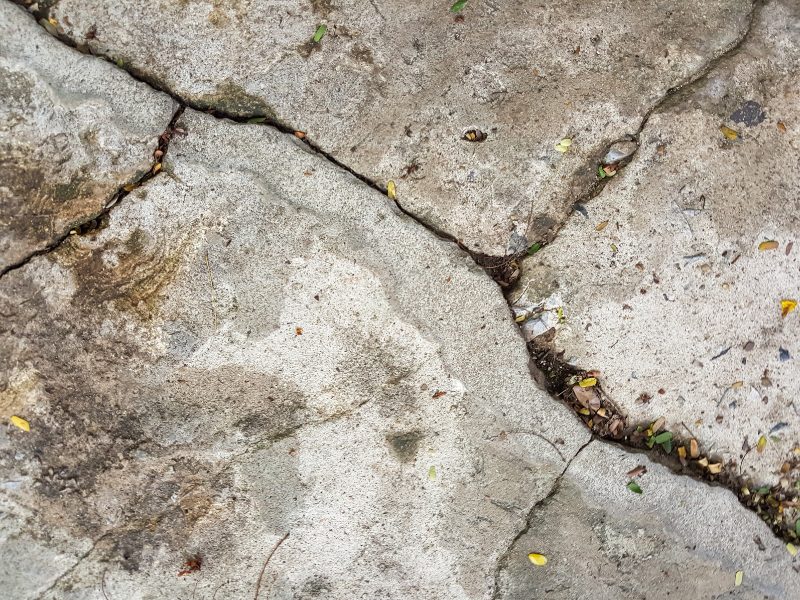
A levelling compound will not hold if the slab beneath it is moving or cracking due to ground subsidence or foundation issues. Applying a compound over active cracks or a settling slab only delays the problem. You will see the same cracking and unevenness return, often within months.
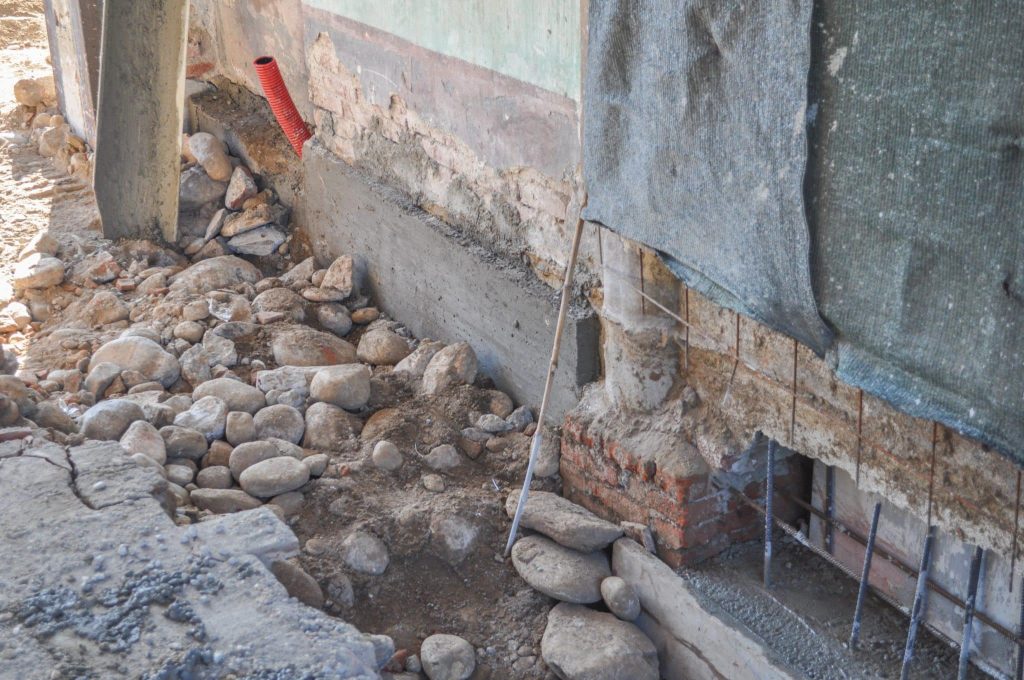
Signs that point to structural repair rather than surface levelling include wide cracks running through the full depth of the slab, areas where the slab has visibly dropped or tilted, and floors that continue to change over time. Sinking floors and cracked walls appearing together are a strong indicator that the issue sits below the surface.
Getting a professional assessment before applying any compound prevents wasted time and money on a repair that will not last.
How Do You Choose the Right Concrete Levelling Compound for Your Project?
Not all levelling compounds perform the same way. Product selection affects bond strength, long-term durability, and the finished floor’s performance under real-world conditions. Product selection and surface preparation for floor laying are the two variables that most often determine whether a levelling job succeeds or fails.
The right compound depends on the specific requirements of your project, not just what is available at the hardware store.
Key Factors to Consider Before Selecting a Product
Work through these factors before committing to a product:
- Self-levelling vs manual-spread compounds. Self-levelling products flow into low areas and settle flat on their own. Standard compounds need to be spread with a trowel and are suitable for smaller patching jobs.
- Indoor vs outdoor application. Most standard compounds are for interior use only. Outdoor-rated products handle moisture and temperature variation differently.
- Required thickness. Products have minimum and maximum application depths. Using a standard compound in a single pour where 40mm is needed will cause shrinkage and cracking. Some jobs need multiple pours.
- Drying and curing time. Fast-setting products allow flooring installation within hours. Standard products may need 24 hours or more before they carry foot traffic or adhesive.
- Flooring compatibility. Tile adhesive bonds differently to levelling compound than vinyl or timber adhesive. Check the compound manufacturer’s specifications against the flooring product you plan to install.
- Moisture resistance. In bathrooms, laundries, or areas prone to dampness, a moisture-resistant compound is the practical choice.
Always follow manufacturer specifications. Product datasheets define the exact conditions under which the compound is designed to operate, including temperature ranges, substrate requirements, and curing protocols.
How Do You Apply Concrete Levelling Compound Correctly?
Surface preparation determines the quality of the finished result more than the compound itself. A well-prepared surface bonds properly, cures evenly, and gives the flooring above it a stable base. Correct placement, curing, and finishing of residential concrete slabs directly influence the long-term performance of any cementitious product applied over the top.
Follow these steps in order. Skipping any step increases the risk of delamination, cracking, or early failure.
Application Steps
- Clean the concrete thoroughly. Remove all dust, grease, old adhesive, paint, and loose material. Any contamination stops the compound from bonding.
- Repair significant cracks before levelling. Fill structural cracks and holes with a suitable repair mortar and allow it to cure fully. Crack injection and repair address deeper fissures that the compound alone cannot bridge.
- Apply primer if the product requires it. Many levelling compounds need a bonding primer to adhere to dense or smooth concrete. Read the datasheet and follow its instructions.
- Mix the compound correctly. Use the water ratio specified on the packaging. Too much water weakens the mix and causes cracking as it dries.
- Pour and spread evenly. Work quickly. Self-levelling compounds have short working times, typically 15 to 20 minutes from mixing.
- Allow adequate curing before installing flooring. Check the manufacturer’s minimum curing time and do not rush this step.
Environmental Conditions That Affect Curing
Temperature and humidity both affect how a levelling compound sets. Cold conditions slow the chemical reaction, extending curing time. High humidity affects surface drying. Ambient conditions during and after placement directly influence the final strength and surface quality of cementitious floor products.
Apply compound when temperatures sit between 10°C and 30°C. Avoid working on very hot days where rapid surface drying can cause the compound to crack before it cures through.
What Are the Benefits of Using a Concrete Levelling Compound?
Levelling compound provides a flat, clean substrate for flooring installers to work on. Acceptable floor flatness tolerances for residential construction are defined in Queensland building standards, and most flooring products also have their own tolerance requirements. Levelling compound bridges the gap between an aged or imperfect slab and those requirements.
The practical benefits include:
- A flat surface that reduces lippage in tiled floors and prevents hollow spots under vinyl or timber
- Better adhesive coverage and bond strength because the substrate is consistent
- Faster installation for flooring contractors since they are not working around dips and ridges
- Lower long-term maintenance costs because properly prepared floors resist cracking and movement
- Compatibility with a wide range of finish flooring materials, including tiles, timber, vinyl, carpet, and polished concrete overlays
Good floor preparation also extends the service life of the finished flooring. A tile laid over a level, sound substrate lasts longer than one laid over a surface with unsupported low points.
What Mistakes Should You Avoid When Using a Concrete Levelling Compound?
Most levelling compound failures trace back to a handful of preventable errors. Surface preparation and moisture management are the two most commonly overlooked areas in floor preparation and installation work.
Common Errors That Lead to Failures
These mistakes account for the majority of levelling compound problems in Australian residential and commercial projects:
- Skipping surface preparation. Applying a compound over dust, paint, or old adhesive prevents proper bonding and can cause delamination.
- Ignoring moisture problems. Excess moisture in concrete slabs causes the compound to fail from below. Test moisture levels before applying any product and address the source of dampness first.
- Incorrect water-to-compound ratio. Too much water weakens the mix. Too few results in the compound setting prematurely during application.
- Exceeding the product’s recommended application thickness. Thick single pours crack as they cure. Products that need to go deep require multiple pours, with drying time between layers.
- Not allowing sufficient curing time. Installing flooring or applying adhesive before the compound reaches full strength results in adhesion failures.
- Applying over active cracks or unstable ground. Any slab movement after application will cause the compound to break. Address the cause of movement first through slab jacking or underpinning before any surface work begins.
Rushing any stage of the process is the single most common thread running through failed levelling jobs. The compound itself rarely fails when prepared properly.
Frequently Asked Questions
What is a concrete levelling compound?
A concrete levelling compound is a cementitious or polymer-modified product applied to an existing concrete surface to fill low spots and create a flat, even base. It prepares the slab for flooring installation or cosmetic finishes. It does not add structural strength to the slab beneath it.
Can concrete levelling compound be used outdoors?
Most standard levelling compounds are formulated for interior use only. Outdoor-rated products are designed to withstand greater moisture exposure and temperature variation. Always check the product datasheet to confirm its suitability for external conditions before applying it outside.
How thick can concrete levelling compound be applied?
Thickness limits vary by product, but most standard compounds are suitable for applications between 3mm and 40mm per pour. Jobs requiring greater depth need multiple pours with curing time in between. Exceeding the recommended single-pour depth causes shrinkage cracking as the compound dries.
How long does concrete levelling compound take to dry?
Fast-setting products allow foot traffic within two to four hours and flooring installation on the same day. Standard compounds typically need 24 hours before flooring installation and longer before heavy loads. Always follow the specific curing times on the product datasheet rather than general estimates.
Do I need to prepare the concrete surface before applying a levelling compound?
Yes. Surface preparation is not optional. The concrete must be clean, dry, and free of dust, grease, old adhesive, and loose material. Many products also require a bonding primer applied to the substrate before the compound goes down. Skipping preparation is the leading cause of levelling compound failure.
Sources
- RMIT BuildRight Learning Lab — Concrete Slab General, Page 1: https://learninglab.rmit.edu.au/Toolbox/buildright/content/bcgbc4010a/10_floor_systems/01_concrete_slab_general/page_001.htm
- RMIT BuildRight Learning Lab — Concrete Slab General, Page 3: https://learninglab.rmit.edu.au/Toolbox/buildright/content/bcgbc4010a/10_floor_systems/01_concrete_slab_general/page_003.htm
- WA Government — Moisture Content in Concrete Slabs (TG002, 2025): https://www.wa.gov.au/system/files/2025-11/tg002-moisture-content-in-concrete-slabs.pdf
- WA Government — Placement, Curing and Finishing of Residential Concrete Floor Slabs (IB031): https://www.wa.gov.au/system/files/2024-10/ib_031_placement_curing_and_finishing_of_residential_concrete_floor_slabs_nov_2013_0.pdf
- QBCC — Guide to Standards and Tolerances: https://www.qbcc.qld.gov.au/sites/default/files/documents/guide-standards-tolerances.pdf
- Standards Australia — AS 2870-2011 Residential Slabs and Footings: https://www.standards.org.au/standards-catalogue/standard-details?designation=as-2870-2011
- training.gov.au — MSFFL2032 Floor Laying Competency Standards: https://training.gov.au/TrainingComponentFiles/MSF/MSFFL2032_R1.pdf
- training.gov.au — CPCCCO3046A Concrete Construction Unit: https://training.gov.au/TrainingComponentFiles/CPC08/CPCCCO3046A_R1.pdf