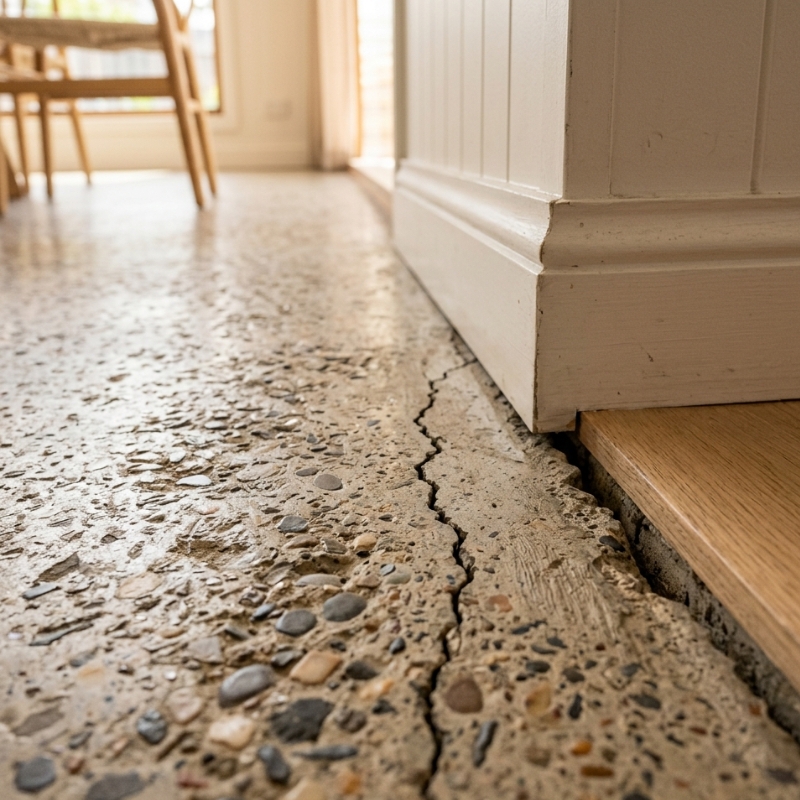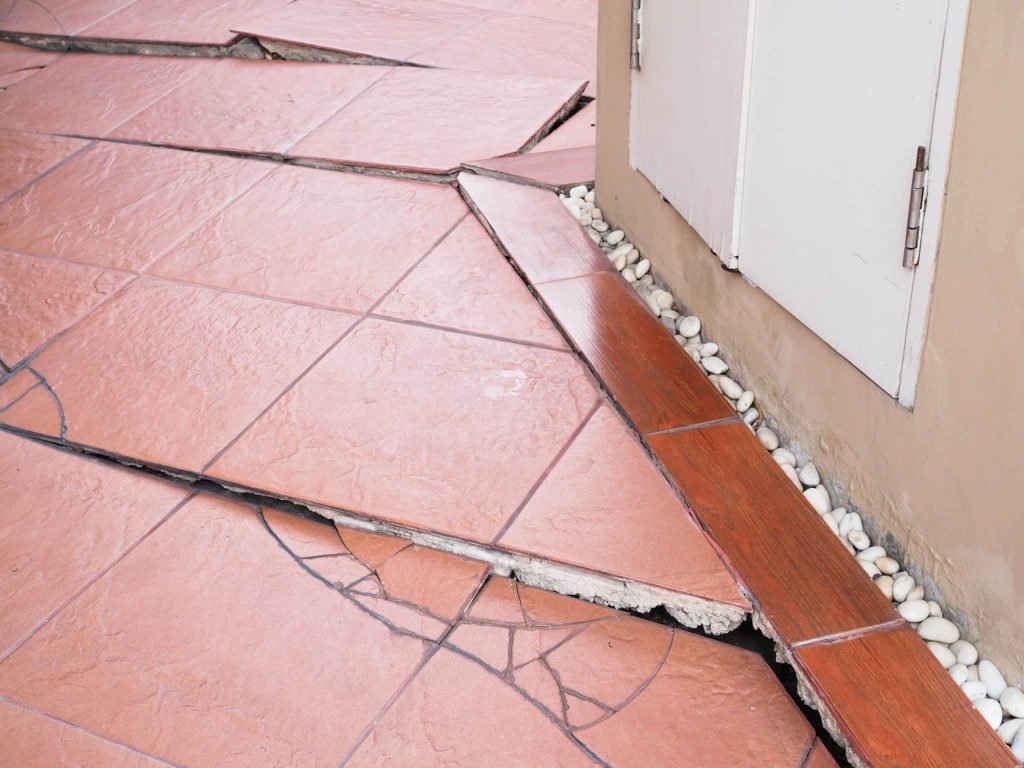
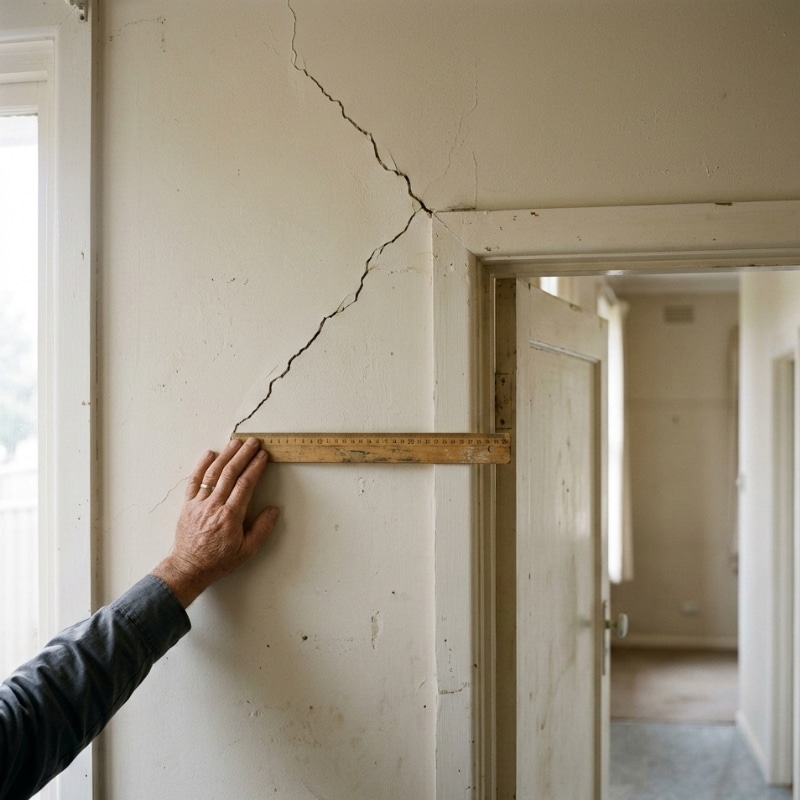
A crack in a wall can be nothing more than cosmetic ageing. Or it can be signs of subsidence, with the ground beneath part of the home shifting and the structure beginning to distort.
In Australia, it’s especially easy to feel unsure because plenty of perfectly sound homes show minor cracking for normal reasons, while the same climate patterns that make our backyards thrive can also create big swings in soil moisture. Add in plumbing leaks, drainage problems, trees, and renovation changes, and you’ve got a recipe for cracks that look similar on day one but behave very differently over time.
This guide is designed to help you tell the difference between everyday settling cracks and cracks that may be linked to more dangerous ground movement (often described as “subsidence” when the ground support drops or becomes uneven). You’ll learn how to “read” crack patterns, what to measure, what changes matter, and when it’s time to stop patching and start investigating.
The four things that tell you the most about a crack
If you remember nothing else, remember this: most crack assessment comes down to four observations.
• Pattern: what shape is it (vertical, diagonal, stepped, horizontal)?
• Location: where is it (plaster, cornice, brickwork, near windows/doors, near wet areas)?
• Size: how wide is it, and is there any offset (one side higher/out of plane than the other)?
• Change: is it stable, or is it getting worse?
A fine line that never changes is usually a different story from a diagonal crack that lengthens after each heavy rain and starts to coincide with sticking doors.
A practical rule of thumb
Stable cracks that don’t change much over time are often consistent with normal settling or material shrinkage. Cracks that widen, lengthen, multiply, or come with distortion (doors, windows, floors, gaps) are more suggestive of active movement and deserve a closer look.
Settling vs serious ground movement: what’s the difference in plain English?
People use “settling” to describe lots of minor, normal building changes, such as:
• small plasterboard joint movement
• shrinkage in timber framing as it dries and seasons
• thermal expansion and contraction in materials
• minor adjustment in the early life of a building (varies by site and build)
More serious ground movement is different because it’s not just the lining moving a little. It’s the structure being asked to span or twist because support under part of the building is changing. In Australian homes, that commonly relates to:
• reactive clay soils shrinking and swelling with moisture changes
• poor drainage causing uneven wetting around footings
• plumbing leaks, softening or washing out soil locally
• tree-related moisture changes around the perimeter
• erosion, washout, or localised soft spots
The tricky part is this: on the surface, both scenarios can start with “just a crack”.
Crack patterns you can read without being an engineer
Patterns are clues, not diagnoses. Still, they’re useful clues when combined with location, size, and change.
Hairline cracks in plaster (especially along joins)
Often consistent with:
• plaster compound shrinkage
• minor seasonal timber movement
• paint film cracking
• small, stable building adjustment
Lower concern when:
• The crack is fine and doesn’t widen
• It doesn’t keep re-opening after patching
• there are no other symptoms (doors/windows/floors)
Higher concern when:
• It keeps re-opening quickly after patching
• multiple rooms develop new cracks in the same season
• cracks appear with new sticking doors/windows or new gaps forming
Diagonal cracks from door or window corners
Often consistent with:
• stress concentration around openings (common)
• differential movement (one part of the home moving more than another)
Lower concern when:
• it’s fine, short, and stable
• It appears early in a home’s life and then stops changing
Higher concern when:
• it’s lengthening or widening over weeks/months
• You see matching cracking on the opposite side of the wall
• doors/windows nearby start to jam, rub, or won’t latch
Stair-step cracks in brickwork (following mortar joints)
Often consistent with:
• differential movement in masonry
• localised movement near that wall segment
Higher concern when:
• the steps become more pronounced over time
• the crack widens, branches, or new stepped cracks appear nearby
• you see separation at corners, near lintels, or between wall and slab edge
Horizontal cracks (especially in masonry)
Horizontal cracks are often treated more seriously because they can indicate:
• bending or lateral pressure on a wall
• more significant structural distress than a simple vertical hairline
If a horizontal crack is prominent, growing, or paired with bulging/leaning, treat it as a “check sooner rather than later” signal.
Cornice gaps or cracks where walls meet ceilings
Often consistent with:
• seasonal timber movement
• minor joint movement
• roof truss uplift in some houses (a known phenomenon)
Higher concern when:
• the gap grows rapidly
• It shows up alongside worsening wall cracks and door issues
• There are clear signs of water ingress or roof movement
Q&A: How do I tell if it’s harmless settling or something more serious?
Look for “movement companions”. Serious movement rarely travels alone.
More consistent with normal settling/shrinkage:
• cracks are hairline and isolated
• they don’t keep spreading
• There’s no noticeable change in door/window operation
• floors feel consistent underfoot
• The crack doesn’t correlate with rain events or plumbing issues
More consistent with active ground movement:
• cracks widen, lengthen, or new cracks appear nearby
• diagonal or stepped patterns are concentrated in one area
• doors suddenly stick, rub, or won’t latch
• Windows start jamming, or gaps appear around frames
• you notice new gaps at skirtings, cornices, or cabinetry joins
• the problem worsens after heavy rain, a leak, or a long dry spell
If you’re not sure, the best next step is usually monitoring rather than patching.
Don’t patch first: check these common triggers
Patching too early can hide evidence and make it harder to tell whether a crack is stable or active.
1) Weather swings: drought-to-deluge is a real crack trigger
In many parts of Australia, the pattern looks like this:
• dry conditions shrink reactive clay soils
• heavy rain rehydrates them
• uneven wetting around one side of the home creates uneven movement
That’s one reason cracks can “come and go” seasonally, or suddenly worsen after a big weather change.
2) Drainage: Where does water go during a storm?
Walk your property in (or right after) heavy rain if it’s safe to do so. Look for:
• downpipes discharging right next to footings
• ponding along the slab edge or near piers/stumps
• garden beds built up against walls, trapping moisture
• paths/paving that slope toward the house
• blocked stormwater points or overflowing pits
A solid homeowner resource that explains why drainage and moisture management matters is the Victorian Building Authority’s guidance on reducing foundation movement risk: VBA guide on minimising foundation movement.
3) Plumbing leaks: slow problems can create fast cracks
Leaks don’t always show as obvious puddles. Watch for:
• unexplained increases in the water bill
• musty smells, mould, or persistent damp areas
• soft or sinking ground near wet areas
• cracks concentrated around bathrooms, laundries, or kitchens
4) Trees: it’s about moisture patterns, not blame
Trees can influence soil moisture, especially on reactive sites. Risk tends to be higher when:
• large trees are close to footings, and soils are reactive
• A tree has recently been removed (moisture conditions shift again)
• irrigation patterns have changed around one side of the home
A safe crack monitoring method that actually helps decision-making
You don’t need special equipment to gather useful information. You just need consistency.
What to do today (10–15 minutes)
• Take clear photos in good light
• Include a ruler or tape measure in the photo
• Write down the location (room + wall + nearby feature)
• Measure the crack width at the widest point and record it
• Note any “offset” (can you feel a step if you run a finger across it?)
What to do over the next 7–30 days
• Re-photo weekly from the same angle
• Re-measure the same points
• Record “trigger events” (big rain, heatwave, plumbing repair, drainage work)
What meaningful change looks like
Change is not only “wider”. It can also be:
• the crack lengthening
• a new parallel crack forming nearby
• branching or stepping appearing
• visible offset increasing
• doors/windows becoming harder to operate
• new gaps showing at skirtings, cornices, benchtops, or tiles
Q&A: How wide does a crack need to be before I worry?
There isn’t a single number that applies to every house, wall type, and site condition. A fine crack in plaster can be cosmetic, while a smaller crack in masonry that is clearly changing over time can be more significant.
As a homeowner, focus on:
• whether it’s changing
• whether it’s paired with distortion (doors, windows, floors)
• whether it’s in masonry or structural elements (not just a lining)
If you’re unsure, measuring and monitoring is the most practical starting point.
A decision guide you can use today
Use this as a “what do I do next?” filter.
If it looks like normal settling or shrinkage
Typical signs:
• hairline plaster cracks
• small cornice gaps that don’t change
• no door/window sticking
• no moisture or drainage red flags
What to do:
• monitor for a month (photos + measurements)
• tidy up drainage basics (keep water away from footings)
• patch only after you’ve confirmed it’s stable
If you want background on what ground movement can look like and how it tends to progress when it’s not addressed, it can help to start by understanding the effects of subsidence before deciding it’s just cosmetic.
If it looks like active movement (possible subsidence-type issue)
Typical signs:
• diagonal cracks from openings that are getting worse
• stepped cracking in brickwork
• cracks that re-open quickly after patching
• sticking doors/windows plus new cracking
• crack changes that line up with rain events or a suspected leak
What to do:
• keep your monitoring record (photos, dates, measurements)
• check drainage and plumbing sooner rather than later
• avoid repeated cosmetic patching that hides what’s happening
• consider a professional assessment so you address the cause, not just the crack
If you’re at the “this is changing” stage and want a clear way to think through your options, see practical next steps for property owners so you can act on evidence rather than guesswork.
If you see “act now” red flags
These are higher-priority signs:
• sudden, rapid crack growth (days to weeks)
• pronounced horizontal cracking in masonry
• visible wall bulging or leaning
• large offsets across a crack (a clear step)
• a door/window that suddenly won’t open or close
• new sloping floors or a noticeably uneven feel underfoot
• water ingress that coincides with new movement
If any safety concern exists (for example, significant masonry distress), err on the side of caution and escalate.
Why serious movement is often mistaken for “just settling”
Many movement issues start subtly:
• a fine crack appears after a weather shift
• it gets patched
• It returns a little worse after the next rain
• months later, there are multiple cracks and door problems
That’s why “change over time” is so important. A stable crack and an active crack are different categories, even if they look similar at the start.
What not to do (common mistakes that make cracks worse or hide the cause)
• Don’t keep patching the same crack without checking why it returns
• Don’t ignore drainage because it feels “outside” the house problem
• Don’t assume new builds can’t move (all buildings move; the question is how much and whether it’s uneven)
• Don’t blame trees automatically (leaks and drainage are often bigger culprits)
• Don’t rely on memory — record it properly so you can see the change objectively
Q&A: Why do cracks get worse after heavy rain?
Heavy rain can change support conditions and soil behaviour. Depending on the site, rain can lead to:
• uneven wetting around the perimeter
• softening of soils near footings
• re-expansion of reactive clay after a dry spell
• surfacing of stormwater or plumbing faults under load
If cracks consistently follow big rain events, it’s a strong prompt to review downpipes, surface drainage, and any below-ground leak possibilities.
Q&A: What if cracks are showing up in multiple rooms?
Multiple-room cracking can still be cosmetic (for example, widespread plaster joint shrinkage), but it increases the value of checking for patterns:
• Are the cracks concentrated on one side of the house?
• Do they align with a common structural line (same wall run, same corner)?
• Are there matching external cracks in brickwork?
• Are there companion symptoms like sticking doors or new gaps?
If cracks are widespread and changing, a professional assessment may help you avoid chasing symptoms room by room.
When it’s worth involving a specialist
You don’t need to panic about every crack. But you do want the right input when the pattern suggests active movement.
It’s worth escalating when:
• Cracks are clearly changing over time
• Cracks are stepped or horizontal in masonry
• Cracking is paired with door/window distortion
• drainage/plumbing issues are suspected, and you want clarity
• You’re planning renovations and want to avoid worsening existing movement
If you suspect the crack is part of a bigger ground-movement issue and want a practical overview of what addressing the underlying cause can involve, reading about fixing subsidence issues in Australian homes can help you understand the difference between cosmetic repairs and real stabilisation.
FAQ
Are hairline cracks always harmless?
Often, yes — especially in plaster and along joins — but not always. Hairline cracks that re-open repeatedly, spread, or appear with other distortions deserve closer attention.
Are diagonal cracks always serious?
Not always. Diagonal cracks around doors and windows can be minor and stable. They’re more concerning when they widen/lengthen, appear on both sides of a wall, or come with sticking doors/windows.
Should I patch cracks before I’ve monitored them?
If you’re unsure whether a crack is active, it’s usually better to monitor first. Patching can hide useful evidence and make it harder to tell whether movement is ongoing.
What’s the easiest thing I can do to reduce future cracking risk?
Manage water around the house: downpipes, surface drainage, and avoiding ponding near footings. Many movement issues worsen when moisture conditions are uneven around the perimeter.
How long should I monitor a crack?
A good starting point is 4–8 weeks, plus re-checking after major weather events. If the crack is changing quickly or you see red flags, escalate sooner.
Can plumbing leaks really cause cracks that look like “settling”?
Yes. Slow leaks can soften or wash out soils locally, creating uneven support that presents as cracking and distortion.