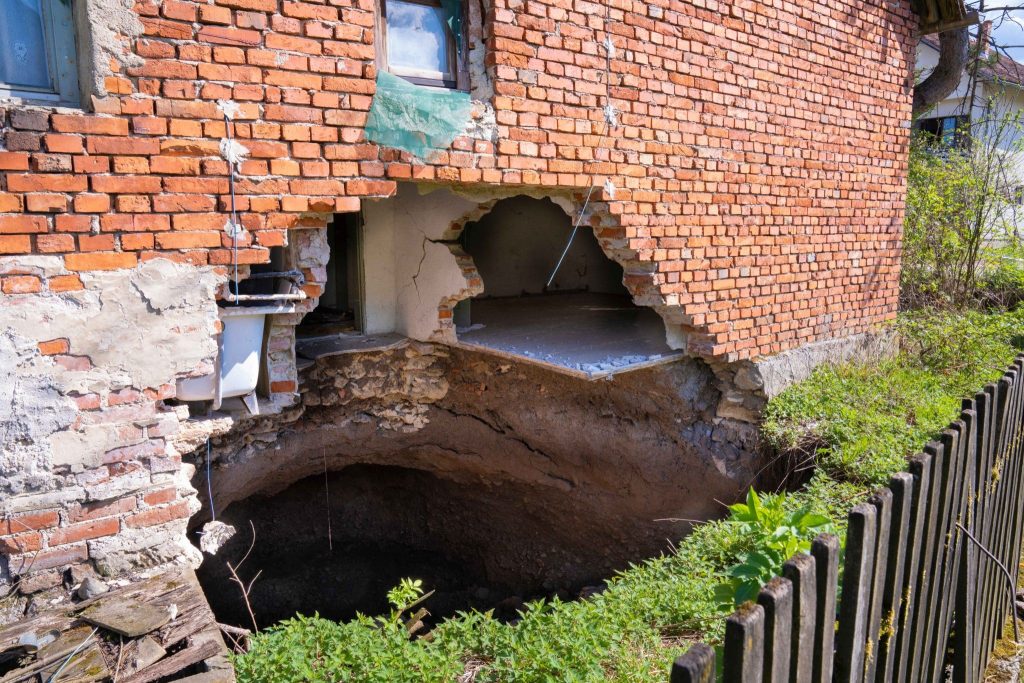

Structural movement in Australian homes is more common than many owners realise. Reactive clay soils, ageing footings, poor drainage, and changing moisture levels can all cause buildings to shift over time. When this happens, homeowners are often advised that they need underpinning, re-levelling, or slab lifting — but understanding the differences between these solutions is crucial.
In simple terms, underpinning strengthens and stabilises foundations by transferring loads to firmer ground, re-levelling restores a building’s correct position after stability is achieved, and slab lifting raises sunken concrete slabs by filling voids beneath them. The right solution depends on soil conditions, building type, and the underlying cause of movement.
This guide explains how each method works, when it’s appropriate, and how to choose the correct fix for Australian conditions.
What Causes Structural Movement in Australian Homes
Structural problems rarely happen without warning. In most cases, movement occurs gradually due to environmental or construction-related factors.
Soil Conditions and Ground Reactivity
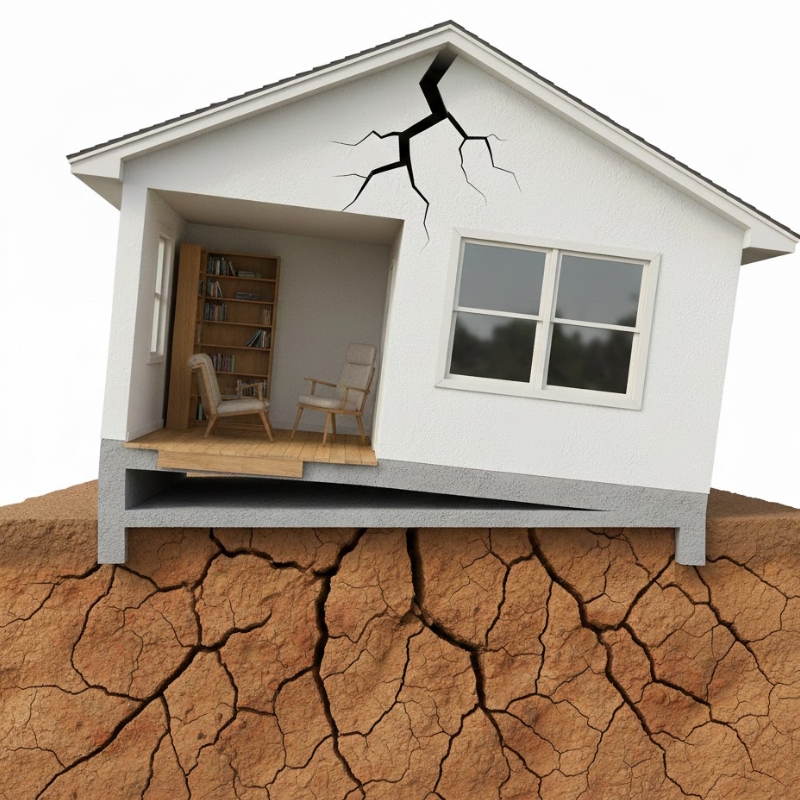
Much of Australia is built on reactive clay soils, which expand when wet and shrink during dry periods. This constant movement places stress on footings and slabs, leading to cracking, sinking, or uneven floors.
Drainage and Moisture Changes
Poor stormwater management, leaking pipes, or inconsistent watering around foundations can change moisture levels in the soil. These fluctuations often cause differential settlement — where one part of the structure moves more than another.
Building Age and Construction Methods
Older homes may have shallow footings that no longer meet modern standards. Over time, materials degrade, and loads increase through renovations or extensions, increasing the risk of foundation movement.
External Influences
Nearby excavation, tree roots, drought conditions, or heavy rainfall events can destabilise soil and trigger structural issues.
How to Diagnose the Underlying Problem
Choosing the wrong repair method can lead to wasted money and recurring damage. Proper diagnosis is essential.
Visible Warning Signs
Common indicators of foundation movement include:
• Cracks in walls or ceilings
• Doors and windows sticking or misaligning
• Uneven or sloping floors
• Gaps between walls and skirting boards
• Separation in brickwork or render
Structural and Engineering Assessment
A qualified structural engineer can determine whether movement is ongoing or historical, and whether the structure requires stabilisation before cosmetic repairs.
Soil and Site Evaluation
Understanding soil behaviour, drainage patterns, and footing depth is crucial in determining whether underpinning, re-levelling, or slab lifting is the most suitable option.
Repair Methods Explained: Underpinning, Re-Levelling, and Slab Lifting
Each solution addresses a different structural issue. They are not interchangeable.
Underpinning — Stabilising the Foundations
Underpinning involves extending or strengthening existing footings so the building’s load is transferred to more stable ground. This is a permanent structural solution used when foundations can no longer support the building safely.
It is commonly required when:
• Footings have failed or subsided
• Structural movement is ongoing
• The building has been altered or extended
• Soil conditions are highly reactive
Homeowners seeking professional underpinning services in Australia should understand that underpinning is primarily about stability, rather than cosmetic correction.
Re-Levelling — Restoring the Building’s Position
Re-levelling is the process of bringing a structure back to its correct alignment after stability has been achieved. It is often carried out following underpinning or footing repairs.
Re-levelling is suitable when:
• The structure is stable but uneven
• Floors slope or dip due to past movement
• Doors and windows are misaligned
Re-levelling alone does not fix unstable foundations. It works best as part of a broader repair strategy.
Slab Lifting — Raising Sunken Concrete
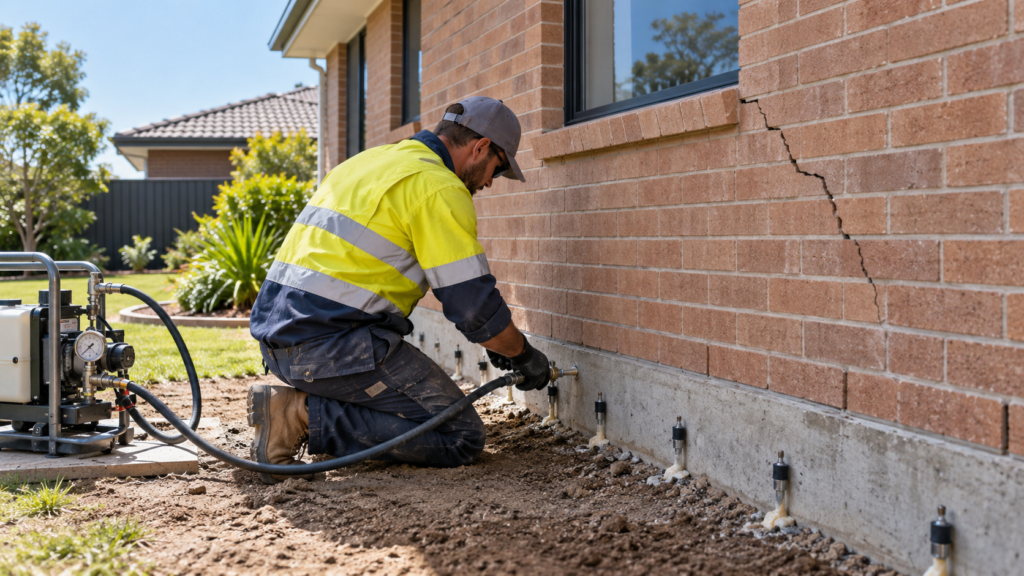
Slab lifting, also known as slab jacking, involves injecting material beneath a concrete slab to fill voids and lift it back into position. It is commonly used for driveways, garages, and pathways rather than entire buildings.
This method works best when:
• The slab has settled due to erosion or voids
• The slab itself is structurally sound
• Movement is localised and not ongoing
For these scenarios, concrete slab lifting and slab jacking solutions can be highly effective and minimally disruptive.
Costs and Timeframes in Australia
Costs vary depending on severity, access, soil conditions, and engineering requirements.
Underpinning Costs
Underpinning is typically the most expensive option due to its complexity and permanence. Costs depend on the number of underpinning points and the depth of the footing.
Timeframes usually range from several days to a few weeks.
Re-Levelling Costs
Re-levelling costs are generally lower, particularly when used as part of an existing stabilisation project. Timeframes are often shorter, depending on building size.
Slab Lifting Costs
Slab lifting is often the most cost-effective solution for non-structural slabs. Many jobs can be completed in a single day.
A professional assessment is essential to avoid choosing a cheaper option that doesn’t address the root cause.
What to Expect During Structural Repair Works
Understanding the process helps homeowners plan and reduce stress.
Site Preparation and Access
Some excavation or drilling may be required, depending on the repair method. Reputable contractors prioritise safety and minimise disruption.
Engineering Oversight and Compliance
Structural repairs often require engineering input and must comply with Australian standards. Guidance from the Australian Building Codes Board ensures works meet national construction requirements.
Noise, Vibration, and Temporary Disruption
While some inconvenience is unavoidable, professional teams aim to complete work efficiently and safely.
Prevention and Long-Term Maintenance
Preventing future movement is just as crucial as repairing existing damage.
Drainage Management
Ensure stormwater is directed away from foundations, and plumbing leaks are repaired promptly.
Consistent Moisture Control
Maintain even moisture levels around the home, especially during dry periods.
Regular Inspections
Early detection of cracks or movement can prevent minor issues from becoming major structural problems.
Homeowners working with trusted foundation repair specialists can also develop maintenance strategies tailored to their property.
Frequently Asked Questions
Is underpinning always necessary for cracks?
No. Cracks can be cosmetic or structural. An assessment is required to determine whether stabilisation is needed.
Can slab lifting replace underpinning?
No. Slab lifting does not stabilise foundations and is unsuitable for structural footings.
How do I know which solution is correct?
The correct solution depends on soil conditions, building type, and the cause of movement. A professional inspection is essential.
To learn more about underpinning solutions, slab lifting, or re-levelling, expert advice tailored to Australian conditions is strongly recommended.