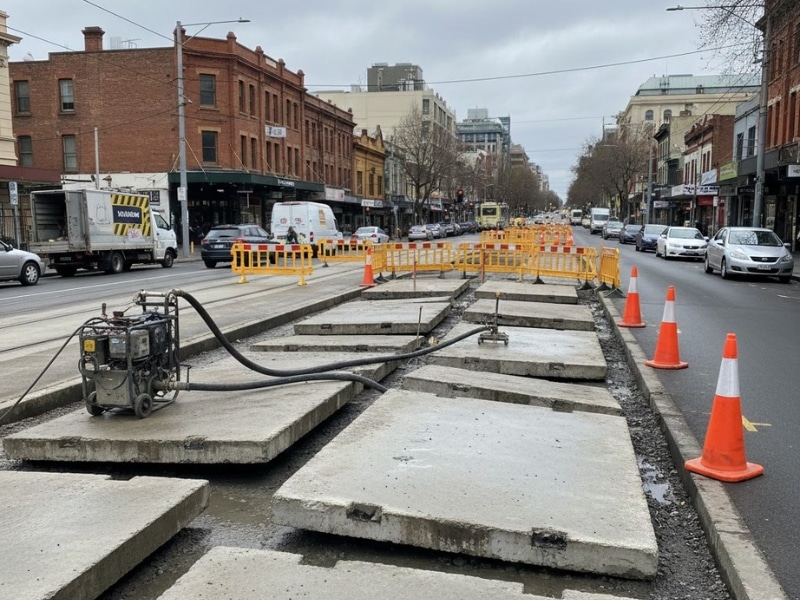
Concrete slab jacking plays an important role in maintaining council roads across Melbourne by correcting uneven concrete panels without the need for full reconstruction. When road surfaces sink or settle, the issue extends beyond appearance — it affects safety, drainage, and long-term asset performance.
For councils managing extensive road networks throughout Melbourne and Victoria, slab jacking provides a targeted way to restore level surfaces while minimising disruption to traffic and surrounding infrastructure. Rather than removing and replacing entire sections of concrete, this method addresses the underlying cause of settlement beneath the slab.
This article explains what influences slab jacking works on council roads, why councils often prioritise this method, and how it contributes to safer, longer-lasting public infrastructure.
What factors influence concrete slab jacking cost in projects?
Concrete slab jacking costs are influenced by factors such as slab size, void depth, soil conditions, traffic control, and proximity to utilities and services. Councils often expect a standard per-square-metre rate, but reality is much more nuanced. Here are the major cost drivers:
- Slab size, thickness and load rating — thicker slabs for heavy traffic require more lift and reinjection materials.
- Subsidence depth and void geometry — deeper drops or irregular voids require additional grouting or staged lifts.
- Access constraints and traffic management — working in narrow streets or busy roads demands lane closures, detours and extra labour.
- Material costs and supplier distance — polymer, cementitious grouts or polyurethane foams may have higher freight or specialty supply premiums.
- Ground conditions — soil type, groundwater, moisture content or stratification affect ease of injection and stability.
- Adjacent utilities and services — closely spaced pipes or conduits require careful avoidance and can slow down crews.
Because of these variables, two seemingly identical roads can cost very differently to remedy. To assist with budgeting, councils around Melbourne often turn to efficient solutions for managing concrete slab jacking costs that provide consistent benchmarks and methodical planning.
Why Councils Use Slab Jacking Instead of Full Reconstruction
Local councils across Melbourne often favour slab jacking as part of their road maintenance strategy because it restores function while preserving existing infrastructure.
Common reasons slab jacking is selected include:
- Reduced disruption to traffic and surrounding communities
- Retention of existing pavement, avoiding unnecessary demolition
- Lower environmental impact, with minimal concrete waste generated
- Compatibility with future resurfacing or overlay works
- Efficient network-wide maintenance, allowing staged repairs across multiple locations
By addressing settlement early, councils can extend the service life of concrete roads without escalating to more invasive remediation.
What Hidden Site Conditions Can Complicate Road Lifting Works?
Some challenges are not immediately visible at the surface but can significantly affect slab jacking works if not identified early.
Potential complicating conditions include:
- High groundwater or poor subsurface drainage
- Weak or unstable soils beneath the slab
- Dense material layers that restrict injection flow
- Existing slab damage, such as cracking or reinforcement deterioration
- Restricted access due to kerbs, medians, or nearby structures
- Unrecorded or congested underground services
Identifying these factors during assessment helps ensure slab jacking remains effective and appropriate for the site.
In terms of environmental and structural longevity, slab lifting also supports subsidence prevention methods, providing lasting stability that helps councils across Victoria extend the life of their roads without resorting to expensive rebuilds.
When Is the Right Time for Councils to Carry Out Slab Jacking?
Timing is critical when managing concrete road settlement. Slab jacking is most effective when carried out before surface damage escalates.
Councils typically schedule slab lifting works:
- At the early signs of settlement or surface unevenness
- Before trip hazards or drainage issues develop
- In coordination with planned road or utility works
- Before resurfacing or overlay programs
- As part of routine pavement monitoring and inspections
Proactive scheduling helps councils manage road assets more predictably and avoid emergency repairs.
These variables don’t just inflate cost — they may dictate whether slab jacking is even feasible. For compliance and long-term durability, councils also refer to national standards for concrete footings and slabs.
How Slab Jacking Improves Safety and Road Performance
Correcting uneven concrete slabs delivers clear safety and performance benefits for public roads.
Well-executed slab jacking helps to:
- Restore smooth, even road surfaces
- Reduce the risk of vehicle damage and pedestrian hazards
- Prevent water ingress that accelerates subgrade deterioration
- Improve load distribution across concrete panels
- Support long-term pavement durability under traffic and weather cycles
Following proper procedures and standards is essential to achieving these outcomes over the long term.
Final thoughts on managing concrete slab jacking cost for public assets
When councils evaluate long-term maintenance options, concrete slab jacking cost becomes more than a budget line — it’s a strategic planning tool. Overcommitment without accounting for hidden ground risks can derail even tight estimates. But when you combine methodical scope, proactive scheduling, and cost-comparative thinking (versus replacement), slab jacking becomes a cost-effective and low-disruption method for restoring public infrastructure. Learn what Raise & Relevel can do for council road stability by bringing years of concrete levelling experience to your council projects. With trusted delivery, on-ground insight, and locally informed practices, we support asset renewal that lasts.