Some of these changes are harmless. Homes expand and contract with temperature and humidity, timber shrinks, and older properties often have a bit of “character movement” over time. But other patterns can point to active ground or footing movement that deserves attention, especially in areas with reactive clay soils and big wet-to-dry swings.
This guide helps you:
• Spot the warning signs that matter most
• Understand which crack patterns are more concerning
• Check inside and outside to find common drivers (like drainage and leaks)
• Decide when to monitor and when to escalate
Quick answer
If you’re seeing a cluster of symptoms (for example, worsening cracks plus sticking doors plus sloping floors), changes happening quickly, or new movement after heavy rain, drought, plumbing leaks, or drainage issues, it’s time to take the signs seriously. Document what you’re seeing, rule out simple causes, and seek professional assessment if the symptoms are progressing.
First, what “foundation trouble” can look like in Australian homes
In plain terms, foundation trouble is when the ground and/or footings are no longer behaving consistently, causing the structure above to move in ways it wasn’t designed to tolerate.
Common contributors in Australia include:
• Reactive clay soils that swell when wet and shrink when dry
• Inadequate surface drainage or overflowing stormwater
• Plumbing leaks under or near the house
• Trees and gardens changing moisture levels around footings
• Poor site grading that lets water pond near the slab or stumps
• Past renovations that changed loads or drainage pathways
You don’t need to diagnose the cause from day one. Your job is to notice patterns, confirm whether the issue is active, and respond before small problems become bigger repairs.
The biggest red flag: clusters, not single symptoms
A single hairline crack is often just a crack. A single sticky door can be a hinge or a humidity issue. A single tile crack might be a poor installation.
But when you start seeing multiple symptoms together, the likelihood of meaningful movement rises.
“Cluster” examples that deserve attention
• Cracks that are getting longer or wider over weeks/months
• Cracks plus doors/windows sticking or misaligning
• Uneven floors plus new gaps around skirtings, cornices, or window frames
• New cracking after a major weather event, leak, or drainage change
• Repeated patch-and-paint cycles where cracks return
Inside the home: signs to look for (and how to interpret them)
1) Wall cracks that change over time
Cracks are the most common early warning sign, but context matters.
More concerning patterns include:
• Diagonal cracks from the corners of doors and windows
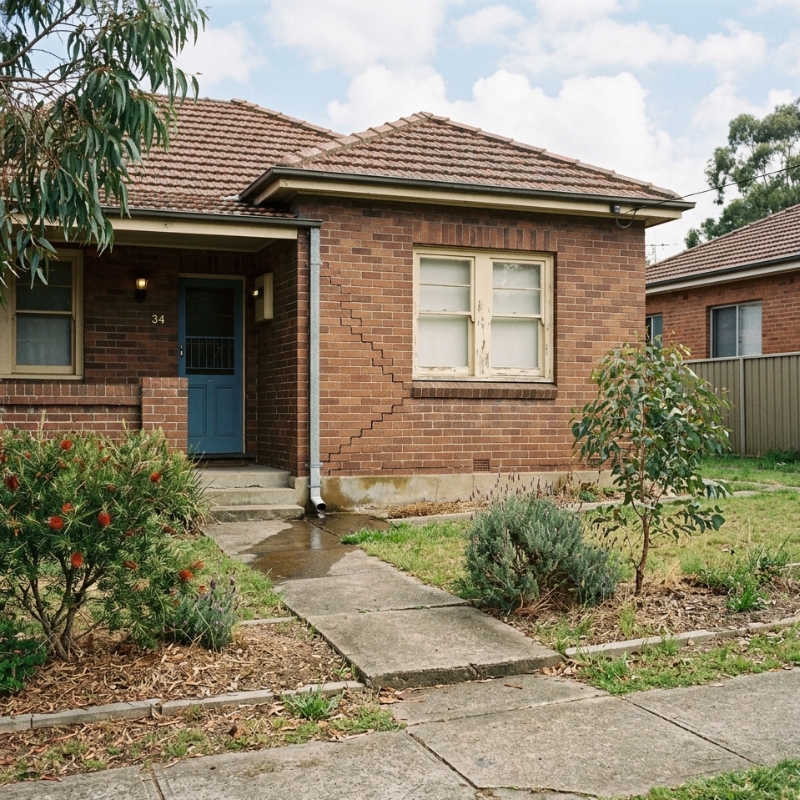
• Stair-step cracks through brickwork mortar joints
• Cracks that widen at one end (tapered)
• Cracks that reopen after being repaired
• Multiple cracks appearing in different rooms over a short period
Less concerning (often) includes:
• Very fine hairline cracks in plaster that don’t change over time
• Minor shrinkage cracks in new plaster or paint (especially after renovations)
• Isolated cracks with no other symptoms
A practical way to assess crack activity
• Photograph the crack with a coin or ruler for scale
• Write the date next to the crack lightly in pencil (or keep notes)
• Recheck after heavy rain, long dry spells, or noticeable door/floor changes
• Track whether it is widening, lengthening, or branching
If you want a stronger approach, look up simple “crack monitoring tell-tales” used for basic tracking.
2) Doors and windows that stick, swing, or won’t latch
Movement can change the geometry of frames, especially if one side of the building is moving differently from the other.
Watch for:
• Doors that scrape at the top corner (often indicates racking)
• Latches that no longer line up without force
• Windows that bind or don’t close smoothly
• Sudden changes that weren’t seasonal before
Rule-out checks first:
• Tighten hinges and check for loose screws
• Look for swelling timber from humidity (common in coastal and humid periods)
• Confirm there hasn’t been a recent painting that reduced clearances
• Check whether the issue improves when the weather changes
If sticking is paired with growing cracks or uneven floors, treat it as more significant.
3) Sloping, uneven, or “bouncy” floors
Floors can feel uneven for many reasons, especially in older homes with timber stumps or bearers. But a noticeable change, or a slope that seems to have developed over a short timeframe, can indicate movement.
Look for:
• A slope you can feel underfoot, particularly toward one side of the home
• Furniture rolling or doors swinging open/closed on their own
• New squeaks, bouncing, or a “soft” feel in one area
• Cracked tiles or grout lines that follow a consistent direction
Rule-out checks first:
• Subfloor ventilation and moisture issues (timber movement)
• Localised floor damage (rot, termites, water ingress)
• Changes after renovations that altered floor support
4) Gaps where surfaces used to meet neatly
Movement often shows up as separation.
Common examples:
• Gaps between skirting and floorboards
• Cornice separation or ceiling-to-wall gaps
• Gaps around window/door trims
• Benchtops pulling away from splashbacks or walls
Again, one small gap isn’t always alarming. Several new gaps appearing together matter more.
5) Cracks in ceilings, cornices, and around openings
Ceiling and cornice cracks can be caused by truss uplift or seasonal movement, but they can also accompany foundation movement.
More concerning:
• Cracks that align with wall cracks below
• Cracks that form around door/window corners and then spread
• Cracks that grow quickly or after weather/leak events
Outside the home, the “drivers” you can often see
If the inside is showing symptoms, the outside often shows the causes.
1) Drainage problems around the perimeter
Poor drainage is one of the most common accelerants of movement. In reactive soils, inconsistent moisture around the footings can cause one section of the house to move differently from another.
Check for:
• Downpipes that discharge next to the house
• Overflowing gutters during storms
• Ponding water near the slab edge or stump line
• Garden beds built up against the house
• Broken stormwater lines (signs include soggy patches, sinkholes, or persistent dampness)
2) Soil levels and grading
The ground should generally fall away from the house, so water runs away, not toward the footings.
Red flags:
• Soil higher than the slab edge or weep holes (where applicable)
• Water running back toward the house during rain
• Erosion channels that suggest concentrated flow
3) Trees and thirsty landscaping close to footings
Trees don’t automatically cause problems, but they can contribute to soil moisture changes, especially during dry spells.
Consider:
• Large established trees close to the building line
• New planting or removal that changed the moisture balance
• Aggressive watering on one side only (creating uneven moisture)
If you suspect this is a factor, avoid drastic changes (like sudden removal) without advice, because rapid moisture shifts can also trigger movement.
4) Cracks or movement in external brickwork, paths, and retaining walls
Look for:
• Stair-step cracking through brickwork mortar joints
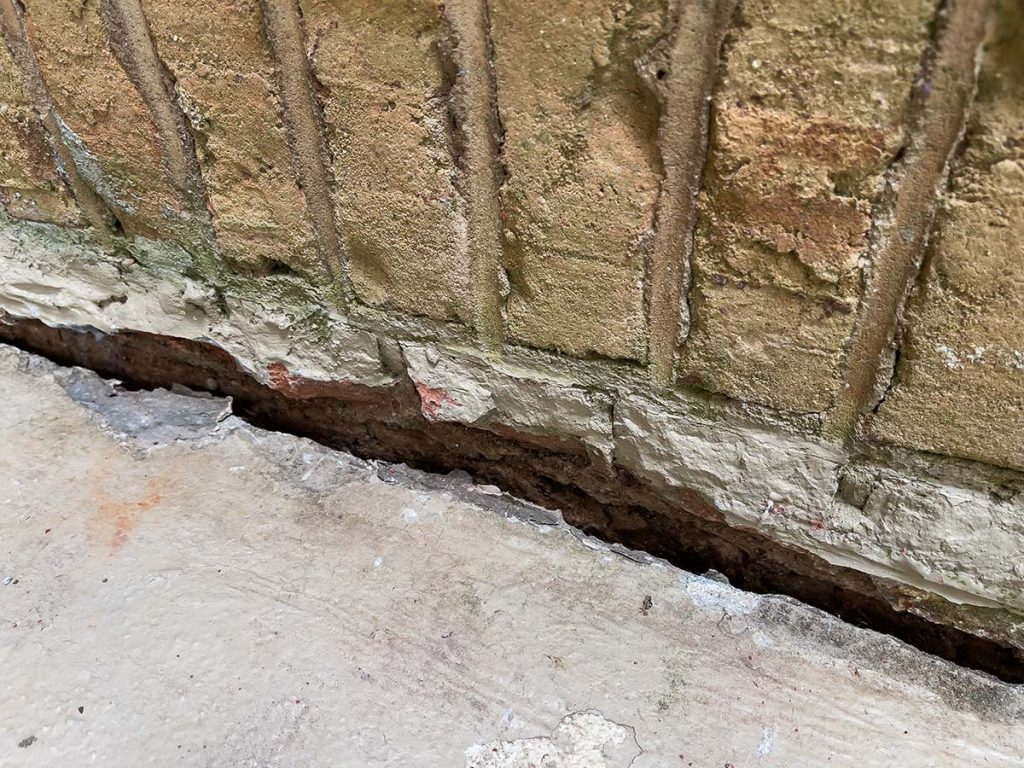
• Separation between the house and external paths/steps
• Retaining walls leaning, bulging, or cracking
• Driveway cracking that has noticeably worsened
External signs that align with internal cracking patterns are particularly telling.
Q&A: Are cracks always a sign of serious foundation issues?
Not always. Many cracks are cosmetic or seasonal. What matters is the pattern and whether it’s changing.
More likely to be serious:
• The crack is widening, lengthening, or branching
• There are multiple cracks in different areas
• The crack is accompanied by sticking doors/windows or uneven floors
• The crack appeared after heavy rain, flooding, drought, plumbing leaks, or drainage changes
If it’s stable for a long period and isolated, monitoring may be reasonable. If it’s active or clustered with other symptoms, escalate.
How to tell “normal settling” from active movement
A simple way to think about it:
• Settling is often slow, early in a building’s life, and then stabilises
• Active movement tends to show ongoing changes, seasonal swings, or step-changes after events (storms, leaks, drought)
Signs it’s more likely active movement
• Symptoms are getting worse over weeks/months
• A repaired crack reappears quickly
• You see a seasonal open/close cycle that’s becoming more extreme each year
• Multiple parts of the home are affected (not just one wall)
• You can identify a clear trigger (drainage failure, leak, major weather)
A homeowner-friendly monitoring routine
• Take photos of key symptoms monthly (same angle, same lighting if possible)
• Keep a short log: date, weather conditions, what changed
• Recheck after heavy rain, long dry periods, or plumbing issues
• If changes accelerate, don’t wait for the next month—escalate
What to do next: a practical decision guide
Step 1: Document, don’t guess
Start with objective evidence:
• Photos of cracks with scale
• Notes on which doors/windows are sticking and how
• A quick floor check (even a marble roll test can show slope direction)
• Outside photos of drainage, downpipes, ponding, and soil levels
Step 2: Rule out common “false alarms”
Before assuming footing movement:
• Tighten hinges, check latches, consider humidity effects
• Look for simple water ingress or timber swelling near problem doors
• Confirm there hasn’t been recent building work that introduced new cracks
• Check whether there’s an obvious plumbing leak or drainage overflow
Step 3: Address obvious water and drainage issues
If you find downpipes dumping next to the house or ponding against the slab, that’s worth fixing promptly. Even without foundation trouble, it’s good building hygiene.
Step 4: Decide whether to monitor or escalate
Monitoring is reasonable when:
• The issue is minor, isolated, and stable
• There are no additional symptoms developing
• There’s no clear external trigger (leak/drainage failure) and no rapid change
Escalate when:
• Symptoms are worsening or multiplying
• You can see or suspect drainage/plumbing problems
• The home has noticeable slope changes
• Cracks are significant or appearing in brickwork patterns
• The change is sudden (post-storm, post-flood, post-drought)
If your checks suggest the home is actively moving, it’s sensible to learn about pathways for stabilisation, including signs you may need underpinning, so you understand what’s involved if the assessment points that way.
Q&A: What crack width is “too big”?
There isn’t a single magic number that applies to every home and material. A small crack that’s stable can be less concerning than a moderate crack that is rapidly widening.
Use these practical cues:
• Rate of change matters most (is it growing?)
• Location matters (corners of openings and stair-step brick cracks can be more meaningful)
• Cluster matters (one crack vs many)
• Function matters (if doors/windows stop operating normally, treat it seriously)
If you’re unsure, document and seek professional guidance rather than relying on a guess.
Australia-specific context: reactive clay soils and moisture swings
Many Australian suburbs sit on clay-rich soils that change volume depending on moisture. That means:
• Wet periods can cause swelling and heaving
• Dry periods can cause shrinkage and settlement
• Uneven moisture around the house can create uneven movement
This is why drainage, downpipes, and leak management are so important. If you want a deeper technical explanation in plain language, the CSIRO Foundation Maintenance and Footing Performance guide is a useful reference.
When the warning signs point to structural movement
If your documentation shows the symptoms are active and especially if they’re clustered, the “next step” is usually a more formal assessment rather than repeated cosmetic repairs.
At that point, it helps to understand what “foundation support” solutions can look like in principle, including underpinning for structural movement, so you can ask better questions and make informed decisions.
Common mistakes homeowners make (and what to do instead)
• Patching cracks repeatedly without monitoring
– Instead: record, compare, and look for change over time
• Ignoring drainage because the crack seems “small”
– Instead: treat drainage as urgent maintenance, especially in reactive soils
• Making sudden landscaping changes near footings
– Instead: aim for gradual, balanced moisture management and seek advice for major changes
• Waiting until doors don’t close at all
– Instead: escalate when you see a cluster and/or acceleration
Q&A: If my house is moving, should I renovate first or wait?
If you suspect active movement, major renovations can lock in problems or create new ones (for example, fresh plaster and tiles cracking again). Often it’s better to:
• Confirm whether movement is active
• Address obvious drainage/leak causes
• Get clear advice on stabilisation pathways (if needed)
• Then renovate once the risk is managed
This doesn’t mean you can’t do anything—small maintenance tasks are fine—but structural uncertainty and expensive finishes don’t mix well.
A simple symptom checklist you can use today
Inside
• Are cracks new, growing, or returning after repair?
• Are cracks diagonal from door/window corners?
• Are doors/windows newly sticking or misaligned?
• Do floors feel more uneven than before?
• Are new gaps appearing at skirtings, cornices, or trims?
Outside
• Do gutters overflow or do downpipes discharge near the house?
• Is there ponding water along the perimeter?
• Has the soil level built up against the house?
• Are there signs of stormwater or plumbing leaks (soggy patches, sinkholes)?
• Are external brick cracks stair-stepping through mortar joints?
• Are paths/steps pulling away from the house?
If you tick multiple items across both lists, treat it as more than cosmetic.
Bringing it all together: what “good next steps” look like
If you take only one thing from this guide, make it this: foundation trouble is best managed early, with evidence.
A sensible progression is:
• Document symptoms (photos + dates)
• Check and improve water/drainage basics
• Monitor short-term if symptoms are minor and stable
• Escalate promptly if symptoms worsen, cluster, or follow a trigger event
And if movement is strongly suspected or confirmed, understanding options like understanding the underpinnings for moving homes helps you interpret advice you may receive and avoid wasting money on repairs that don’t address the cause.
FAQ
How do I know if a crack is “active”?
If it’s changing over time (wider/longer/branching), reappearing after repair, or changing noticeably after rain/dry spells, it’s more likely active. Document it with dated photos and compare over several weeks.
Can poor drainage really cause foundation issues?
Yes. Poor drainage can create uneven moisture around footings, which is a major driver of movement in reactive soils. Even if it doesn’t cause the original issue, it can worsen and accelerate symptoms.
Are sloping floors always a sign of foundation trouble?
Not always. Older homes can have some level variation due to age, stump condition, or subfloor issues. What matters is whether the slope is new, worsening, or paired with other signs like cracks and sticking doors.
Why do doors and windows stick more at certain times of year?
Seasonal humidity and temperature changes can cause timber to expand/contract and can also affect reactive soils. If sticking is new, getting worse, or paired with cracks and uneven floors, treat it as more significant.
Should I patch cracks straight away?
Cosmetic patching can hide evidence you need for monitoring. If you’re unsure what’s going on, document first. If you do repair, keep photos and measurements from before and after.
What should I check first after heavy rain or storms?
Look for gutter overflow, blocked downpipes, pooling water near the house, erosion channels, and any new internal symptoms like fresh cracks or doors suddenly sticking.
How long should I monitor before escalating?
If symptoms are minor and stable, a short monitoring period can help. But if symptoms are worsening, multiple signs appear together, or there’s a known trigger like a leak or drainage failure, it’s better to escalate sooner rather than waiting.
Can plumbing leaks cause movement?
Yes. Persistent leaks can soften soils, wash out material, or create uneven moisture conditions—especially problematic around slabs and footings.