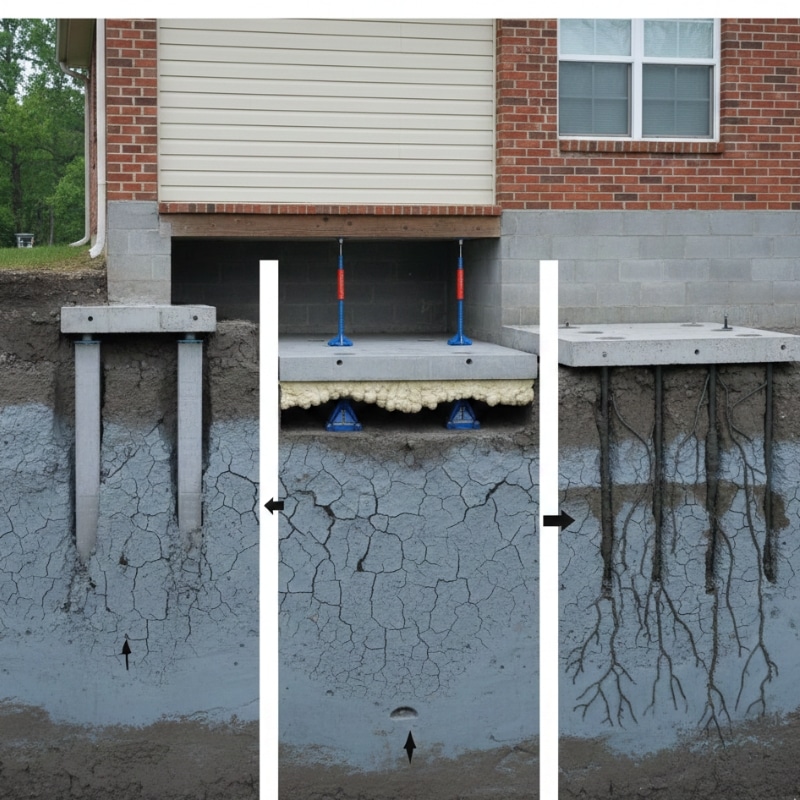
Subsidence is one of the most misunderstood structural issues Australian homeowners face. When parts of a house sink, move, or lose support, the conversation often jumps straight to solutions like underpinning, slab jacking, or grouting. The problem is that these methods are not interchangeable — and choosing the wrong one can lead to poor outcomes, wasted money, or recurring movement.
For homes across Melbourne, where reactive clay soils and seasonal moisture changes are common, understanding why subsidence occurs is just as important as understanding how different remediation methods work. This guide compares underpinning, slab jacking, and grouting in a practical, scenario-led way so homeowners can better understand which approach fits which subsidence situation.
This article is educational only. It explains principles, outcomes, and limitations — not pricing, guarantees, or service recommendations.
Understanding Subsidence in Melbourne Homes
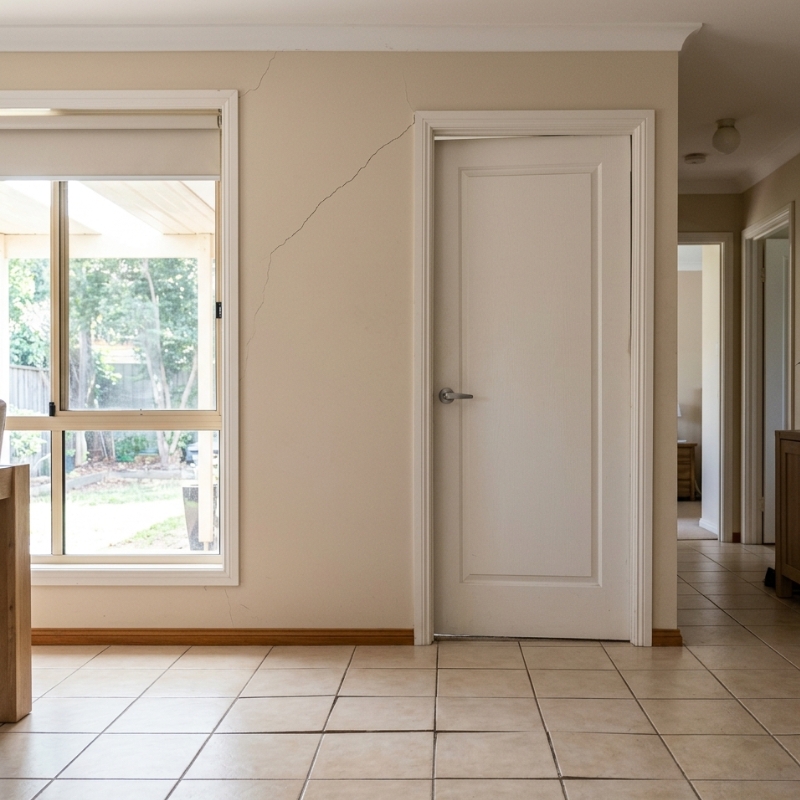
Subsidence occurs when the ground beneath a structure can no longer support it evenly. In Melbourne, this is often linked to reactive clay soils that expand when wet and shrink during dry periods. Over time, this constant movement can lead to uneven settlement, cracks, and changes in how a home sits on its footings.
Common contributing factors include:
• Long dry spells followed by heavy rainfall
• Poor surface drainage around the home
• Tree roots extract moisture from soil near footings
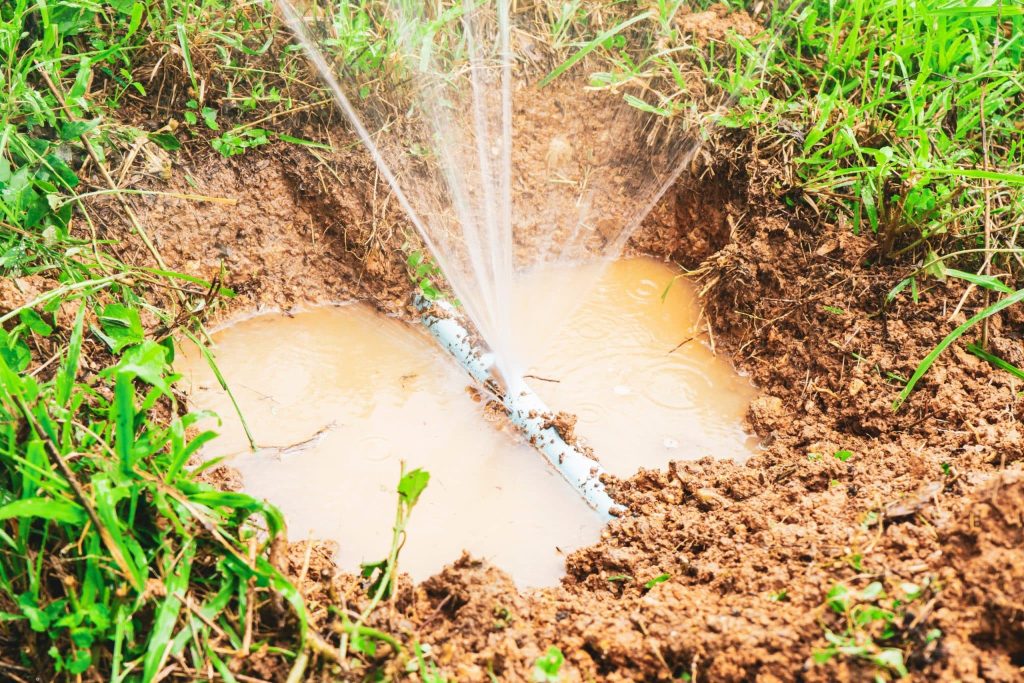
• Changes to landscaping or plumbing leaks
• Older footing designs are not suited to current soil conditions
Importantly, subsidence is rarely uniform. One part of a house may move while another remains stable, which is why cracks and slopes often appear gradually rather than all at once.
Why “One-Size-Fits-All” Solutions Don’t Work
A major mistake homeowners make is assuming all subsidence problems require the same fix. In reality:
• Some methods lift concrete but do not improve soil support
• Others stabilise the ground but don’t re-level structures
• Some are suitable only for slabs, not strip footings
• Soil type can make certain methods ineffective or risky
This is why comparing underpinning, slab jacking, and grouting must be done in the context of cause, structure type, and soil behaviour — not popularity or cost.
What Is Underpinning?
Underpinning is a structural method that strengthens or deepens existing footings so they can bear loads more reliably. It is commonly used when original footings are no longer adequate due to soil movement, erosion, or changes in loading.
Rather than lifting concrete alone, underpinning focuses on transferring the weight of the structure to more stable ground or distributing it over a larger area.
When Underpinning Is Commonly Used
Underpinning is typically considered when:
• Structural cracks continue to worsen over time
• Movement affects load-bearing walls
• Footings have settled beyond acceptable limits
• Reactive soils repeatedly expand and shrink
• Long-term stability is the primary concern
In Melbourne, underpinning is often associated with older homes that were built before modern soil classification and footing standards were widely applied.
Strengths of Underpinning
- Addresses load-bearing capacity directly
- Suitable for severe or ongoing movement
- Can improve long-term structural performance
- Less dependent on near-surface soil conditions
Because it focuses on structural support, underpinning for structural support is often discussed when subsidence has progressed beyond minor cosmetic symptoms.
Limitations and Considerations
Underpinning is not always appropriate. It:
• May not correct cosmetic slab settlement
• Can be unnecessary for minor, isolated movement
• Requires careful engineering design
• Is not intended for temporary or shallow issues
Underpinning is about stability first — not appearance or convenience.
What Is Slab Jacking?
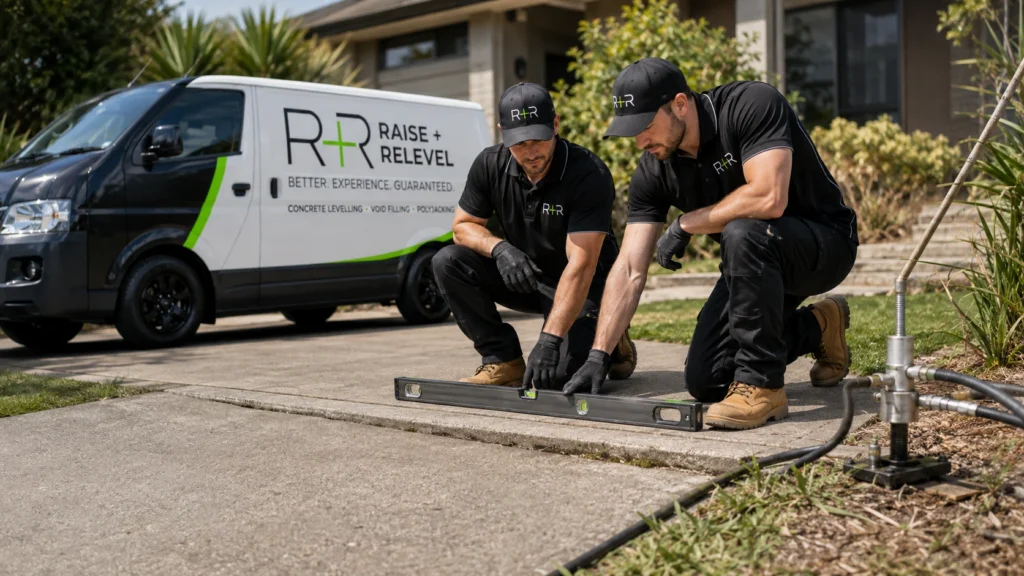
Slab jacking (also known as slab lifting or pressure grouting in some contexts) involves injecting material beneath a concrete slab to raise it back toward its original level. The goal is to fill voids and restore alignment rather than modify structural footings.
This method is commonly used on concrete slabs that have dropped due to soil loss or compaction.
When Slab Jacking Is Commonly Used
Slab jacking is often considered when:
• Concrete slabs have visibly sunk or tilted
• The structure itself remains largely intact
• Settlement is localised rather than widespread
• There is little evidence of deep footing failure
For many homeowners, slab jacking for sunken concrete is most relevant for garages, extensions, pathways, or slab-on-ground homes experiencing uneven floors.
Strengths of Slab Jacking
- Can re-level concrete surfaces
- Less invasive than structural work
- Useful for restoring function and alignment
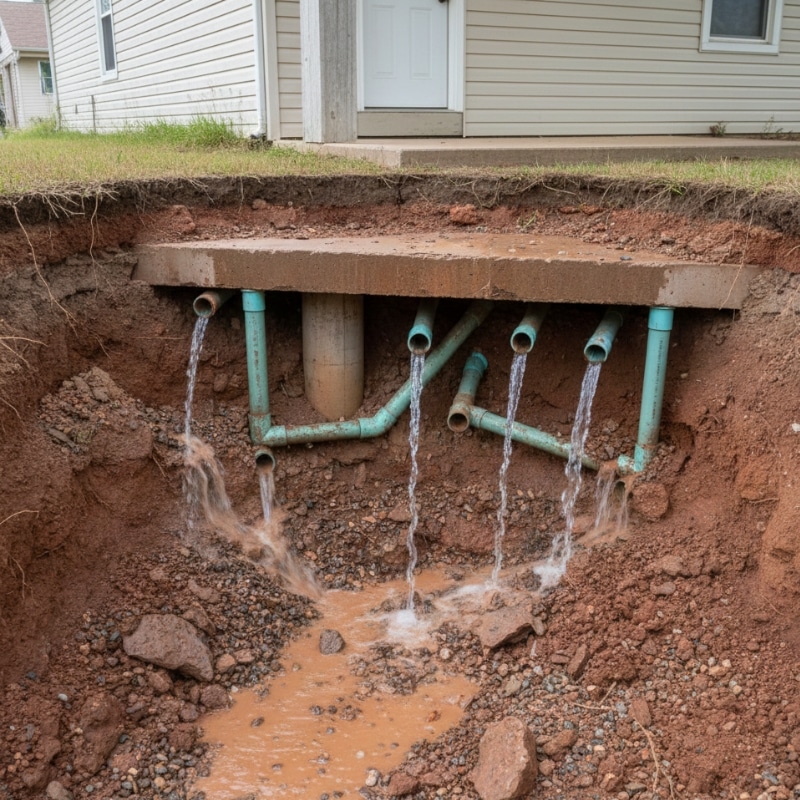
- Addresses voids caused by soil washout
Limitations and Considerations
Slab jacking does not:
• Strengthen existing footings
• Prevent future soil shrinkage
• Suits all soil types equally
In reactive clay environments, slab jacking outcomes depend heavily on whether soil movement has stabilised or is ongoing.
What Is Grouting?
Grouting involves injecting specialised materials into the ground to fill voids, compact soil, or reduce water movement beneath structures. Unlike slab jacking, grouting may not aim to lift a slab significantly — instead, it focuses on soil behaviour.
There are many types of grouting, each with different purposes and performance characteristics.
When Grouting Is Commonly Used
Grouting may be considered when:
• Soil erosion or washout is present
• Voids exist beneath slabs or footings
• Water ingress is contributing to instability
• Localised ground improvement is required
In subsidence discussions, grouting methods for subsidence control are often referenced where soil conditions, rather than structural failure, are the primary concern.
Strengths of Grouting
- Can stabilise loose or eroded ground
- Useful for addressing water-related issues
- Less disruptive than excavation
- Can complement other methods
Limitations and Considerations
Grouting:
• Does not always re-level structures
• May be unsuitable for highly reactive clays
• Requires precise design and control
• Is not a universal subsidence solution
Some grouting approaches that perform well overseas may not deliver the same results in Melbourne’s soil conditions.
Comparing Outcomes: Which Method Fits Which Scenario?
Rather than asking which method is “best,” a better question is: which method fits this specific subsidence cause?
Scenario 1: Localised Slab Settlement Without Structural Cracking
Likely considerations:
• Slab jacking
• Targeted grouting
Underpinning is usually excessive in these cases.
Scenario 2: Progressive Cracking in Load-Bearing Walls
Likely considerations:
• Underpinning
Slab jacking alone would not address the underlying structural demand.
Scenario 3: Voids Caused by Water or Drainage Issues
Likely considerations:
• Grouting
• Drainage correction
Structural work may not be required if movement has not compromised footings.
Scenario 4: Older Home on Reactive Clay With Ongoing Movement
Likely considerations:
• Underpinning
• Combined ground management strategies
This is where Melbourne’s soil behaviour becomes a critical factor.
Why Soil Type Matters More Than the Method
Melbourne’s reactive clay soils expand and contract depending on moisture content. According to guidance from the Victorian Building Authority, footing performance and structural movement are strongly influenced by soil reactivity, drainage, and moisture control.
A method that performs well in stable sands or rock may struggle in highly reactive clays if soil movement is not properly accounted for. This is why outcome-based decision-making — not method preference — is essential.
Common Misconceptions About Subsidence Solutions
“Lifting the slab fixes the problem”
Lifting addresses symptoms, not always causes.
“Grouting always stabilises soil”
Not all grouts behave the same, especially in reactive conditions.
“Underpinning is only for severe cases”
Sometimes, early underpinning prevents larger problems later.
“One repair guarantees no future movement”
Soil continues to behave over time — no method freezes the ground permanently.
When Professional Assessment Becomes Necessary
Homeowners should consider expert assessment when:
• Cracks widen or multiply
• Doors and windows begin sticking
• Floors slope or feel uneven
• Repairs fail or symptoms return
• Movement coincides with seasonal changes
Early understanding often leads to better long-term outcomes.
Final Thoughts: Choosing the Right Approach
Underpinning, slab jacking, and grouting each have a place in subsidence management — but only when matched correctly to the cause of movement, soil conditions, and structural demands of the home.
For Melbourne properties, success is rarely about choosing the most aggressive method. It’s about understanding the ground beneath the home, the way the structure interacts with it, and selecting an approach that aligns with both.
An informed comparison leads to better questions, better decisions, and better subsidence outcomes over time.