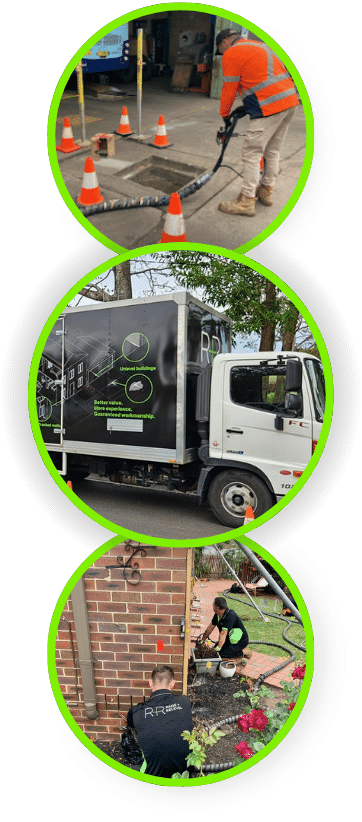
Melbourne Slab Jacking

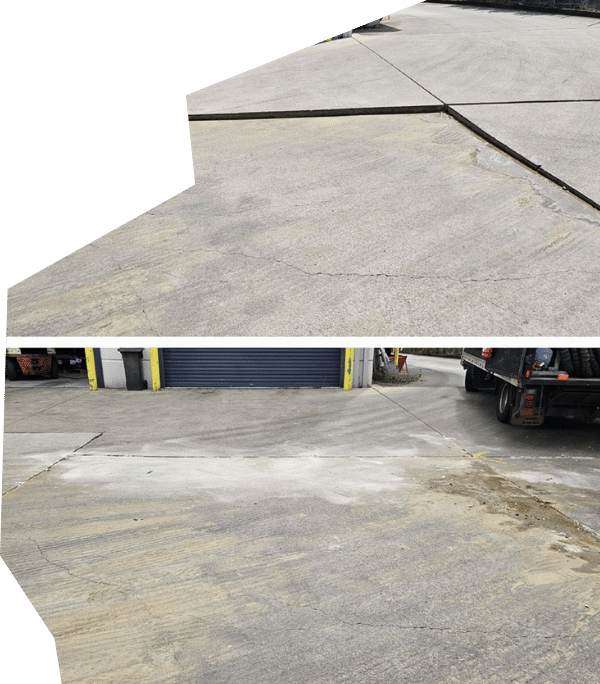
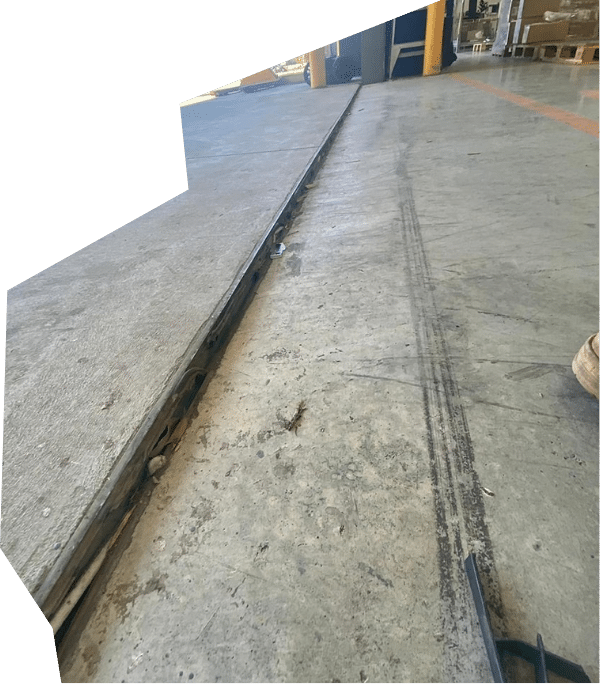
If your driveway, garage floor or path has sunk, cracked at the joints, or started catching the car, the slab can usually be lifted back to level rather than dug up and replaced. Slab jacking injects an expanding polyurethane resin into the voids beneath the concrete, raising it back into position in a few hours.

Most jobs are finished the same day; you can drive on the slab straight after, and the work is backed by our 100-year product guarantee and 50-year workmanship guarantee. Raise & Relevel has lifted and levelled more than 7,000 homes, is fully licensed and insured, and offers a free on-site assessment.

What is slab jacking?

Slab jacking, slabjacking and slab lifting are the same thing: raising a sunken concrete slab back to level by filling the void underneath it. Mudjacking is the older version of this, using a cement slurry pumped beneath the slab. Polyjacking, or foam jacking, is the modern version, using an expanding polyurethane resin that is lighter, cures faster, and moves less once in place. Concrete levelling and concrete lifting (also written concrete levelling) are simply the plain English names for the outcome, whichever method gets you there.

This is worth being direct about: concrete levelling is not the same job as pouring a self-levelling compound over an indoor floor to smooth it out. That is a DIY product for a cosmetic surface. Slab jacking is a professional service that lifts an entire outdoor or structural slab from underneath, and it is what you need if the concrete itself has physically sunk. Our concrete levelling guide covers the full process in more depth if you want the technical detail.
Should you lift the slab or replace it?

Lifting suits a slab that is structurally sound but sitting too low. Replacement is the right call when the concrete itself has failed, not just its position. Here is how the two compare.

Cost and time on site

Lifting is generally the lower-cost option, since the existing slab is kept and there is no demolition, removal or new material to pay for. It usually takes hours. Replacement takes days, plus curing time, and typically several more days before the new concrete can take full load.

Disruption and use afterwards

Slab jacking needs only small injection holes and no excavation, and in most cases you can drive on the slab the same day. Replacement means demolition, removal, formwork and a new pour, with the area out of action until the concrete has cured.

Appearance

This row matters more than it looks like it should. New concrete never matches old concrete, even when it is poured by the same crew a week later, so a driveway repaired by replacement often ends up with one section visibly newer than the rest. Lifting keeps the original surface, and the colour matches because it is the same slab. That is one of the main reasons homeowners choose it over replacement when the slab itself still qualifies.

Lifting is best when the slab is sound but has sunk. Replacement is best when the concrete is cracked through, spalling or failed. For damage to the concrete surface itself rather than its level, our Melbourne concrete repair page covers cracking, spalling and concrete cancer.

How does slab jacking work?

The process is deliberately simple, and most of the work happens beneath the surface rather than on top of it.

  1. Assessment and marking out. We inspect the slab, confirm the likely cause of the settlement, check for underground services, and mark out the injection points based on the location of the void beneath the concrete.
  2. Drilling the injection holes. Small holes, typically around 10mm across, are drilled through the concrete at the marked points. This is the only part of the process that involves cutting into the slab itself.
  3. Injecting the resin. Expanding polyurethane resin is injected through the holes under controlled pressure, filling the void as it expands and gradually lifting the slab back towards its original level.
  4. Patching and clean-up. The injection holes are patched, the site is cleaned up, and, in most cases, the slab is ready to be used the same day again, since the resin cures within minutes rather than hours.

What we can lift and level

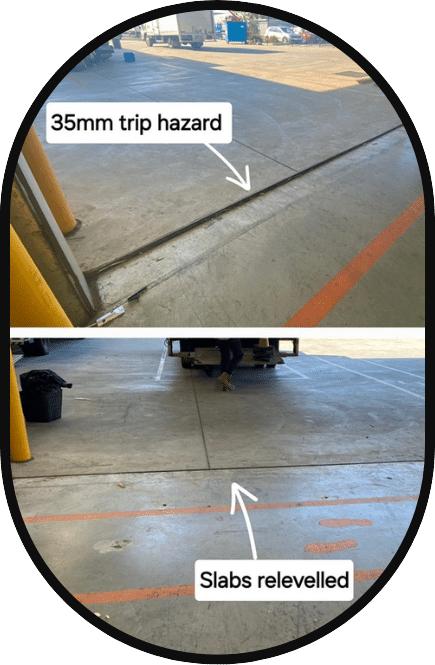
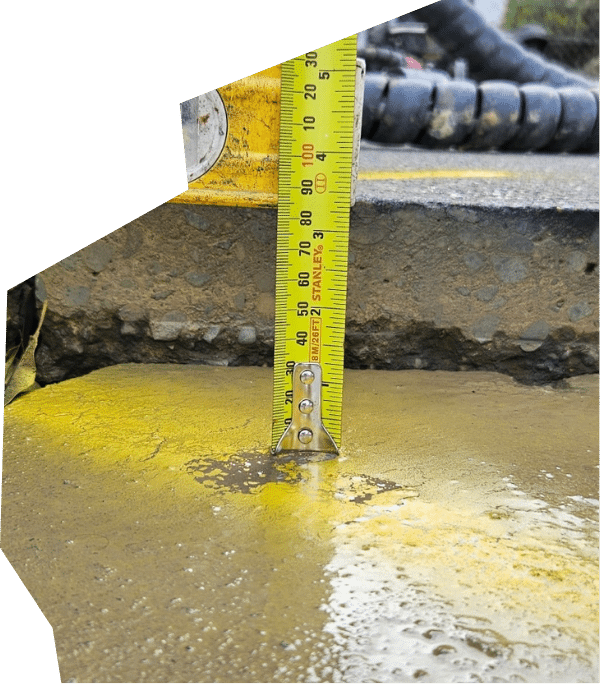
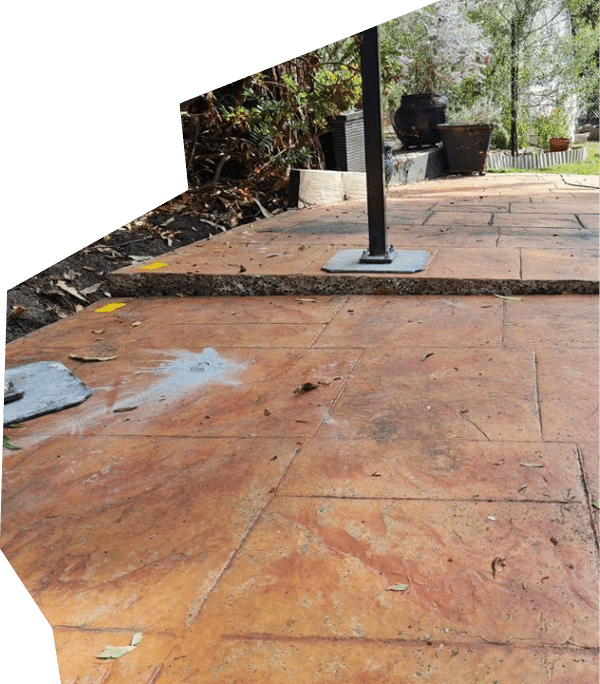
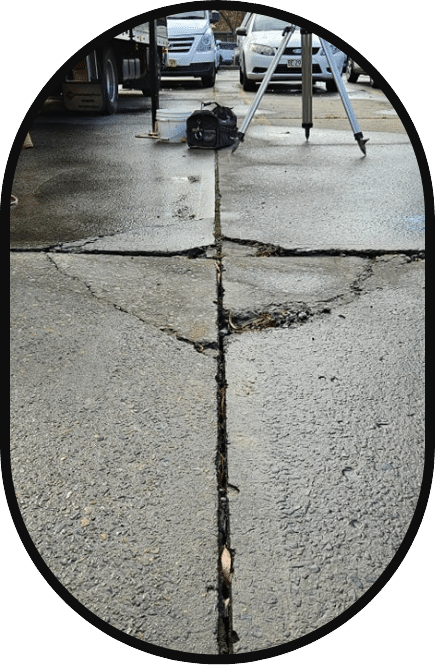
Driveways. Sunken sections, a step forming at the garage entrance, or water pooling instead of draining away. Garage floors. Slabs that have dropped away from the wall, or cracked across the middle under the weight of a vehicle. Paths and footpaths. Trip hazards where one section has settled lower than the next at the joins. Patios and alfresco slabs. Settling that sends water running back towards the house instead of away from it.

Pool surrounds and coping. Settling around the pool shell that leaves the coping uneven or a trip hazard. Internal slabs and floors. Where the house slab itself has dropped rather than just a surface finish. If it is the whole floor rather than a slab section, our sinking floors page covers that specific problem. Warehouse and factory floors. Uneven slabs that affect racking stability or create a hazard for forklift traffic. Sheds, carports and steps. Smaller structures with the same underlying problem: the slab has lost support and needs to be lifted rather than replaced.

What are the most common causes of sunken slabs?

A slab sinks when the ground supporting it can no longer support it. In Melbourne, the most common cause is reactive clay, which shrinks as it dries out over summer, leaving a void beneath the slab that the slab later drops into. Poorly compacted fill under the original pour has the same effect from day one rather than developing over time. Water erosion from a leaking pipe or a downpipe discharging against the slab can wash away the supporting material, and tree roots can both draw moisture from the soil and physically disturb it.

If the movement you are seeing appears to involve the building’s actual foundations rather than a standalone slab, that is a different problem. Our Melbourne underpinning page provides more detail on foundation-level support.

Mudjacking or polyurethane foam?

Polyurethane foam is the better choice for most residential slab jacking. Mudjacking uses a heavy cement slurry that places a significant load on the subgrade, requires larger access holes, takes hours to reach full strength, and can settle again if the underlying ground is still weak. Polyurethane foam is light, so it adds minimal load; it goes in through small holes about 10mm across; it cures in minutes; and it expands to fill and stabilise the void, making it less prone to re-settling.

Because the resin is much lighter than a cement slurry, it does not add meaningful extra load to the ground that may already be struggling to support the slab, which is the main reason it has largely replaced mudjacking in residential work. Where the settlement affects a building’s foundations rather than a standalone slab, Melbourne resin injection is the more relevant service, and our concrete levelling guide explains how to choose between methods in more detail.

How much does slab jacking cost?

Slab jacking is priced by the slab area, the lift height, and the number of injection points required, and is quoted in square metres. Because those factors vary so much from one property to the next, the only way to give you an accurate figure is a free, on-site assessment.

What moves the price

  • The total area of the slab or slab section being lifted
  • How far the concrete has to be raised
  • How many injection points the job requires
  • Site access, including whether equipment can reach the affected area directly
  • Whether the void beneath the slab is small and localised or extensive

As a general guide, a small, straightforward job such as a single garage floor or a short section of driveway sits at the lower end of the range, while a larger driveway, a full patio, or a slab with an extensive void underneath sits higher. Two jobs that look similar on the surface can be priced quite differently once the extent of the void beneath is understood, which is why an accurate figure depends on inspecting the actual site rather than on the visible symptoms alone.

Slab jacking is almost always the more cost-effective option next to replacement once demolition, removal and new concrete are factored in, since none of those costs applies to a lift. The trade-off works the other way for concrete that has failed structurally rather than just settled, where replacement becomes the more sensible comparison regardless of price, because a lift will not hold on concrete that can no longer act as a sound slab.

Book a free on-site assessment, and we will confirm the exact scope and cost for your property before any work begins.

How can Raise & Relevel help?

From the first call to the finished lift, you deal with one team that inspects the slab, diagnoses why it sank, and, in most cases, lifts it back to level in a single visit.

  • Our team is fully licensed and insured, with qualified engineers and technicians on every job.
  • We have lifted and levelled more than 7,000 homes across Australia.
  • Every lift is backed by our 100-year product guarantee and 50-year workmanship guarantee.
  • The on-site assessment is free, and we confirm the scope and cost before any work begins.

We lift and level concrete slabs across greater Melbourne, from the CBD and inner suburbs through to the bayside, eastern, northern and western regions: Frankston, Carrum, Chelsea, Mordialloc, Mentone, Cheltenham, Brighton, Dandenong and the Mornington Peninsula in the south east; Richmond, Hawthorn, Camberwell, Box Hill, Doncaster and Ringwood in the inner east; Brunswick, Preston, Reservoir, Bundoora and Eltham in the north; and Footscray, Sunshine, Werribee, Point Cook and Melton in the west. See our Melbourne hub for the full range of services we offer across the city.

A sunken driveway, garage floor or path does not get better on its own. Book a free on-site assessment, and we will confirm the cause, the lift required, and the cost before any work begins, or call us on 1300 053 835 to speak with the team directly.

Why Raise + Relevel?

Better.

Better quality workmanship for a better price R+R delivers value to our customers by offering the highest quality services at the most competitve price.

Experience.

Over 100 years of genuine experience in relevelling structures – we are ground surgeons.

Guaranteed.

We stand behind the quality of our products and workmanship. Our warranty provides 100-year warranty on our resin products and 50-year warranty on our workmanship – If the problem returns, we return.

FAQ

Your home is everything to you and your family, so before going ahead with any subsidence repairs, we’ve put together a list of questions our customers should ask:

Cost depends on the slab’s area, how far it needs to lift, and how many injection points the job requires, quoted in square metres. Small, straightforward jobs sit at the lower end, and larger areas or extensive voids cost more. Slab jacking is almost always cheaper than replacement once demolition and new concrete are factored in. A free on-site assessment gives you an exact figure.

Usually, yes, when the slab itself is still sound. It is faster than replacement, taking hours rather than days, costs less because there is no demolition or new material, and keeps the existing concrete so the colour matches the surrounding area. Replacement only becomes the better option once the concrete itself has cracked through, spalled, or otherwise failed structurally, at which point lifting a damaged slab will not give you a lasting result.

Polyurethane resin injection is the best method for most residential slab jacking. It is significantly lighter than the cement slurry used in older mudjacking, so it does not add extra load to ground that may already be struggling, and it cures in minutes rather than hours. Mudjacking still has a place on some jobs, but polyurethane foam is the default recommendation for a typical driveway, garage floor or path.

It depends on whether the floor’s surface is uneven or the slab underneath has actually sunk. A rough or unlevel surface finish on an otherwise stable slab can sometimes be addressed with a self levelling compound, which is a DIY product for cosmetic surface work. If the slab itself has physically dropped, that needs slab jacking, which lifts the whole slab from underneath rather than resurfacing the top of it.

Most residential jobs, such as a driveway or garage floor, are completed within a few hours on a single visit. Larger areas or slabs with extensive voids underneath can take longer, but multi-day jobs are the exception rather than the rule for standard slab jacking work. Your on-site assessment will confirm a realistic timeframe once the scope of your specific job is known.

Mudjacking uses a cement slurry, which is heavy, requires larger access holes, and takes hours to cure. Polyurethane foam is much lighter, uses small holes around 10mm across, cures in minutes, and expands to stabilise the void rather than just filling it. Polyurethane has largely replaced mudjacking for residential work because it adds less load to ground that is often already struggling to support the slab.

The injection holes themselves are small, typically around 10mm, and are patched after the resin has cured. Once patched, they are far less noticeable than the visible seams and colour mismatch you would get from a partial concrete replacement, since the original slab and its existing colour are retained. Most customers find the patched holes blend in well within a short time.

The resin itself does not break down over time, so the lift achieved is permanent. What can change is the ground beneath the slab: if the original cause of the settlement, such as a drainage problem or an active leak, is not addressed, the slab can sink again in the future for the same reason it sank the first time. That is why diagnosing the actual cause matters as much as the lift itself, and it is covered by our workmanship guarantee.

We work across Melbourne, including the CBD, inner suburbs, bayside, eastern, western and northern regions. See the Where We Work section above, or get in touch to confirm coverage for your specific address.

of Combined Experience
Homes Relevelled
Guaranteed

At Raise + Relevel, experience matters. With a century of combined expertise and over 7,000 homes re-levelled, we deliver lasting results—guaranteed.

100% Product Guarantee

Quality materials built to last

50-Year Workmanship Guarantee

Proven expertise you can trust

Every home is unique. We provide tailored solutions at the best value, ensuring stability without compromise.

Have More Questions?

Name